This was part two of my retirement kick-off travels. We planned to visit old friends in Umbria then rent a house in southeastern Italy to explore that part of the country. My wife has a big, thick book of UNESCO World Heritage sites. She found quite a few in the province of Puglia. And so, creation of an itinerary began. Alberobello, renown for its Trulli houses, was the first site to capture her fancy. She found a charming Trulli vacation rental home. Along the way we visited an ancient Catholic Church in Brindisi, cave dwellings in Matera, the Baroque city of Lecce, and the church and mausoleum complex of Padre Pio in San Giovani Rotondo on the peninsula with the Parco Nazionale del Gargano.
We flew from Denver to Rome via Houston, picked up a rental car, and drove up to the home of good friends in Umbertide. It is a small city on the Tiber river about a 45-minute drive north of the Umbrian capital of Perugia. Our goal was to be there in time to join them for dinner at our favorite Agriturismo Calagrana, a short drive west of Umbertide.
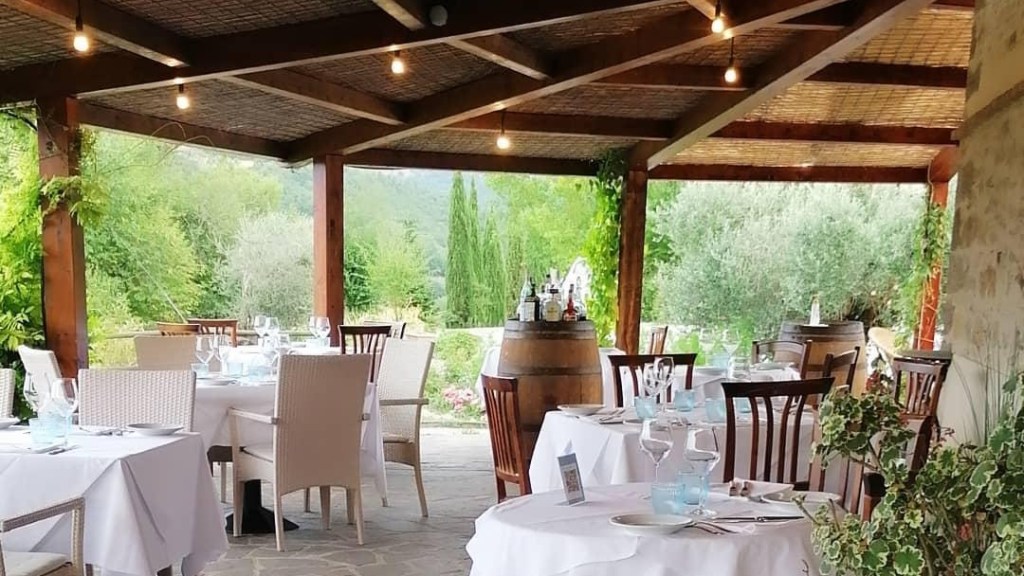
Calagrana was developed from an old family farm and stone buildings by Alberto and Ely. It is set around a cozy country inn and restaurant managed by Ely with Alberto serving up his traditionally-based but innovative European, Italian, and Umbrian cuisine. The result is a unique Italian country experience with views from the open-air patio across the valley to the south. The evening we were there, they featured a special tasting menu.
The next morning, I was up early, eagerly anticipating one of my favorite Italian rituals—that first cup of espresso. For me, it is typically followed by a creamy cafe latte. I make mine at home with unsweetened soy milk but when in Italy, I take it as an Italian would—with steamed milk.
I think the Italians and the French are alike in this way. There is supposedly an old French saying, “Americans eat out of their medicine cabinet!” I think they mean to imply that if you eat a diet of whole, natural foods as a matter of course, without overdoing any one thing, you won’t have to be overly concerned with what you eat to be healthy. And, more importantly, it will taste great, bring joy, and satisfaction. I will hasten to add that the walking, bicycling, manual labor, crafts, and joyous gatherings typical of many Italian and French country lifestyles round out the Mediterranean approach to healthy living. It also helps to mitigate that silent killer, stress.
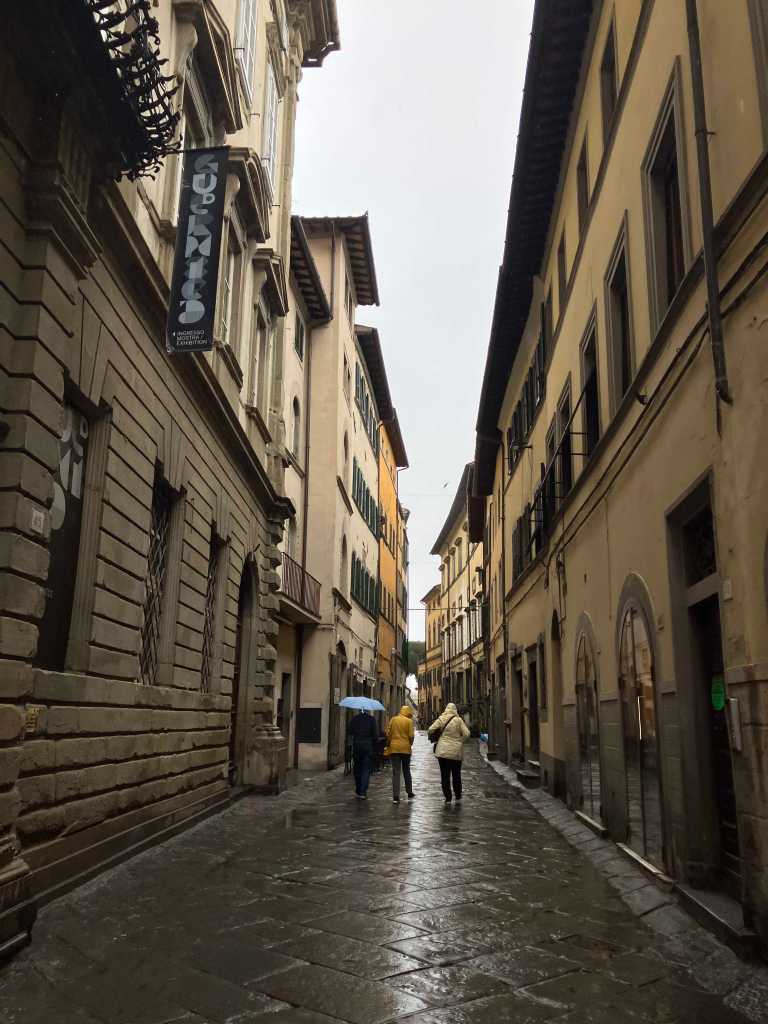
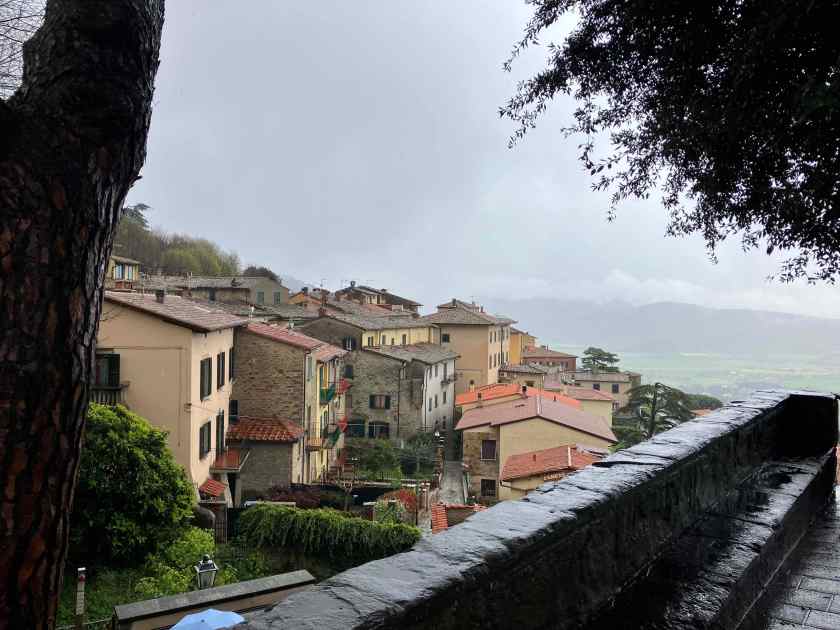
That day, at my wife’s earlier request, our friends had planned a visit to the nearby Tuscan town of Cortona. It was made widely known by Frances Mayes and her books, the first of which was Under the Tuscan Sun. It was a cloudy, rainy day but we headed out just the same. The drive to Cortona is a ride in the country through western Umbrian and southeastern Tuscan hills and forests. Our friends chose a route over a pass that led down through farmland shrouded in low hanging clouds and wisps of fog. The color of the scenery was richly saturated by the moisture with highlights and shadows deeper than they would have been in bright sunlight. The road twisted and turned, rose and fell until we ascended the final stretch to the hilltop center of Cortona.
Then, the search for parking began. I’ll leave it at that but after much ado and a bit of drama we did find a spot. We walked up into town layered in sweaters and raincoats under umbrellas.
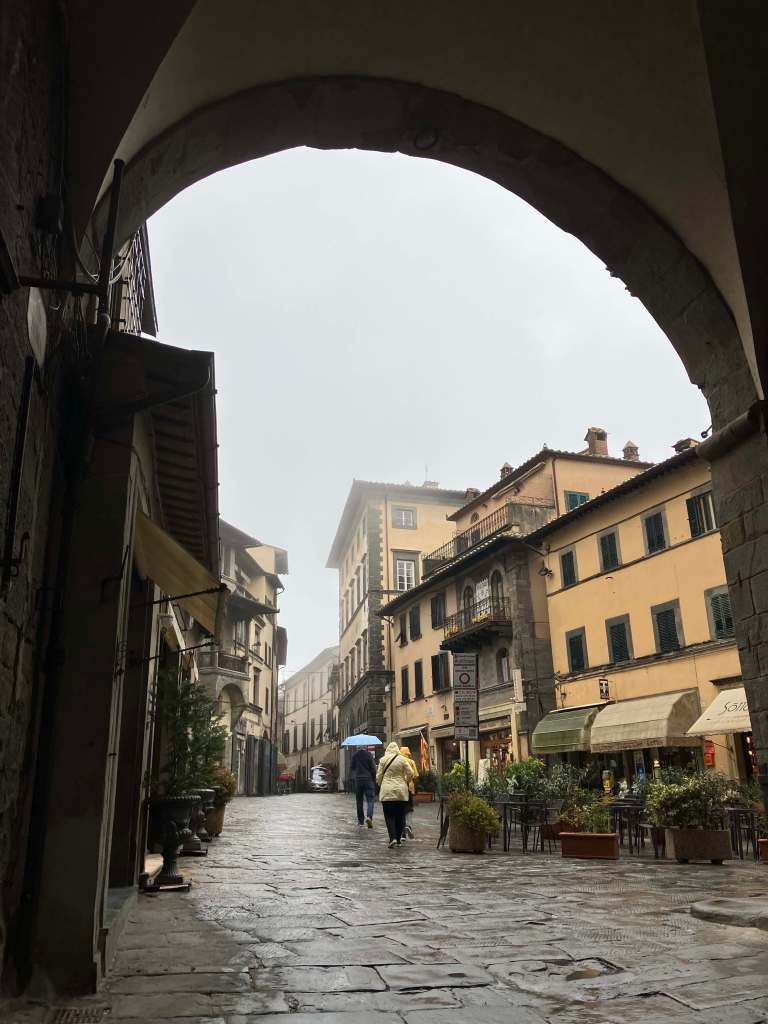
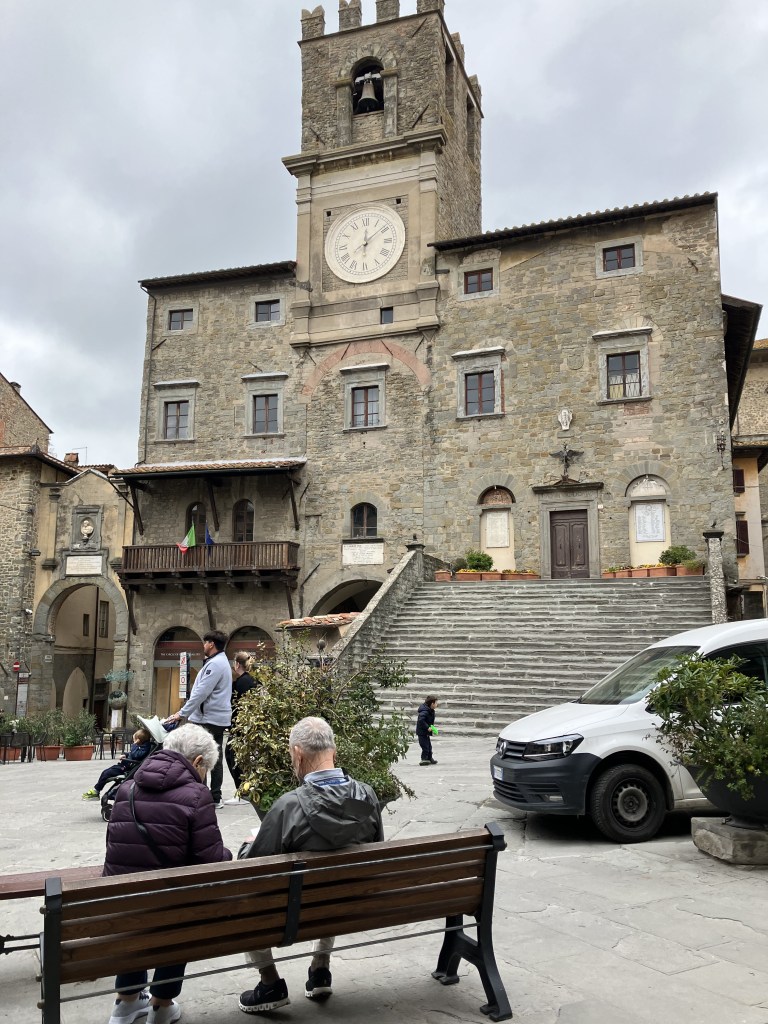
We wandered around the historic town center, il Centro Storico. My wife shopped for a handmade leather purse, then we stopped for coffee. We had lunch, pranzo, reservations at La Bocaccia da Romano, a Michelin One Star (Rosette) restaurant on a side street off the main piazza.
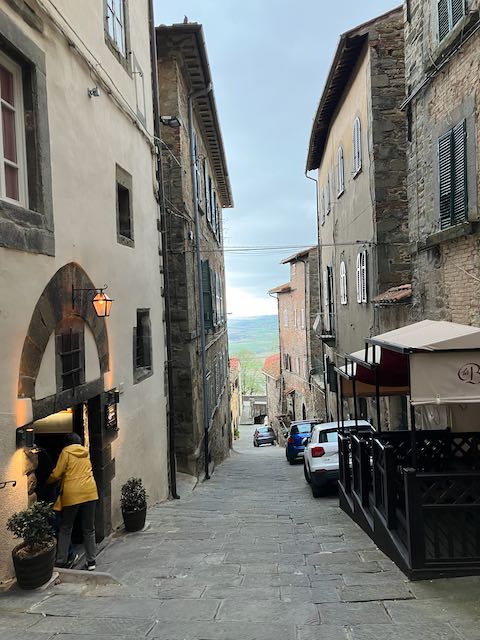
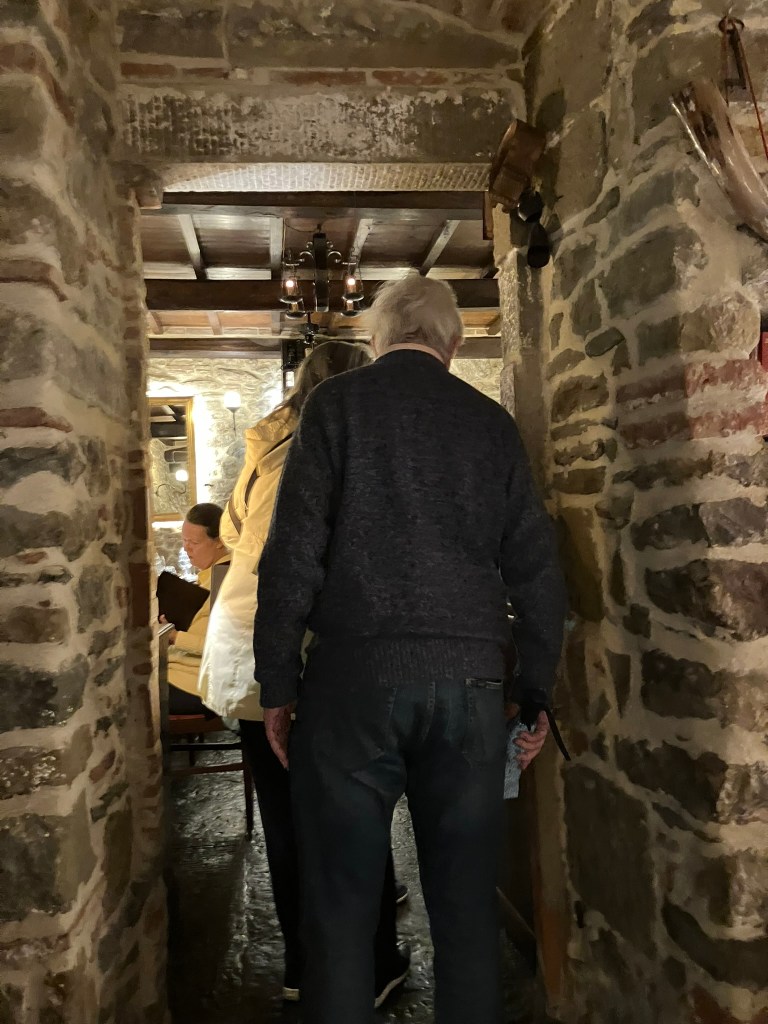
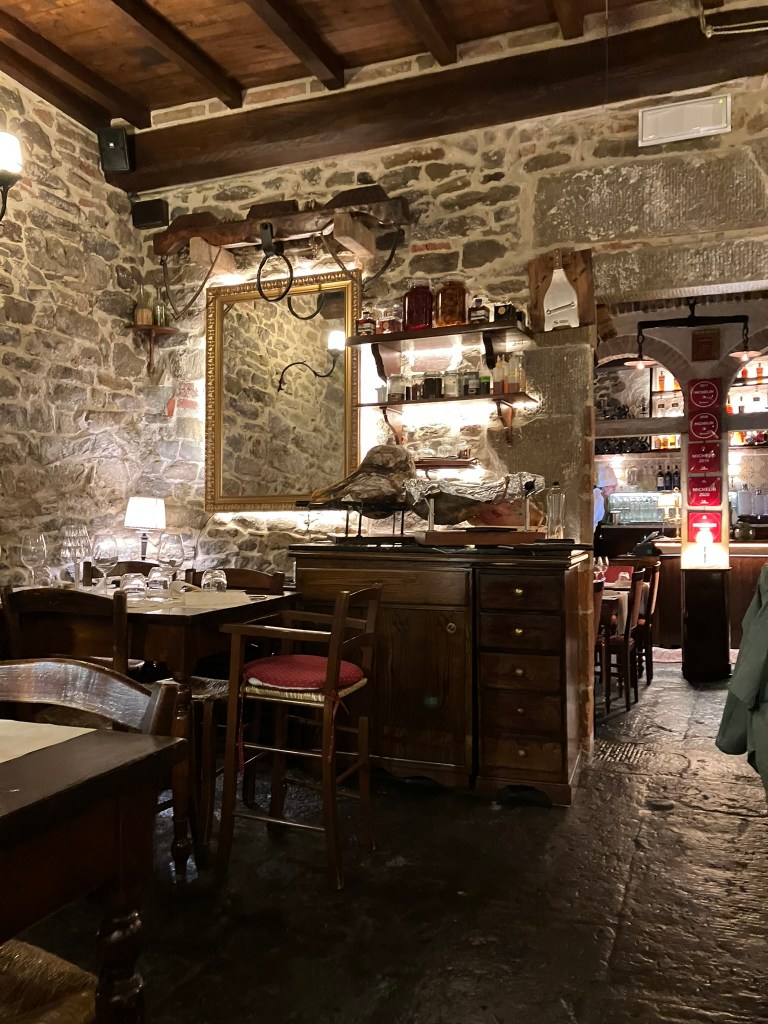
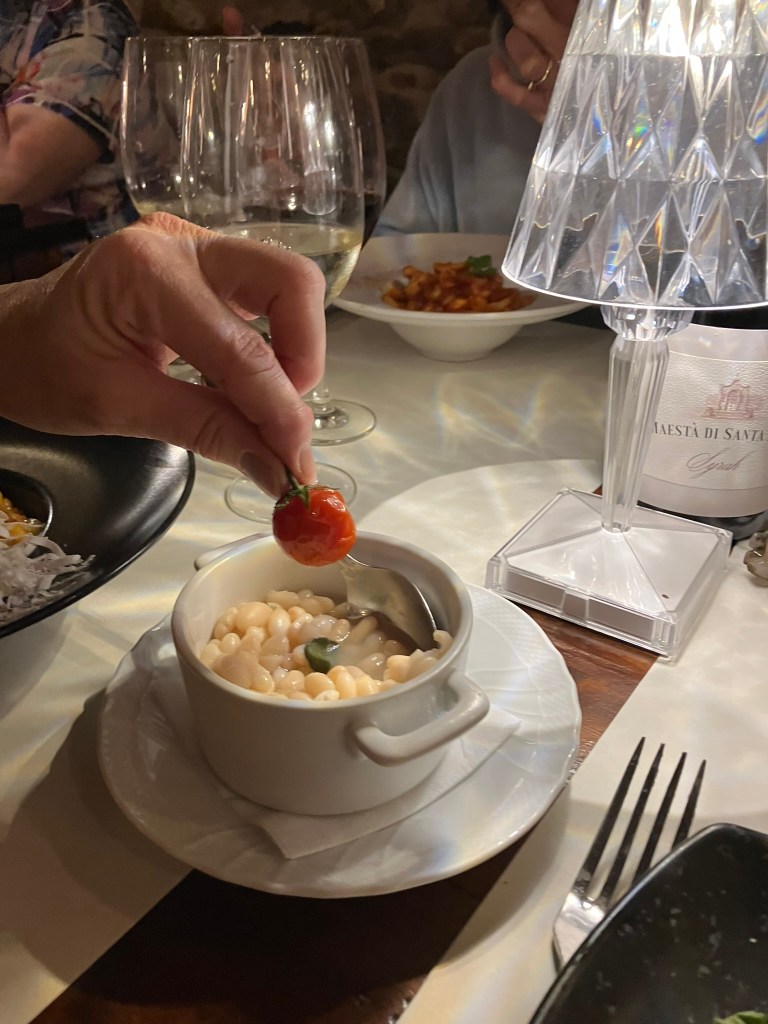
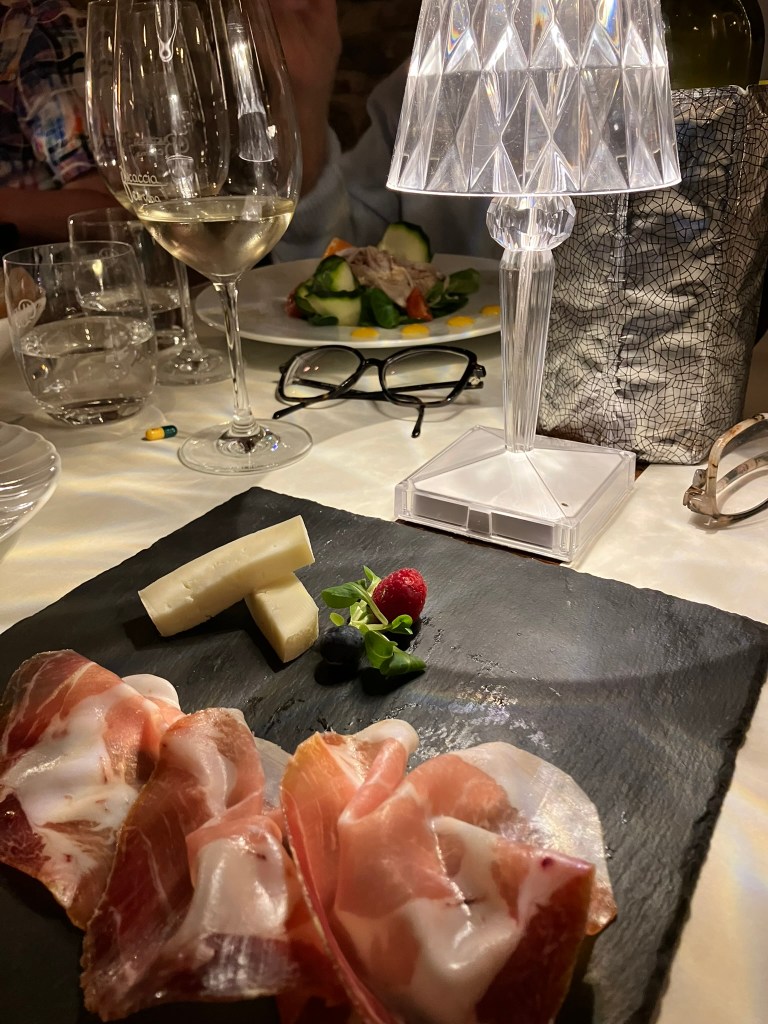
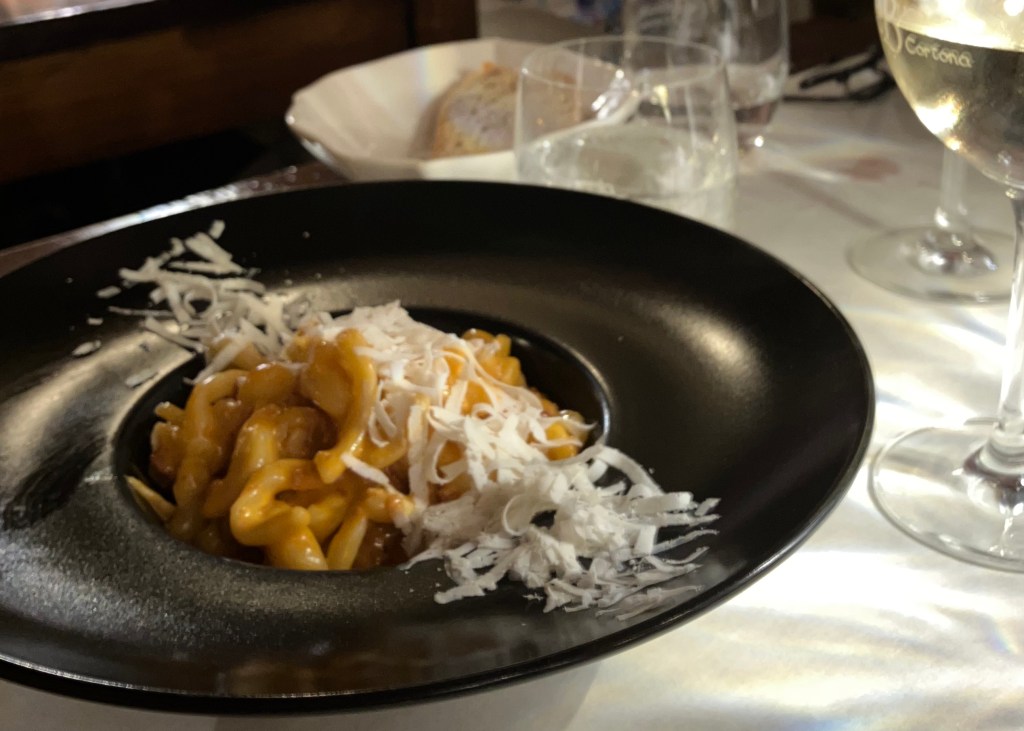
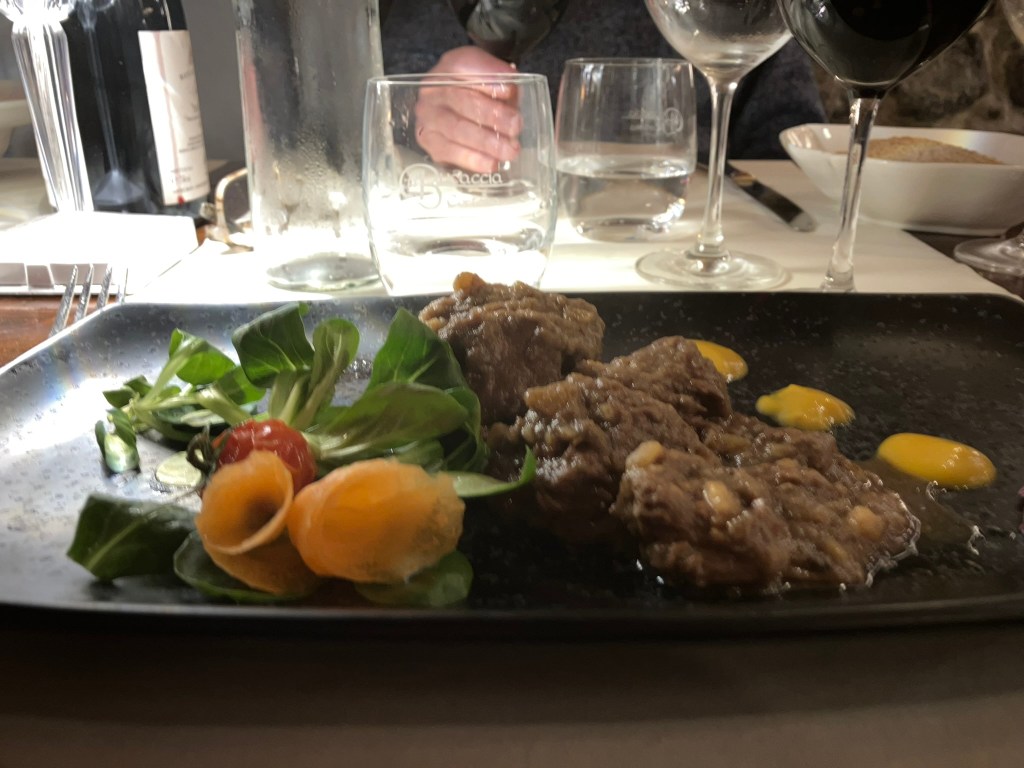
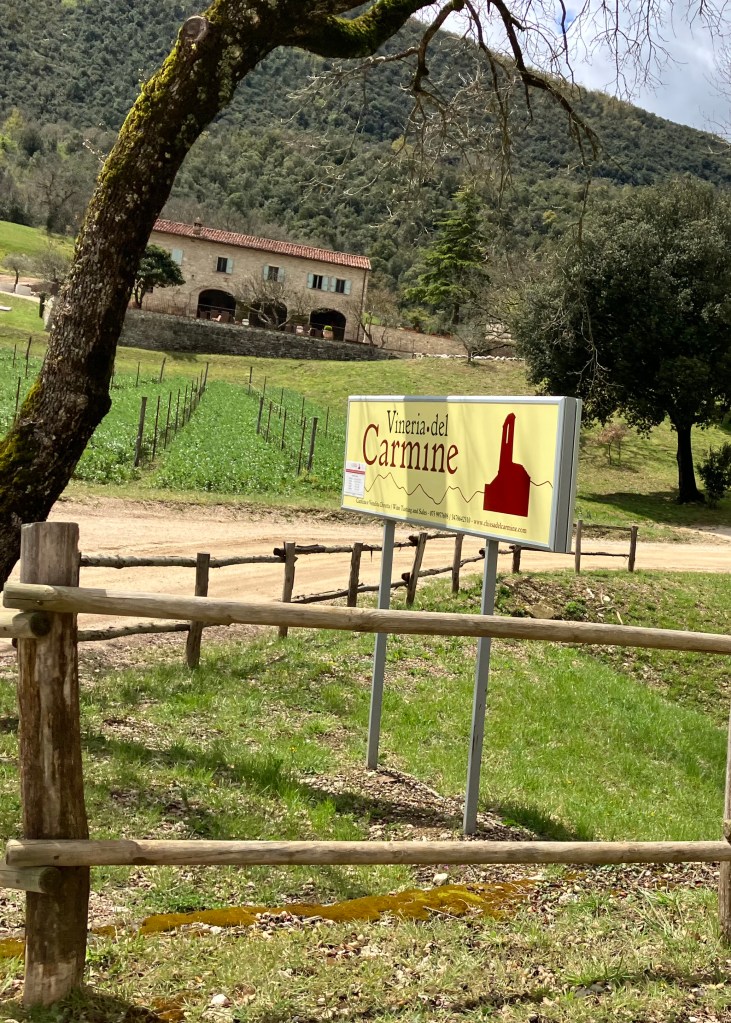
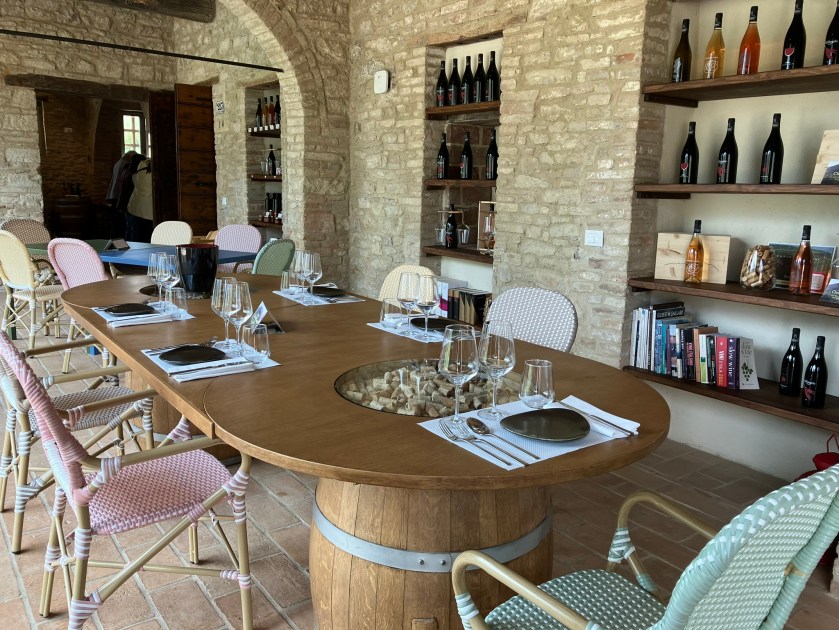
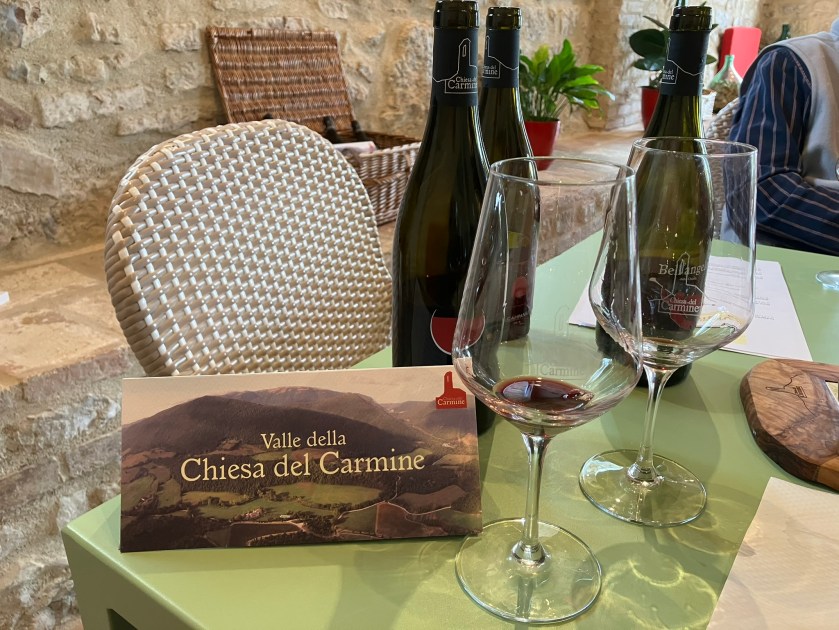
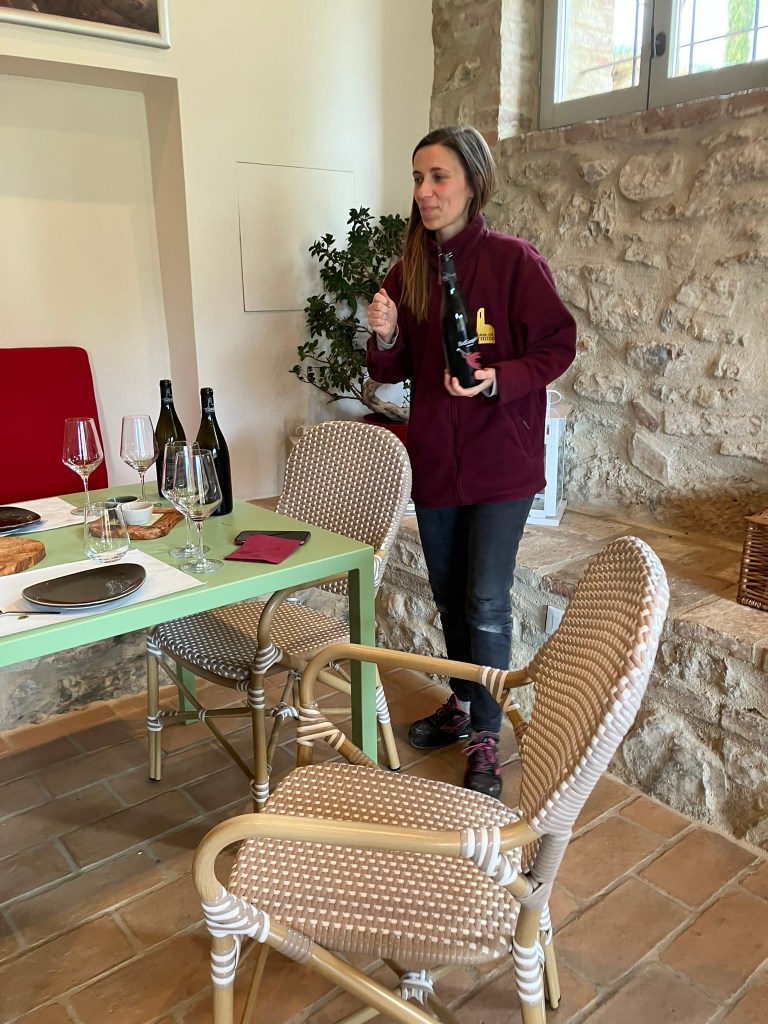
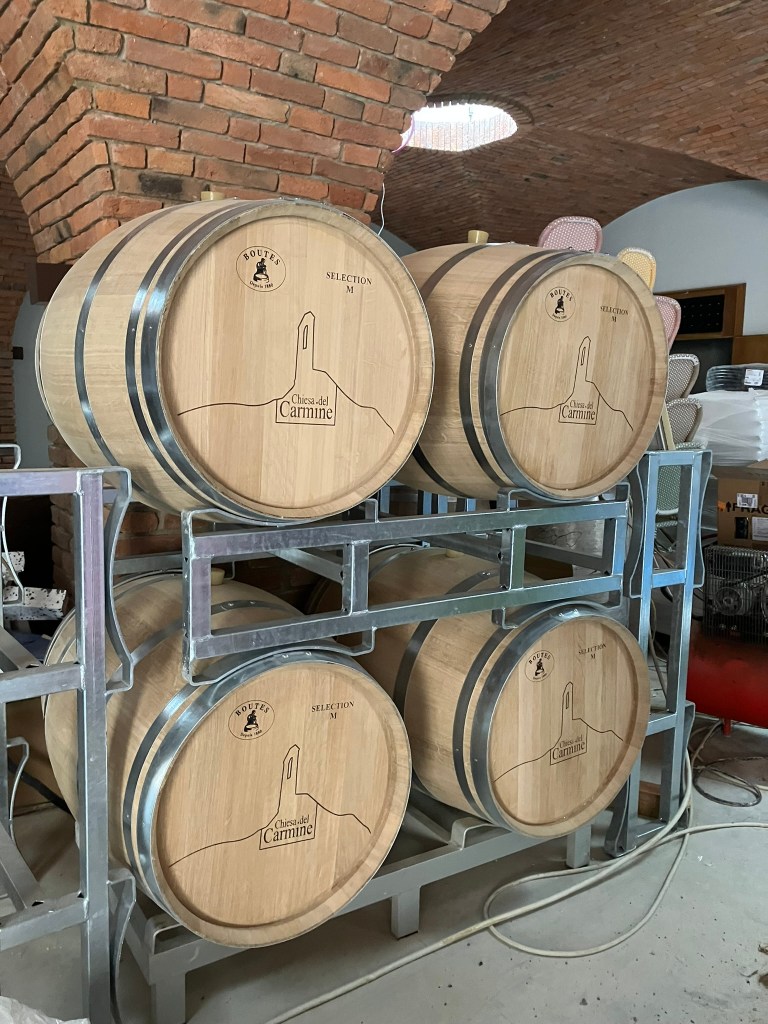
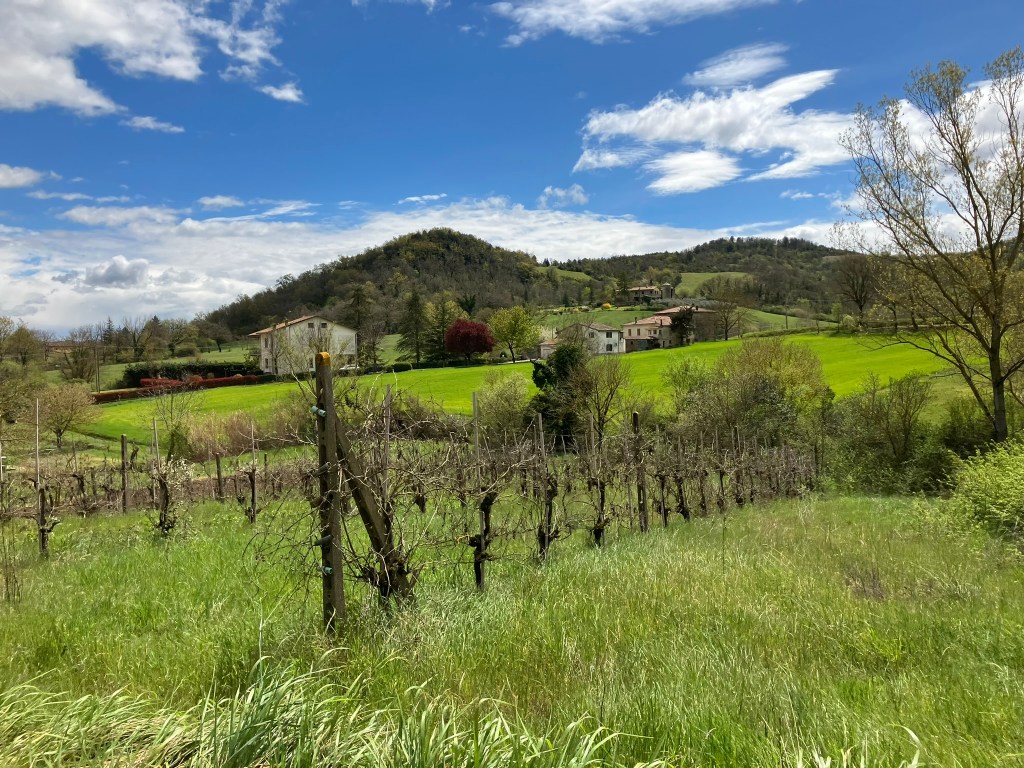
The following day, the last with our friends in Umbertide before departing for southern Italy, started with a visit to the nearby Vineria del Carmine for wine tasting and purchases. It is named after the valley and its old church and convent. Following the wine tasting and scenic drive up through the valley, we stopped for lunch back in town at Enoteca Grace, highly recommended by our friends.
Onto Puglia
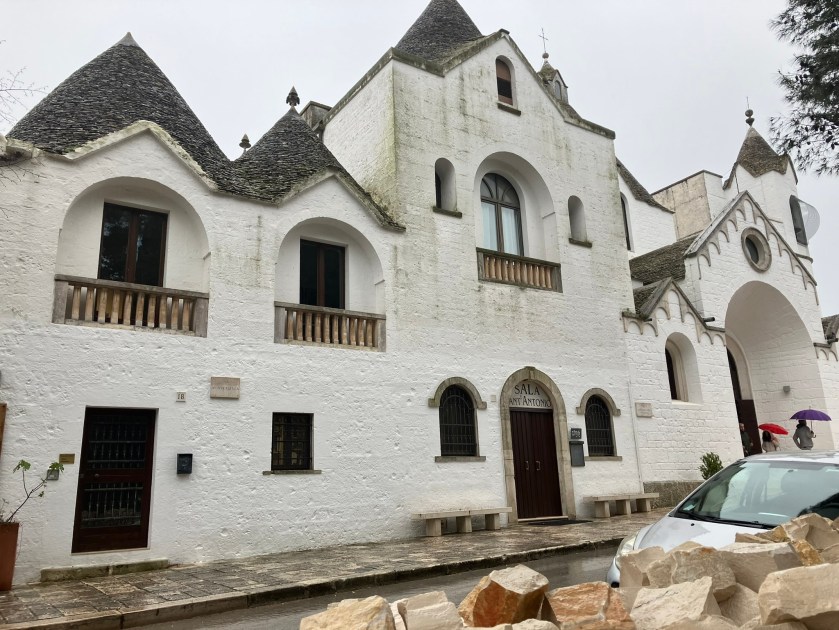
The following day we left Umbertide and Umbria for Alberobello in Puglia. We took the Autostrade south and east of Perugia over the midsection of the Appennine mountains to the Adriatic Coast. Alberobello is a UNESCO World Heritage Site recognized for its unique Trulli homes and buildings.
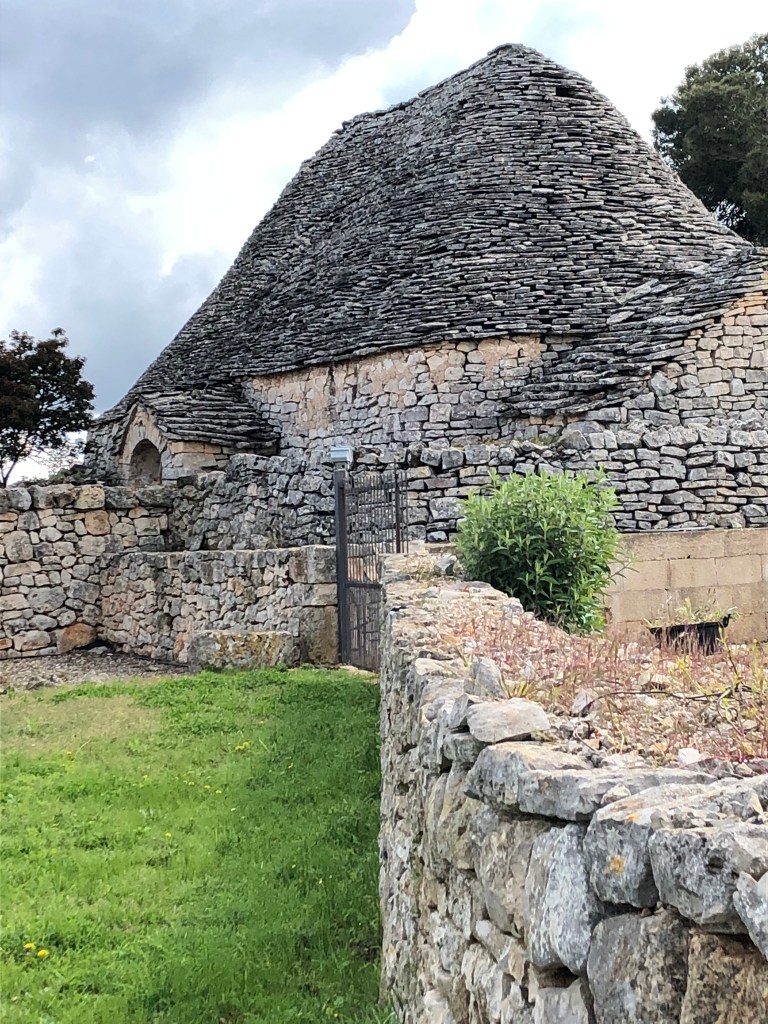

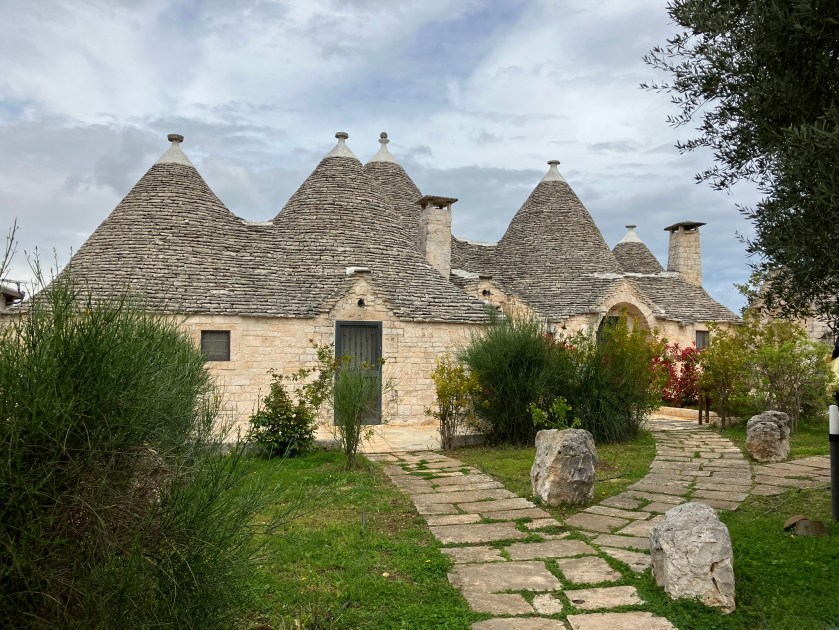
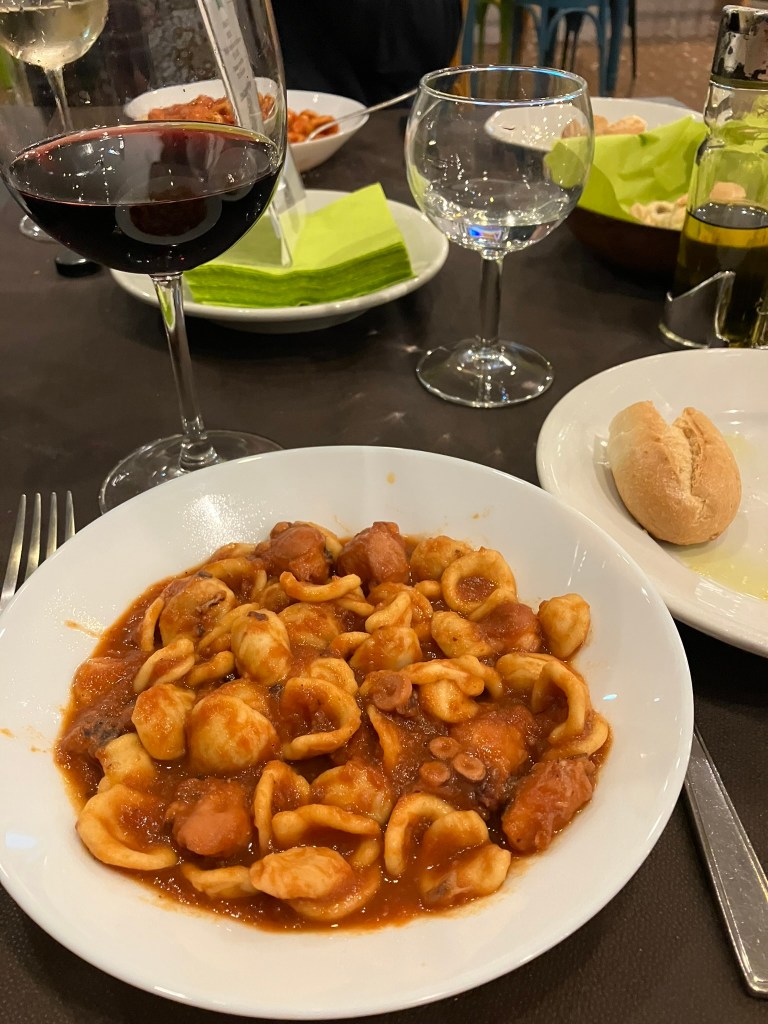
Our host, the owner’s son, recommended a local restaurant where we had dinner that evening and strolled a bit around town. It was chilly and drizzly so we did not linger.

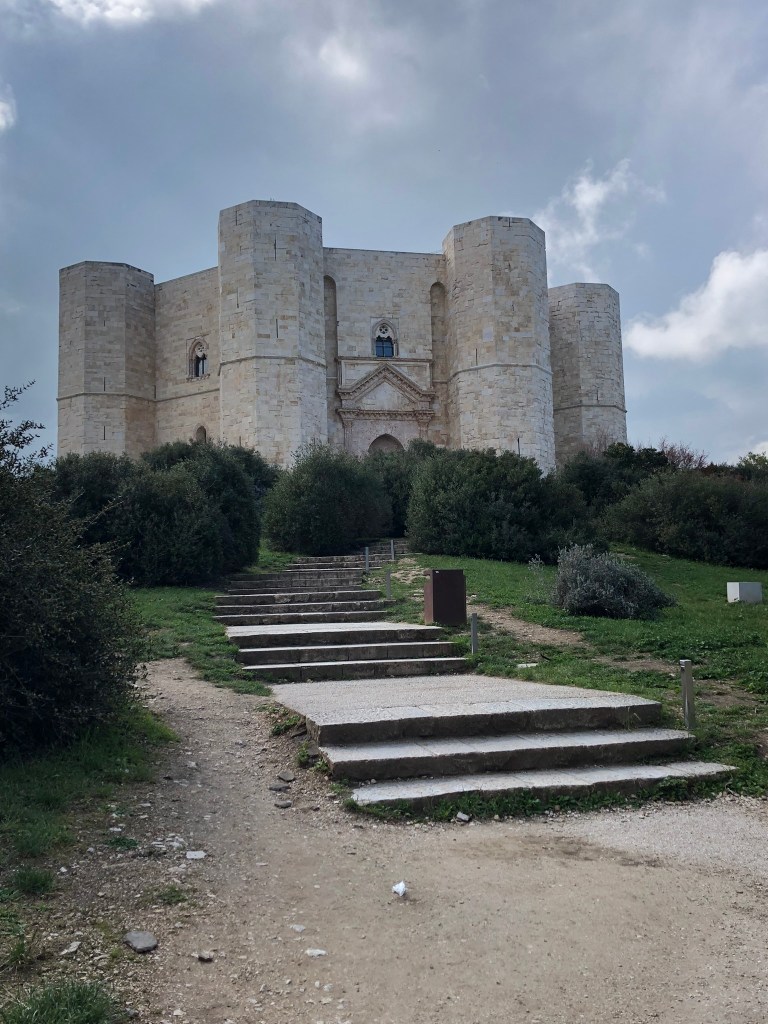
The first UNESCO World Heritage site we visited was the medieval Castel del Monte, a unique octagonal castle built in the 13th century by Frederick II, Holy Roman Emperor, Hohenstaufen of Swabia, and King of Sicily. Visible from afar, it is situated atop a hill in a forested park, accessible via road and walkway from the parking lot and visitor center.
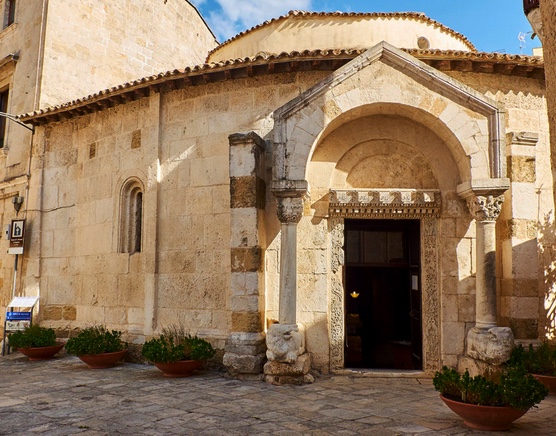
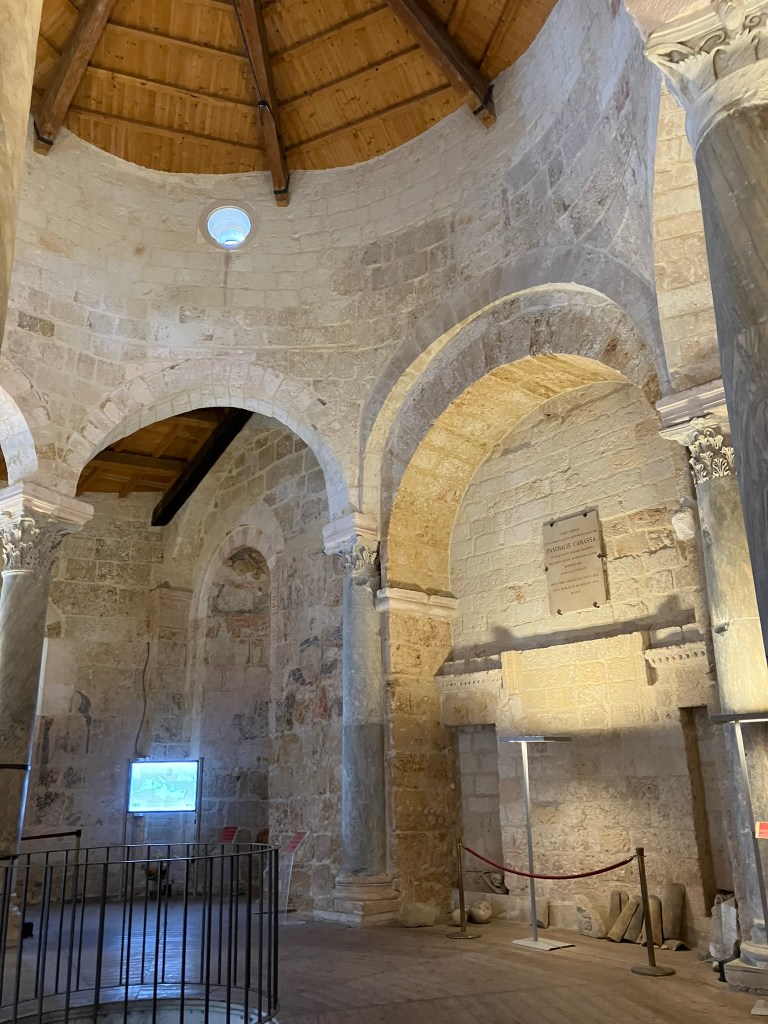
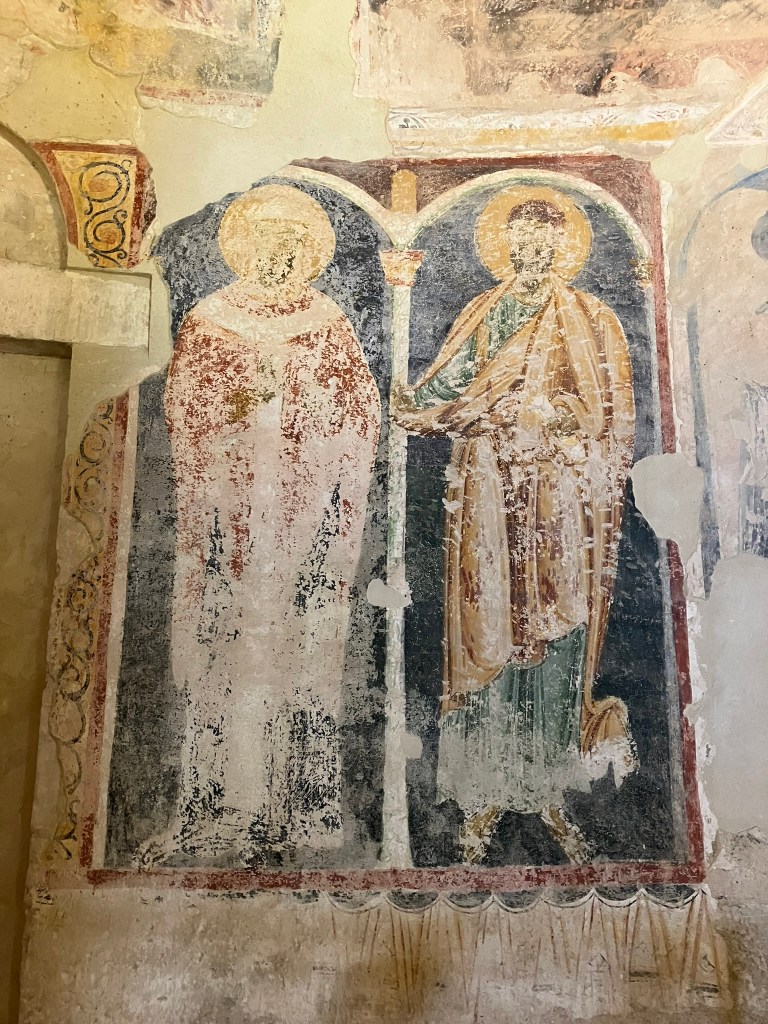
That afternoon, we went onto the seaside town of Brindisi. Among its most important historical, archaeological, and religious sites is right out of the Middle Ages, the ancient Tempio San Giovanni al Sepolcro. It was built by the Canons Regular of the Holy Sepulchre about the year 1128. During subsequent years, ownership passed through various religious orders until it was acquired by the municipality of Brindisi in 1868. At the time, it was in poor condition. Between 1881 and 1883, restoration was undertaken and it became a Civic Museum.
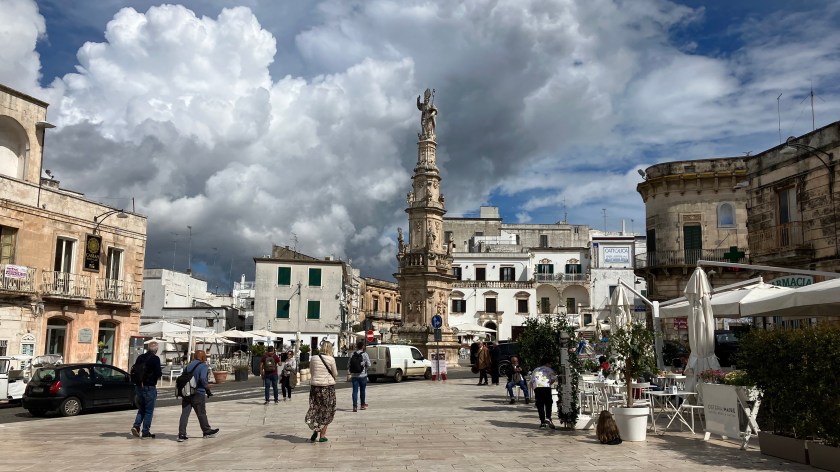
On the way back to Alberobello from Brindisi, we stopped for lunch in Ostuni.
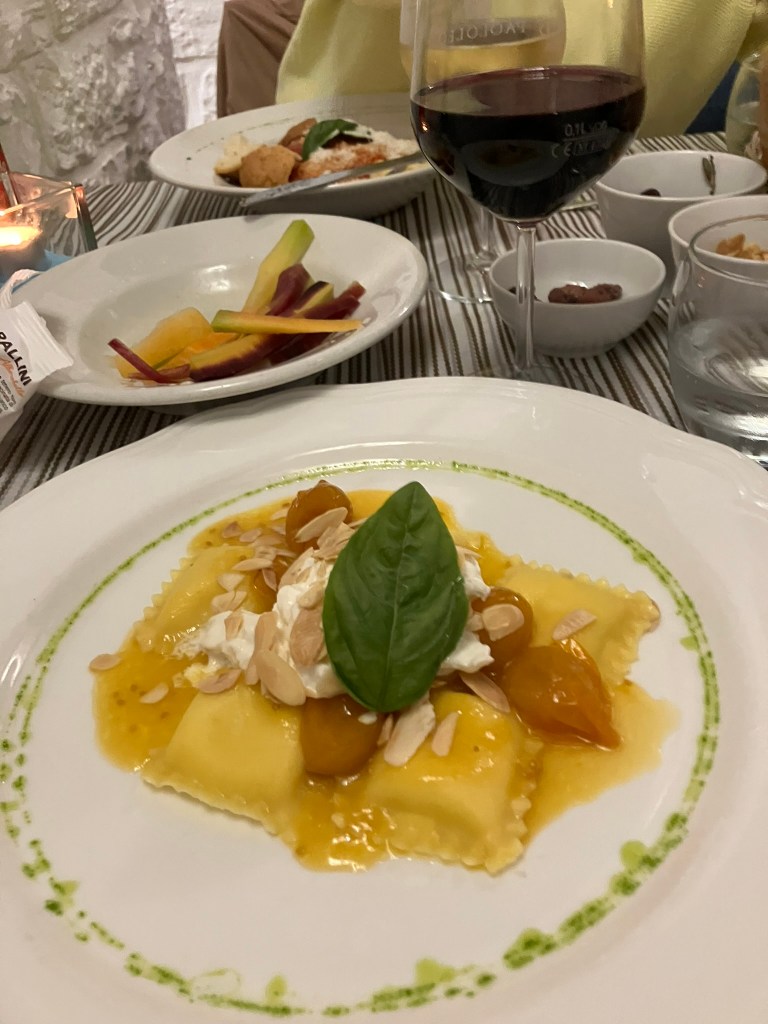
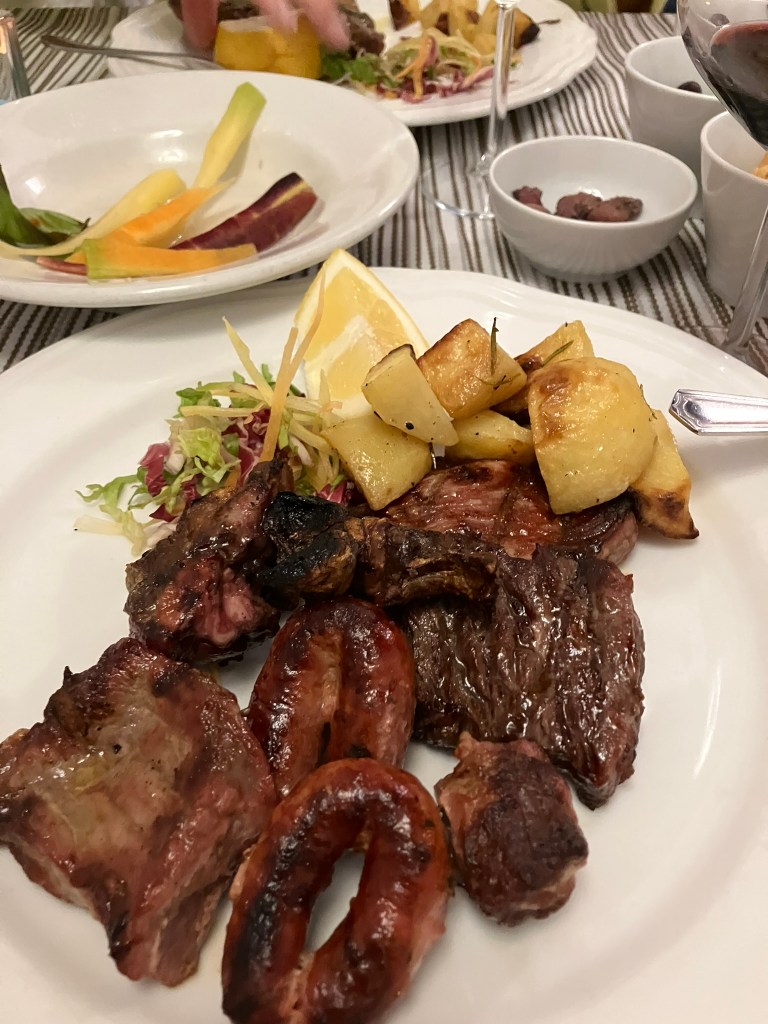
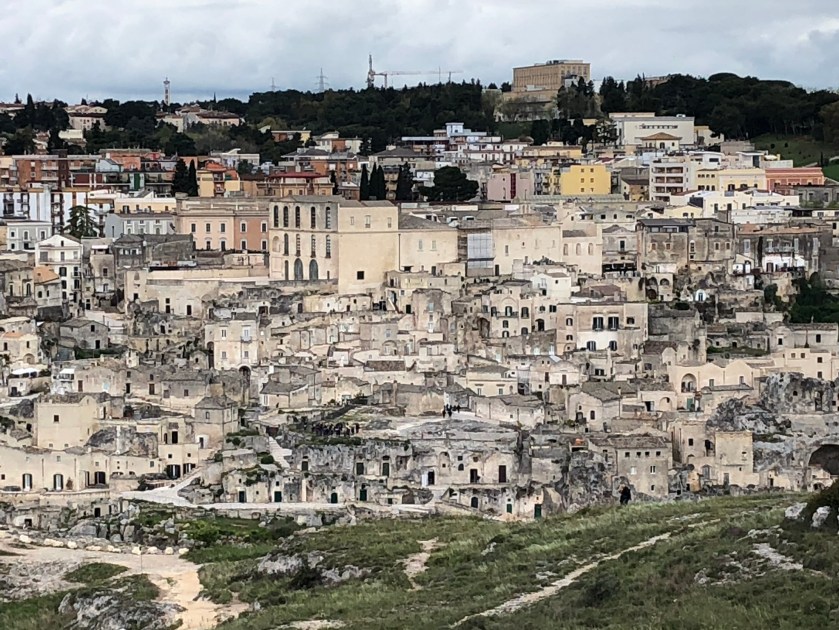
The next day, we drove to another nearby UNESCO World Heritage site, the hilltop town of Matera, renown for its stone cave dwellings.
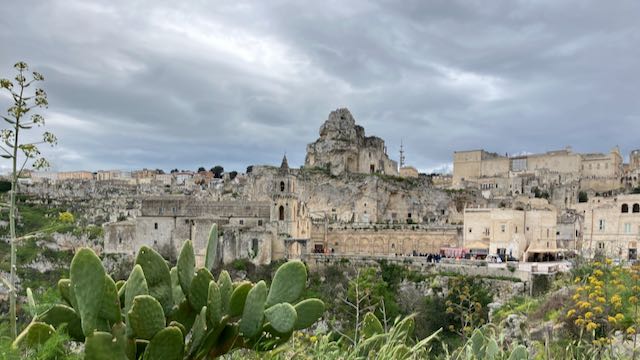
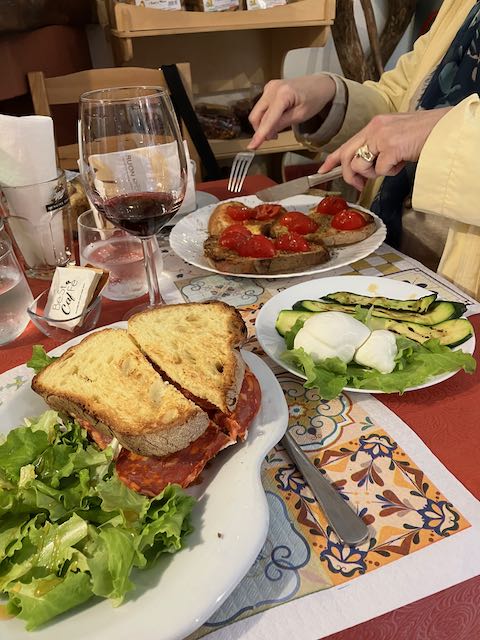
The Sassi, a complex of cave dwellings carved into the mountainside now houses museums, boutique hotels, residences, cafes, and restaurants. After a walk along the wall on the southern edge of the Sassi, we found a small cafe restaurant located in one of the cave dwellings. Best Café was a small, intimate coffee and sandwich shop with a cozy atmosphere. It was a welcome respite from the blustery weather.
Baroque Lecce
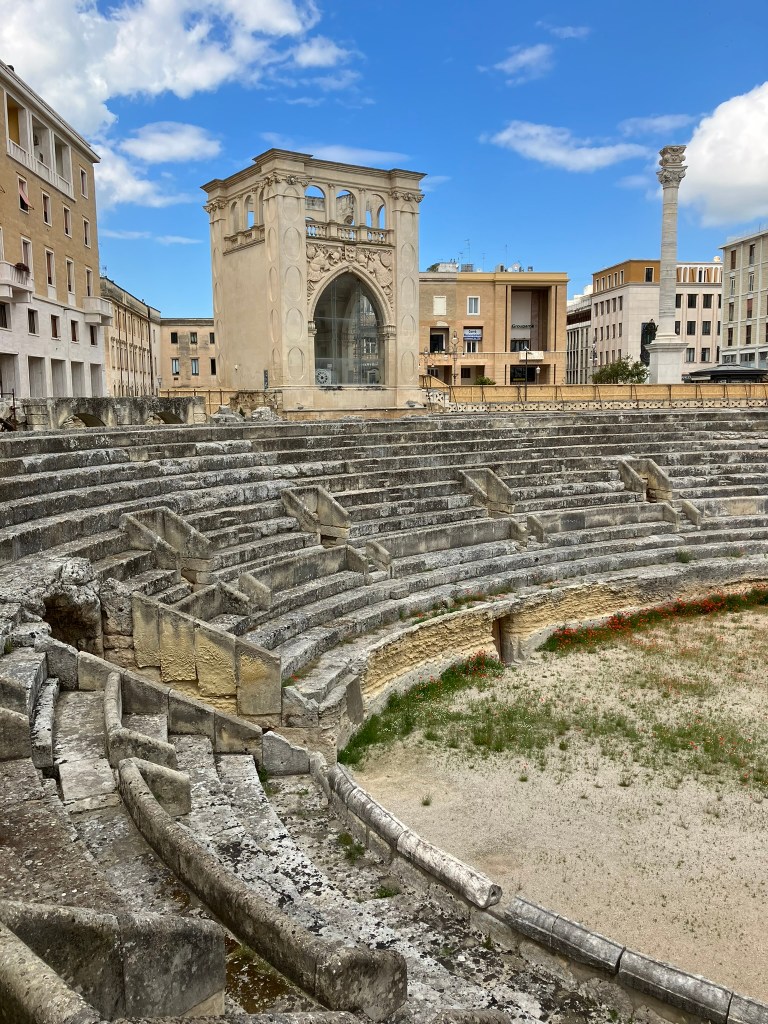
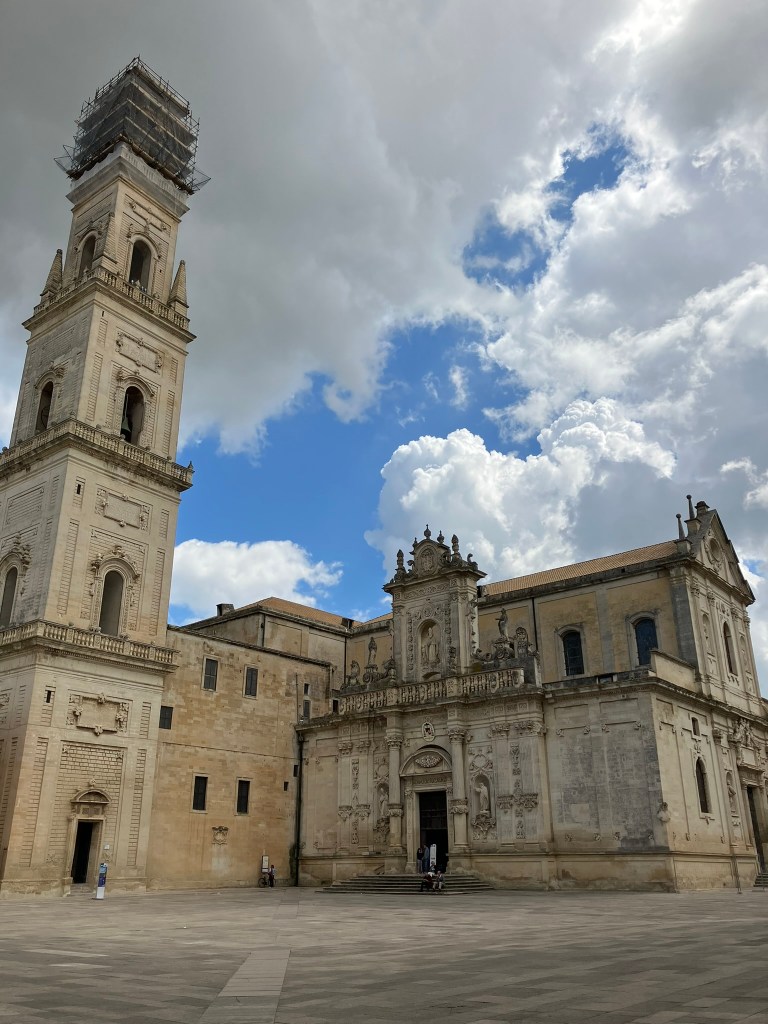
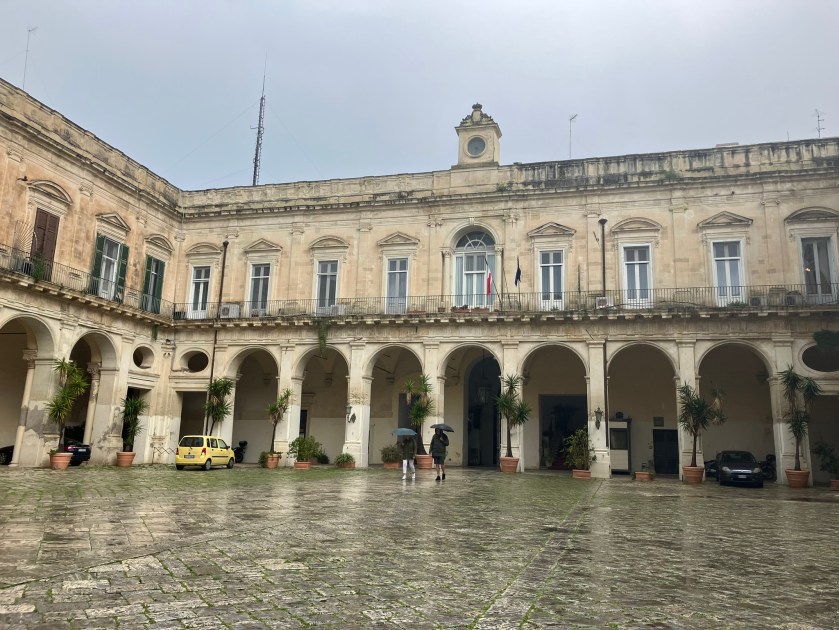
While a long drive from Alberobello, the Baroque city of Lecce rivals the Baroque cities of southeastern Sicily.
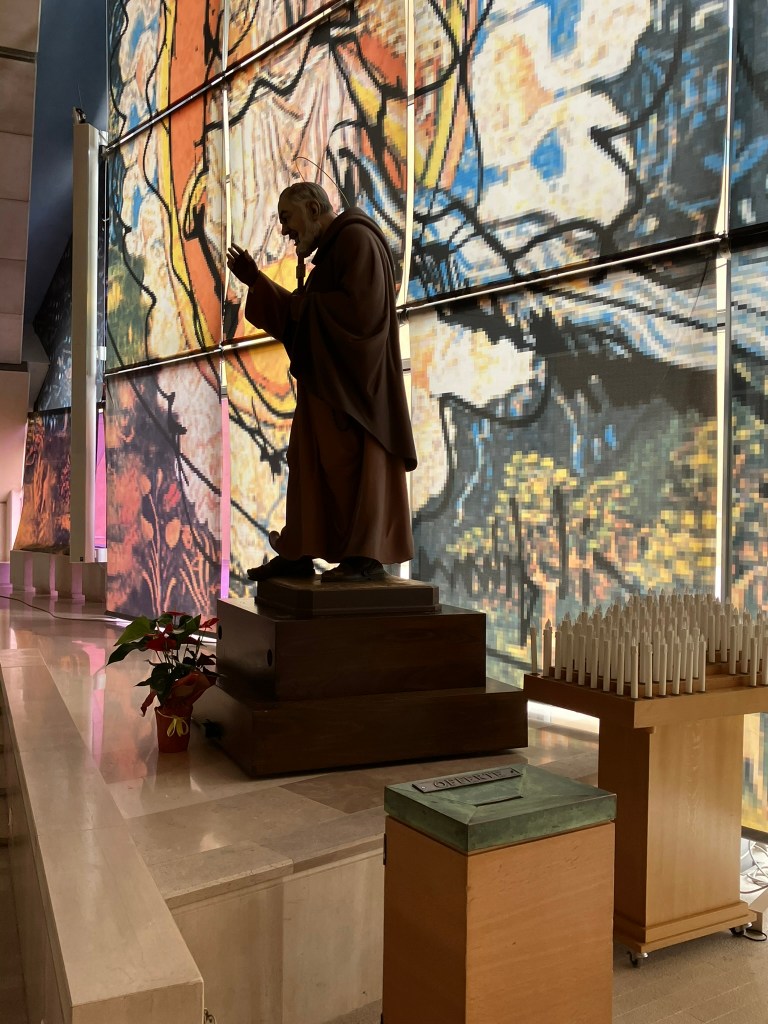
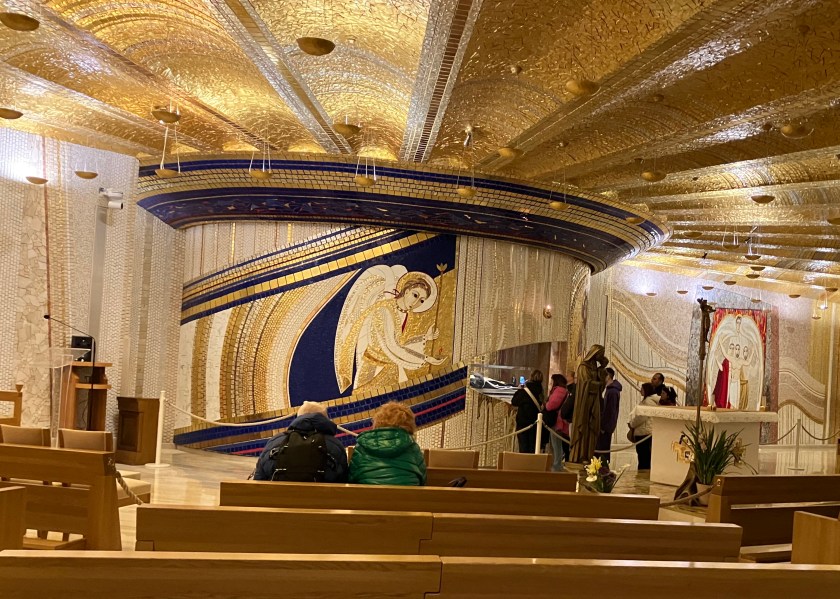
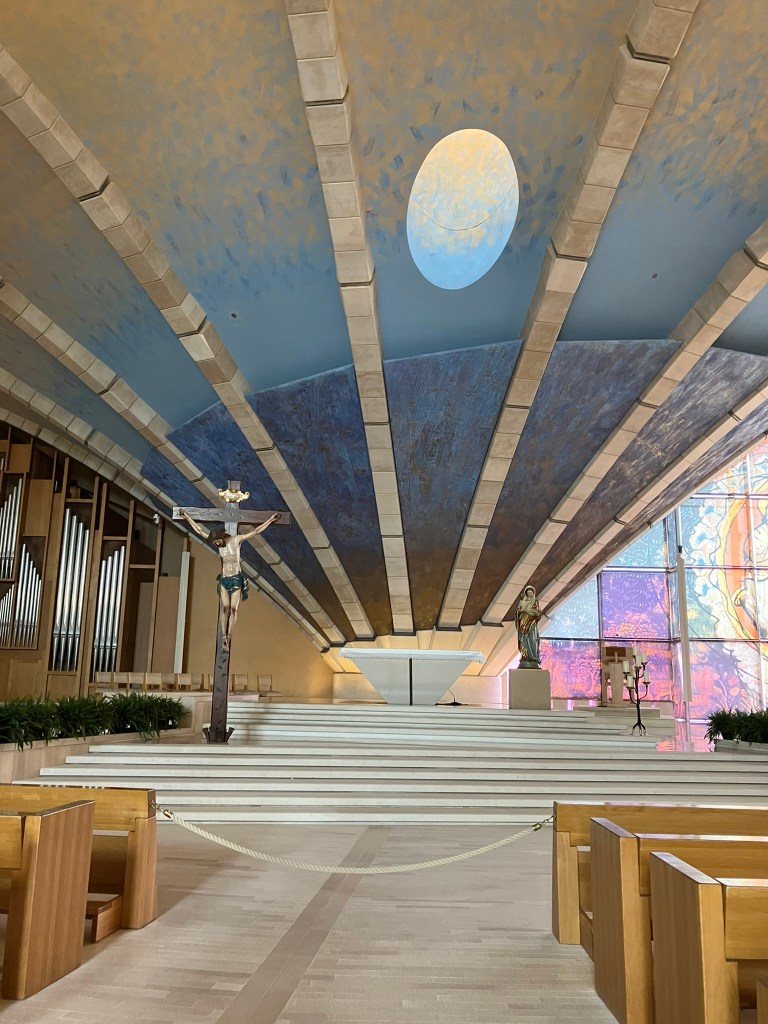
On our last full day in the region, we visited the Gargano Penninsula, home of the Parco Nazionale del Gargano and the hillside town of San Giovanni Rotondo. It is the site of the Santuario di San Pio da Pietrelcina—the church, sanctuary, hospital, and final resting place of Padre Pio. He is a Catholic Saint and bearer of Christ’s stigmata.
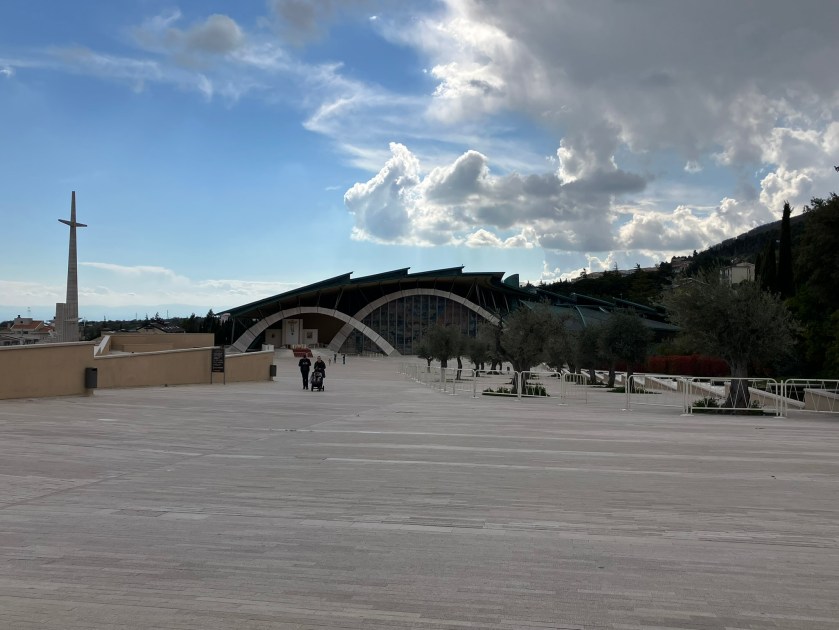
From Gargano, we drove south along the Adriatic Coast passing Manfredonia, through Barleta, to spend the night in Trani.
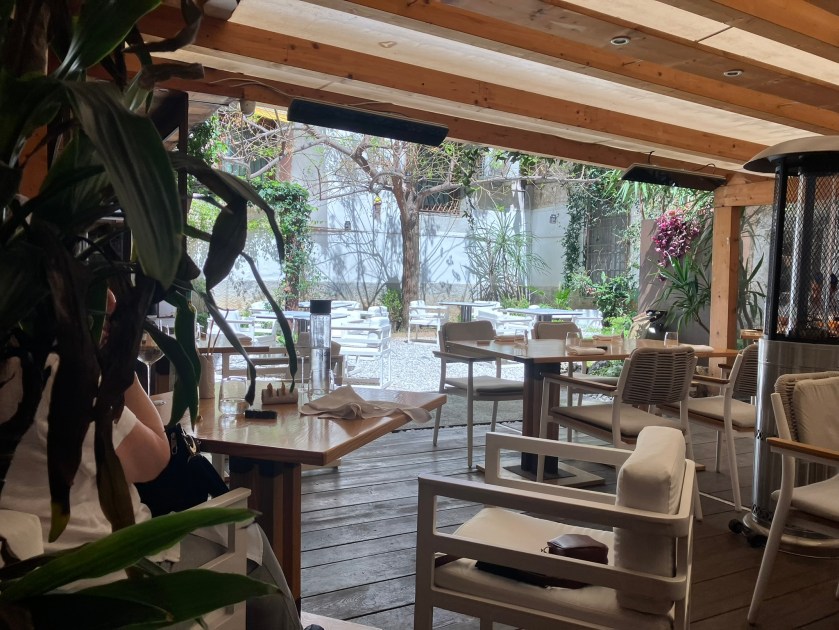
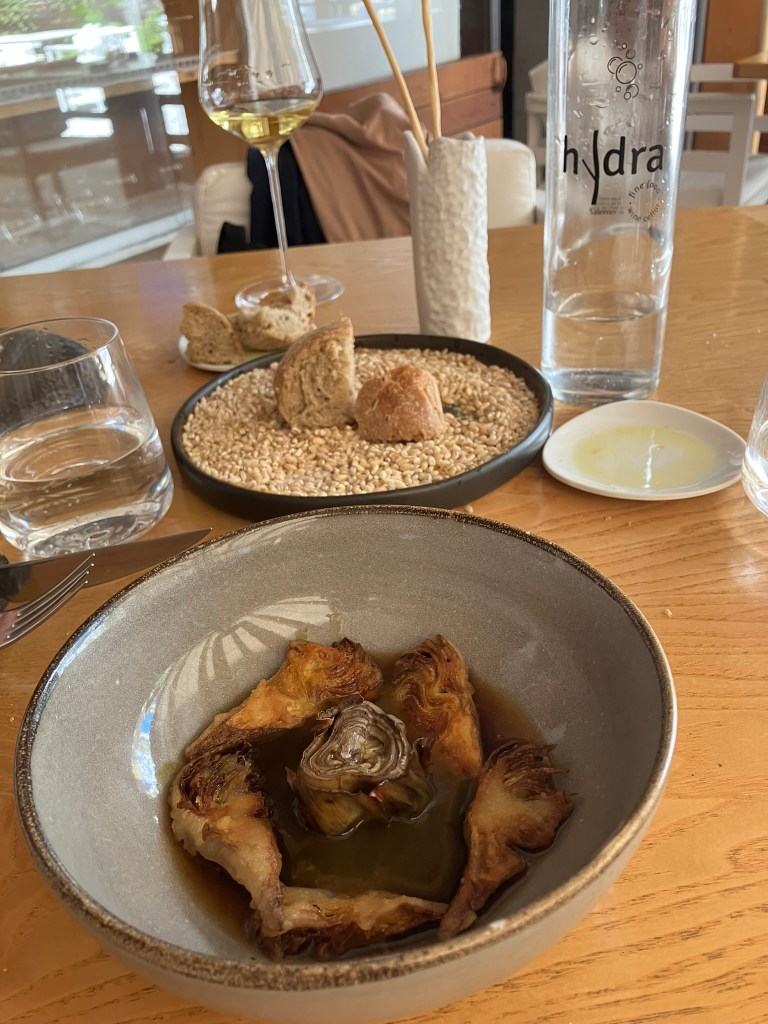
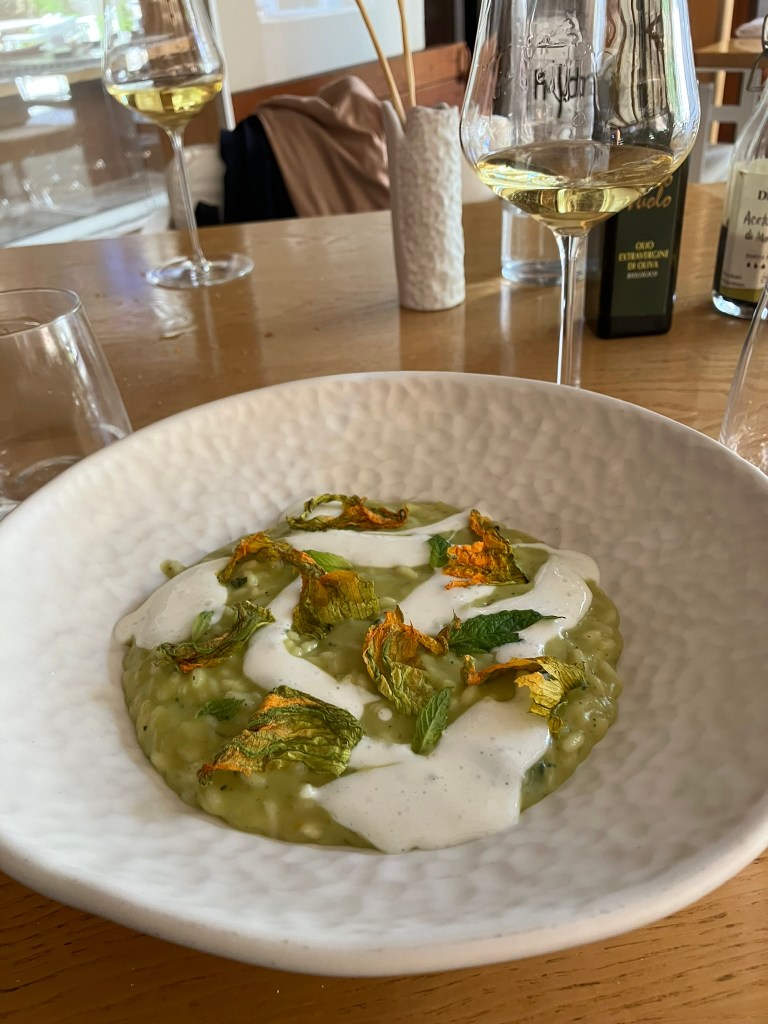
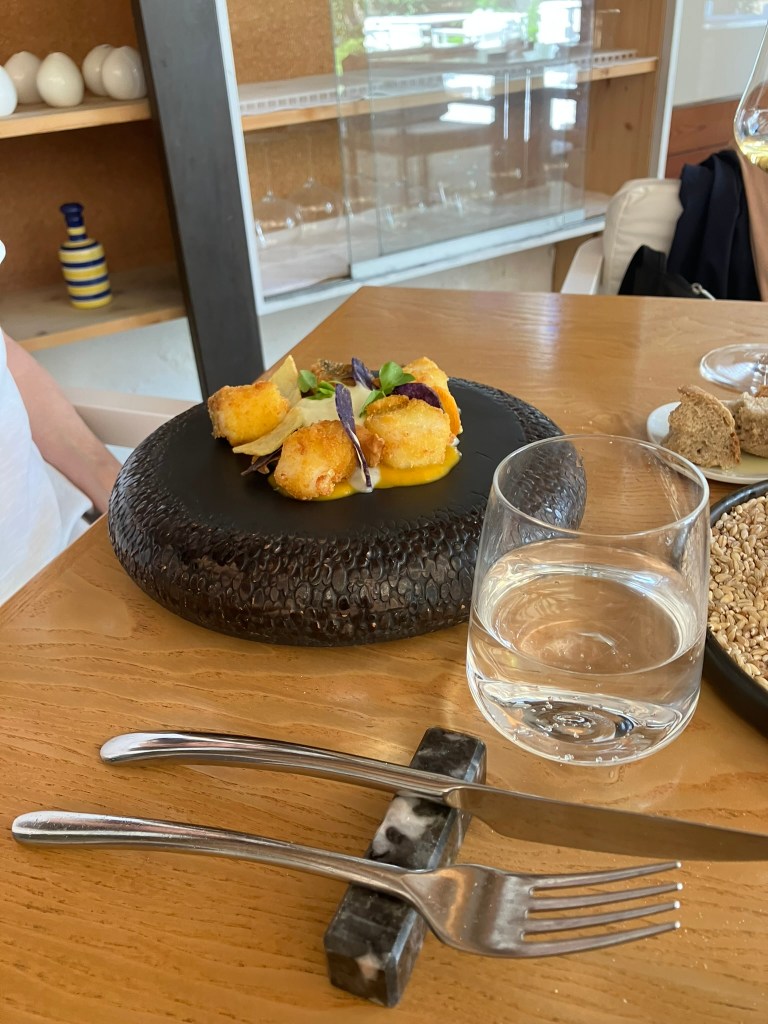
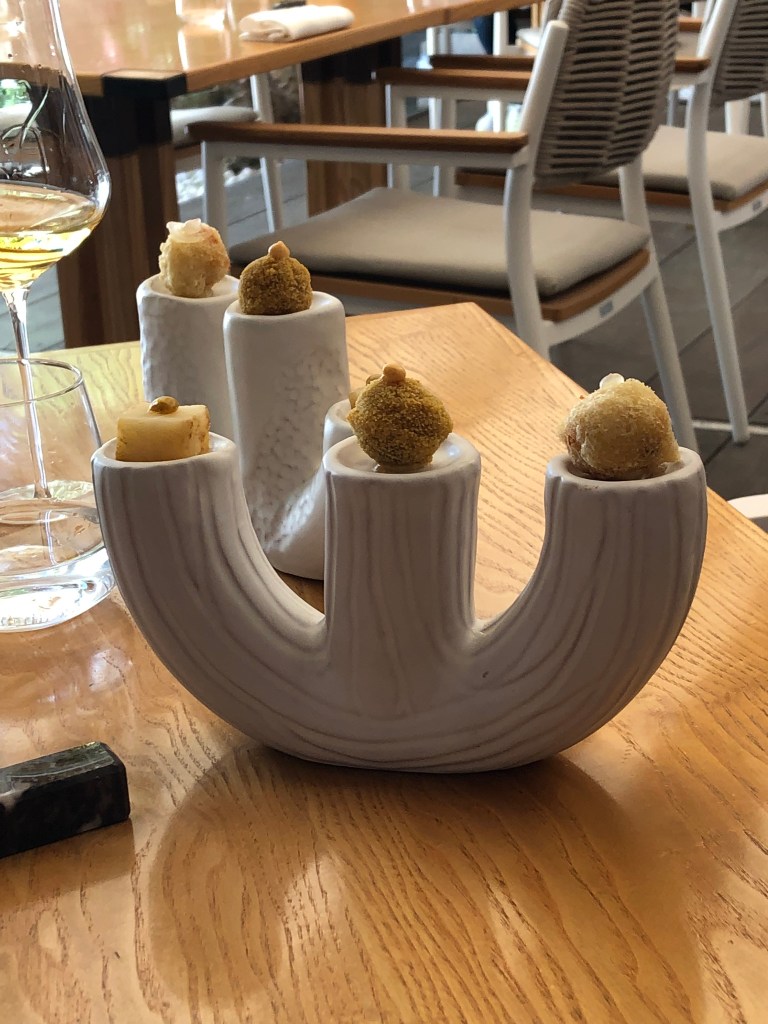
On the way, driving back over the Apennines on Autostrada E842 toward Rome and Da Vinci International Airport, we found a Michelin One Star restaurant on the Amalfi Coast in Salerno using the Via Michelin mobile app. Ristorante Hydra serves an innovative take on Italian cuisine in a cozy but modern open-air inner courtyard.
Onto Greece
My wife had long wanted to visit Ephesus, Turkey. It is where the Christian Apostle Saint Paul traveled after leaving Jerusalem to live, preach, and write in an effort to spread Christianity. He established a church to support his preaching to Gentiles (non-Jewish people). She found a cruise with Windstar Cruiselines departing from the port of Piraeus in Athens, Greece. We sailed along the Corinthian coast, through the southern Greek islands to the southwestern Turkish coast. The itinerary included stops at Nafplio, Santorini, Chania (Crete), Mikonos, and onto Kusadasi, Turkey. From there, tours to Ephesus are staged.
Departing from the Leonardo Da Vinci Aeroporto di Roma-Fiumicino, we arrived at the Athens Eleftherios Venizelos International Airport. We took a taxi to the hotel Windstar Cruiselines had arranged for passengers to stay prior to embarkation, the Saint George Lycabettus Lifestyle Hotel. This was our second time in Athens. The ride through the city was a welcome reminder of all that the the capital of Greece has to offer. It’s a big, crowded, busy city with many sights, the epitome of classic architecture, cultural events, and venues. Our driver, a grey-haired gentleman perhaps in his early sixties, was warm and kind, pointing out sites of cultural and historical interest along the way.
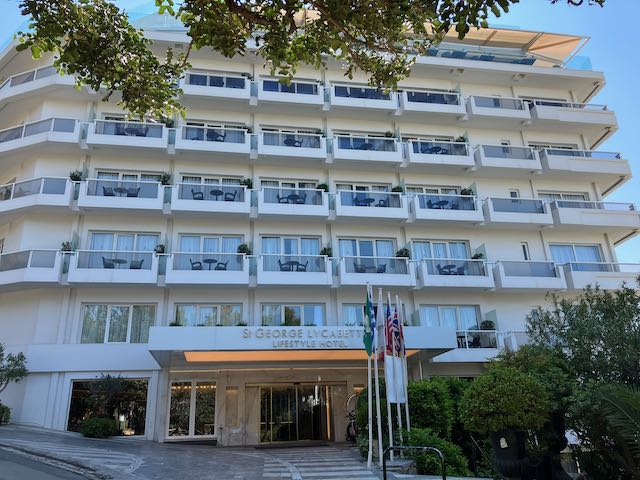
The hotel sits on Lycabettus Hill overlooking downtown Athens with the Acropolis in the distance.
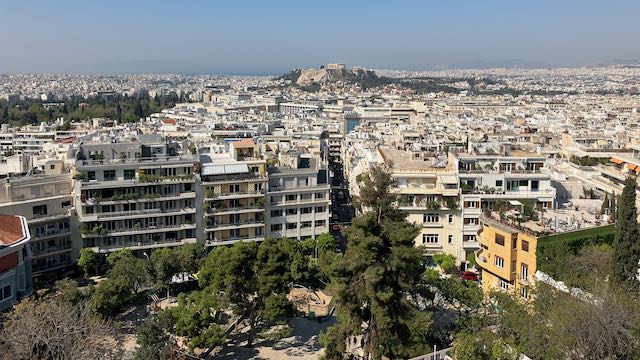
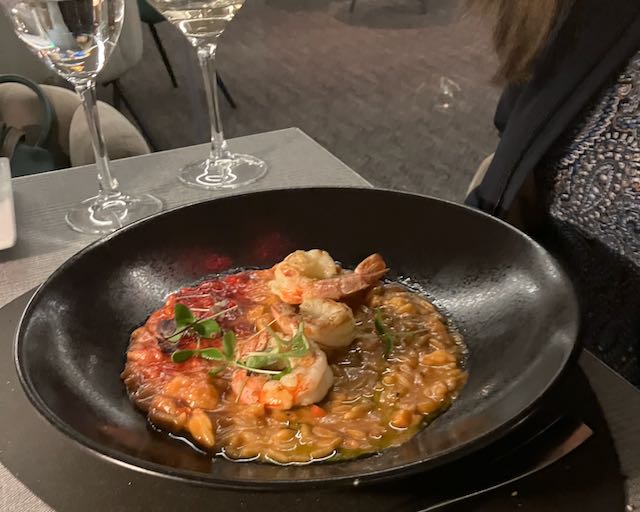
We rested most of that afternoon to better acclimate to the nine-hour time difference. We had dinner at the hotel’s upper-floor La Suite Lounge Restaurant. The view over the city to the Acropolis is spectacular. The food and wine list are good, too. We started with a white Greek wine recommended by the sommelier and a couple of mezzes.
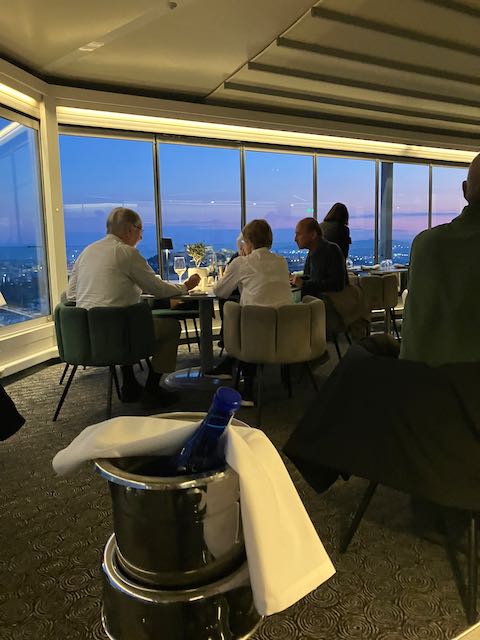
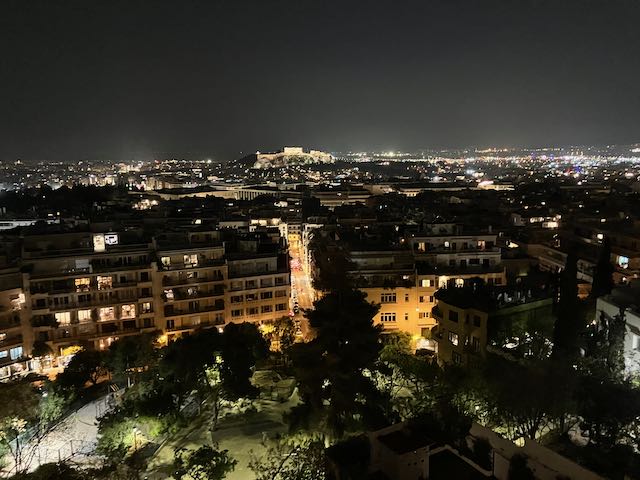
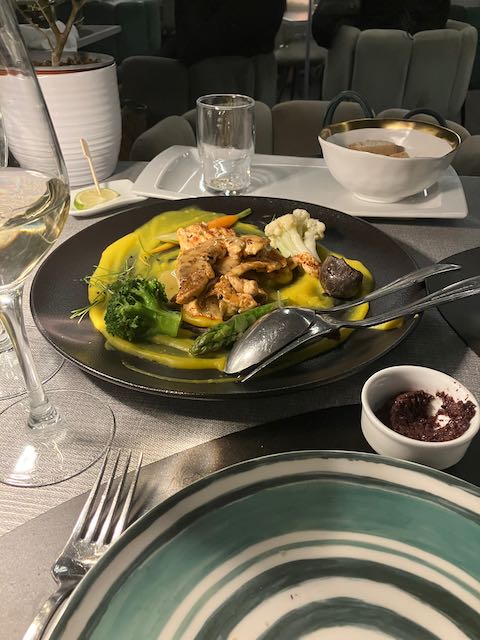
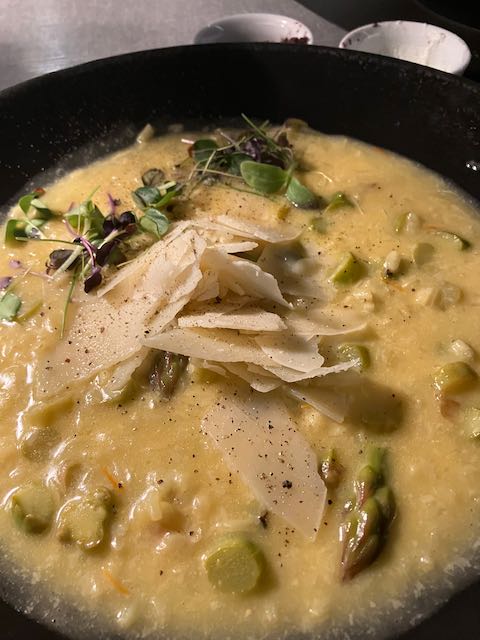
We ordered entrée-like small plates, mezzes, of chicken, fish, and seafood. You can’t go wrong with Greek cuisine. All the meals we had in Greece were well-made with apparent care and natural ingredients. We complemented the mezzes with a red Greek wine, again, recommended by the sommelier.
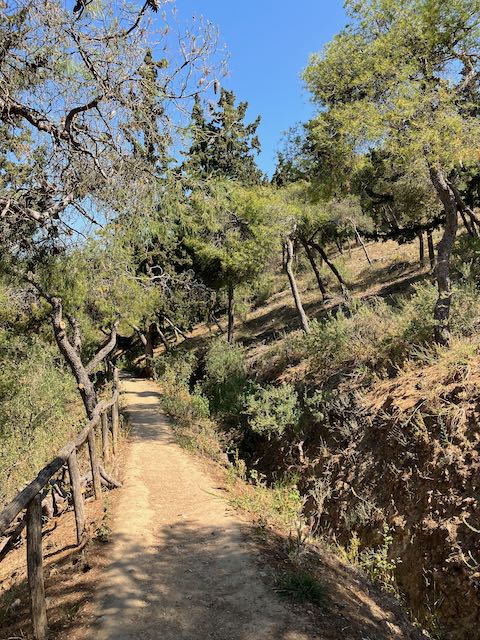
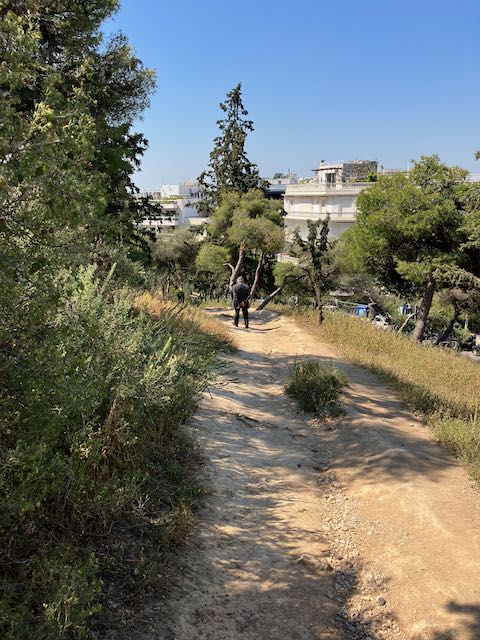
The next morning, following the Continental breakfast buffet with a Greek twist at the hotel’s sixth-floor Le Grand Balcon restaurant, I went for a short walk in the nearby hilltop park atop Mount Lycabettus. It was an unexpected oasis in the city—a forested hilltop traversed by trails and wooden footbridges.
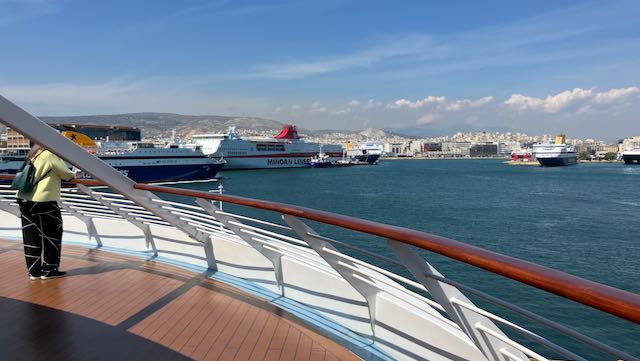
We left the hotel by bus, winding through the streets of Athens, past the U.S Embassy, and onto Piraeus, the port and cruise ship terminal.
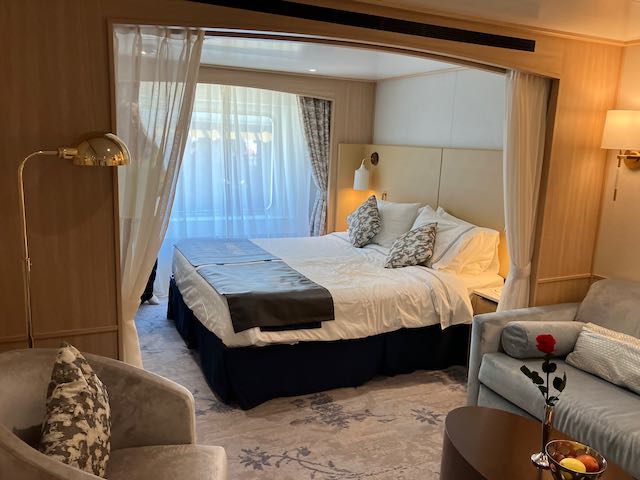
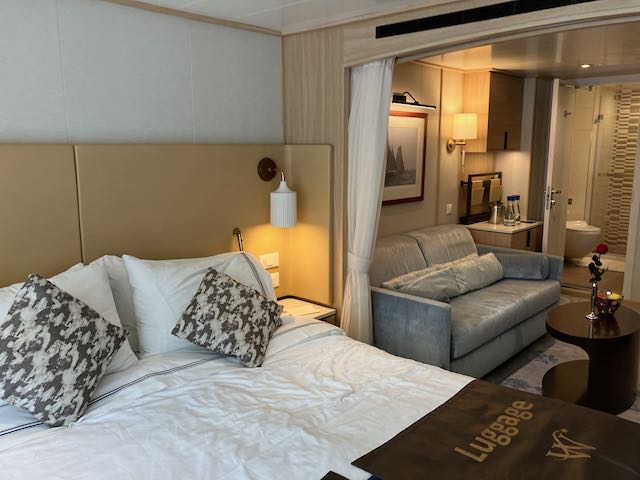
First Stop, Nafplion
This charming port city in the Peloponnese on the southern Greek mainland with its majestic Venetian castles was regarded as the ‘Naples of the East’ by Venetians. It was the first capital of Greece.
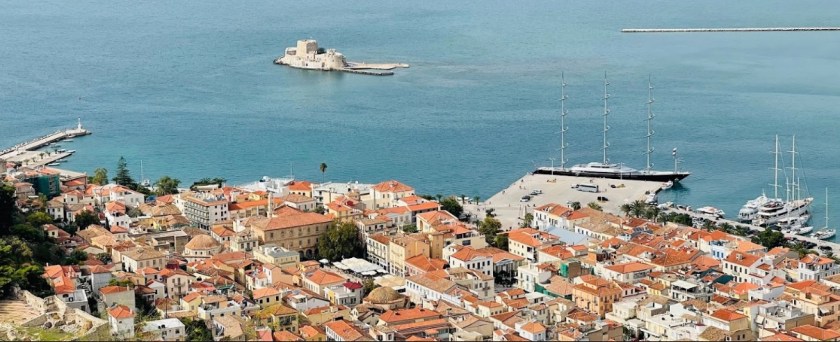
accessed at: https://maps.app.goo.gl/38fb5cdRALXfeeXV8
One of the most prominent sites in the city is Palamidi castle. There are either 857 or 999 steps to reach it from the town below. I did not count them as I ascended but the spectacular view lends credibility to the assertion.
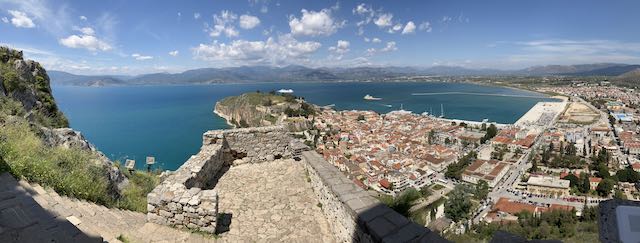
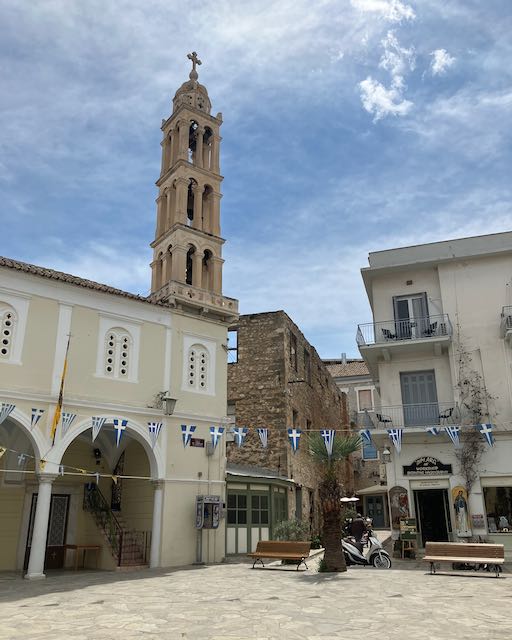
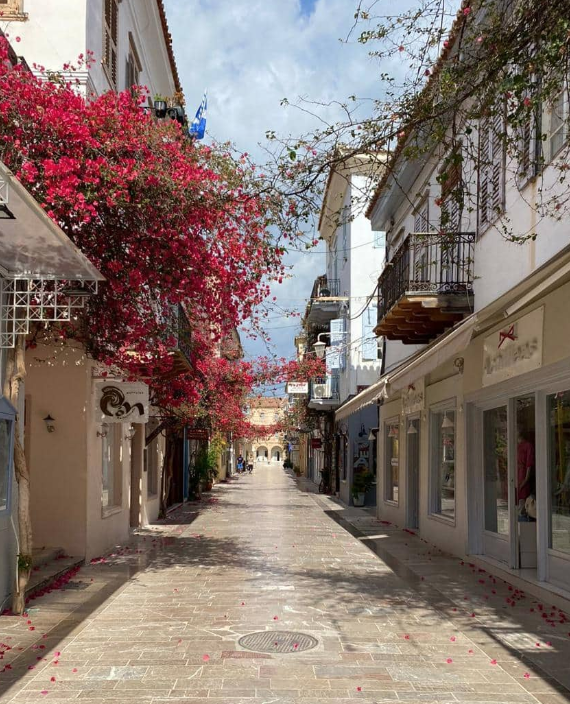
Courtesy of Olga B., Local Guide, accessed at: https://maps.app.goo.gl/jdd2Y7kramMCd3nB9
Next Stop, Santorini
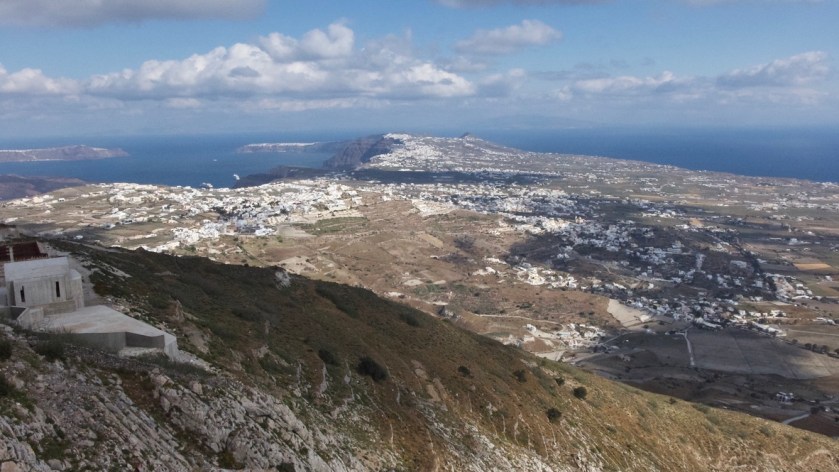
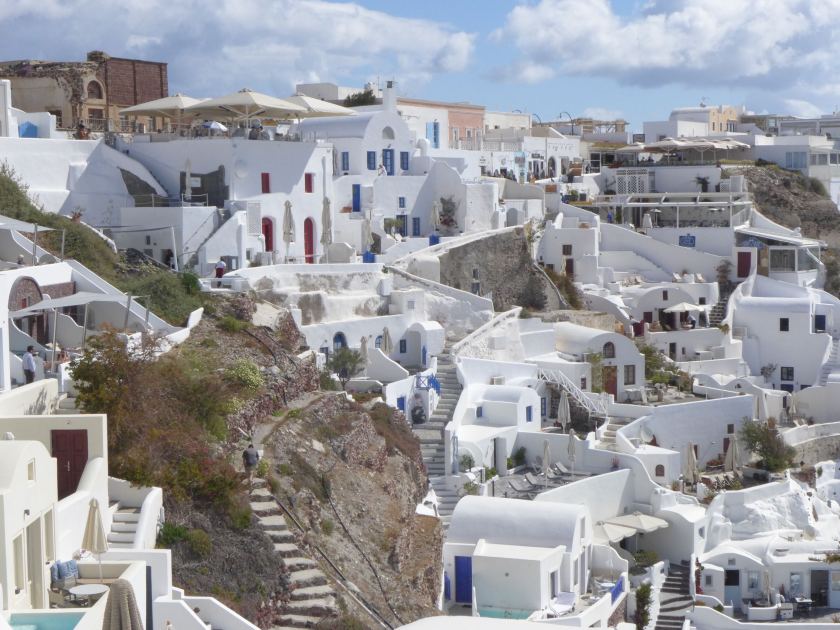
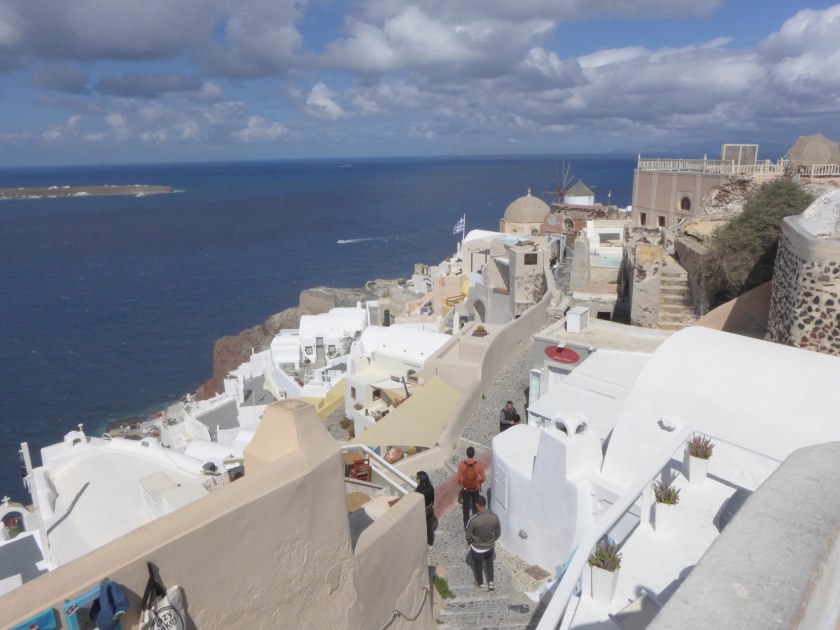
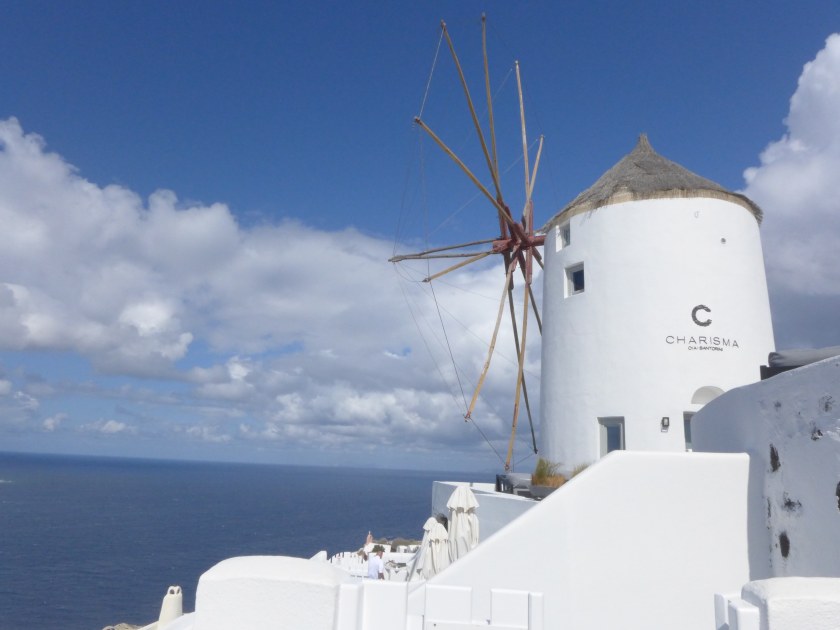
The water-filled caldera of the island of Santorini is a basin created as a result of a volcanic eruption in 1613 B.C.E. The capital city of Fira, or Thira, was built on top of the cliff on the ring island to the south of the basin.
NEWS UPDATE: There have been hundreds of tremors reported around Santorini. Evacuations and other preparations have begun in case a volcanic eruption and/or tsunami ensue—02/02/2025.
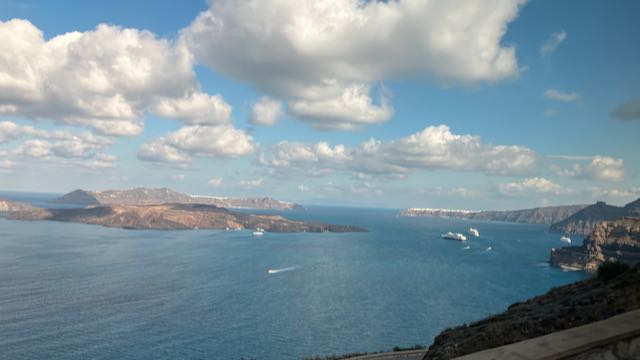
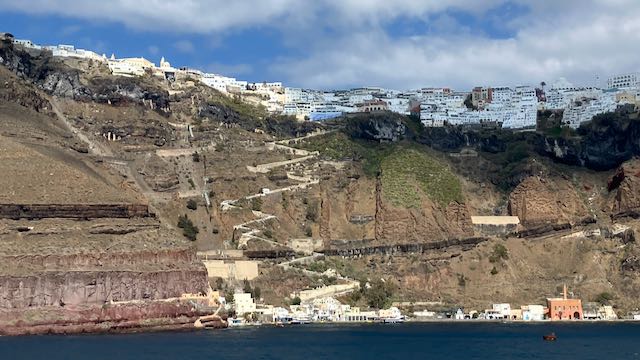
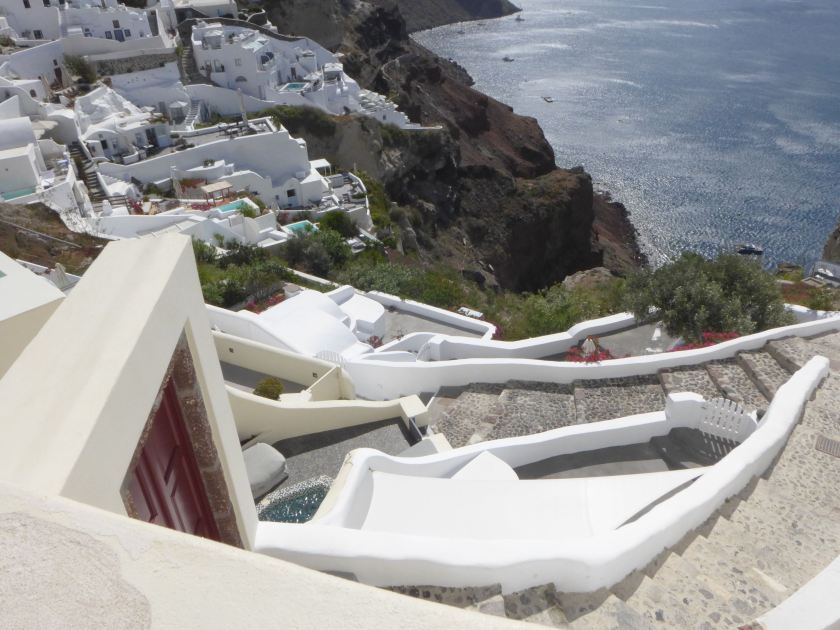
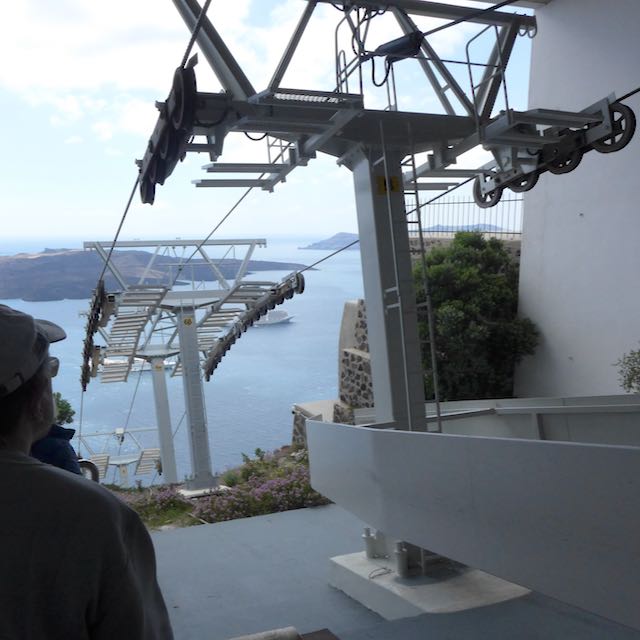
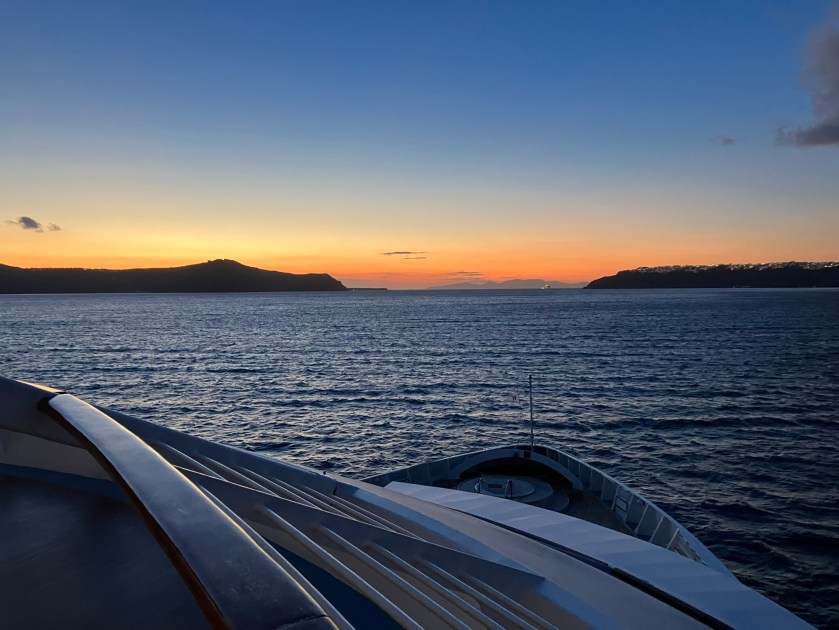
Onto Crete
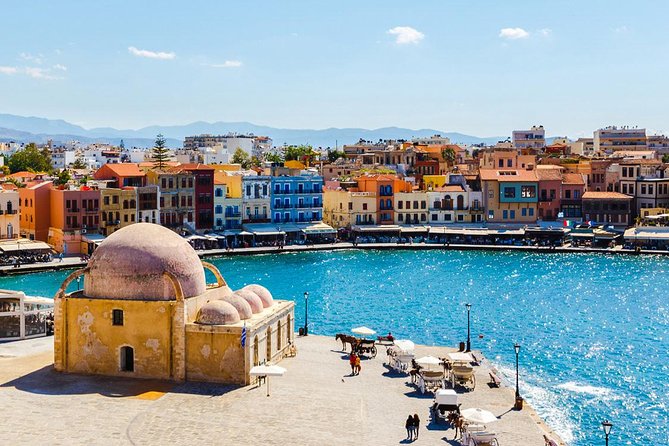
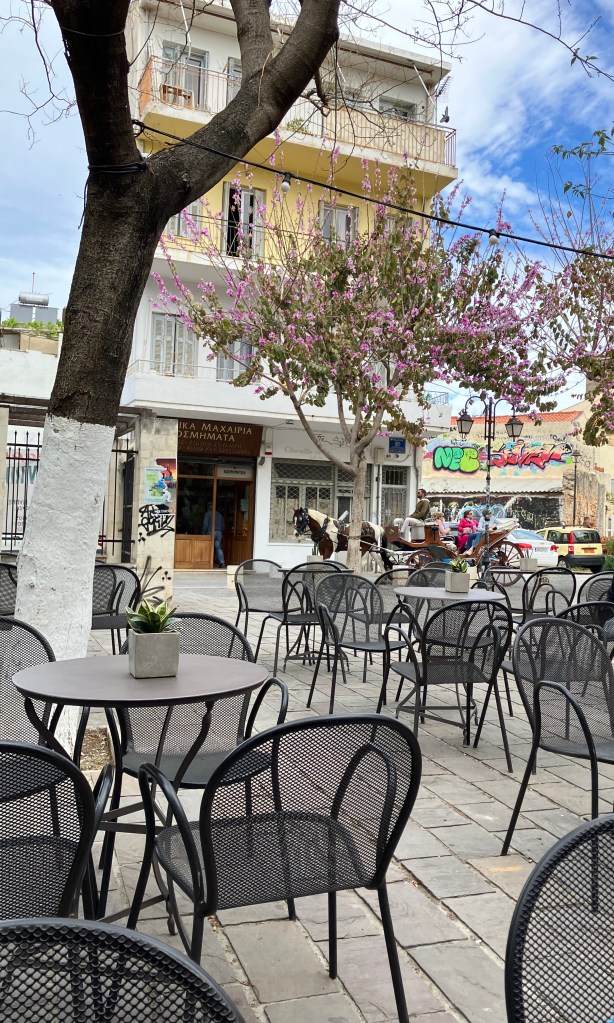
We wound our way through narrow back streets east of the old port that looked interesting on the map, past archeological ruins and small plazas, to a stop for a break at one of the bar-restaurants on Splantzia Square in the heart of old Chania.
Ephesus, Turkey
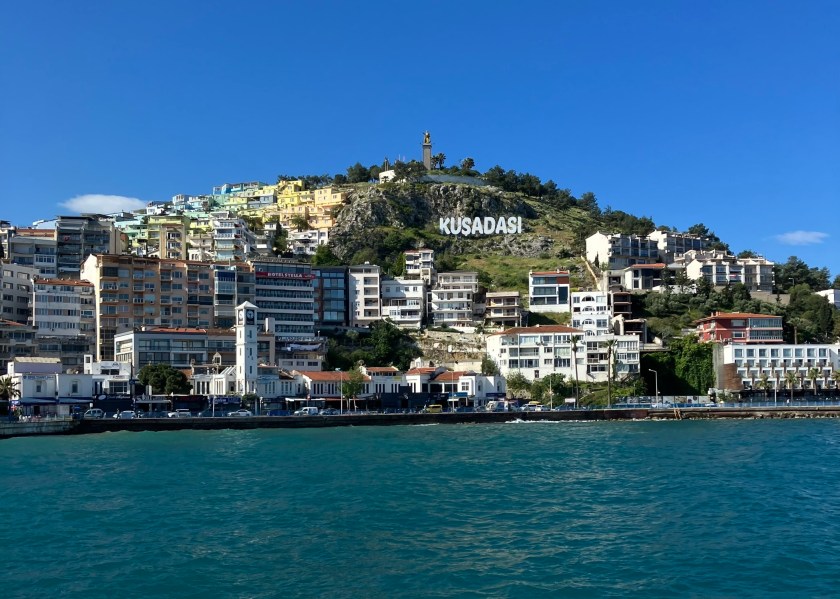
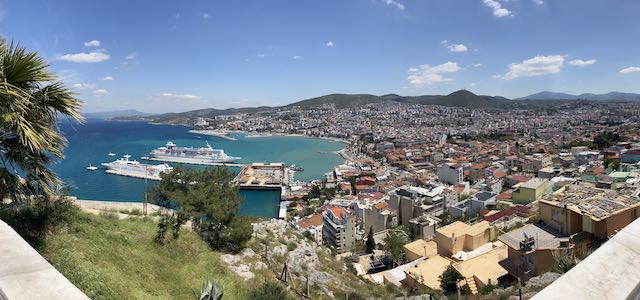
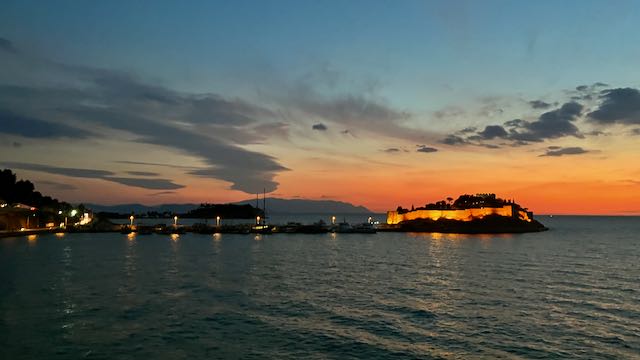
From Crete, we sailed overnight to the southwestern coast of Turkey. We spent two nights at the port town of Kusadasi, gateway to Ephesus and other ancient sites.
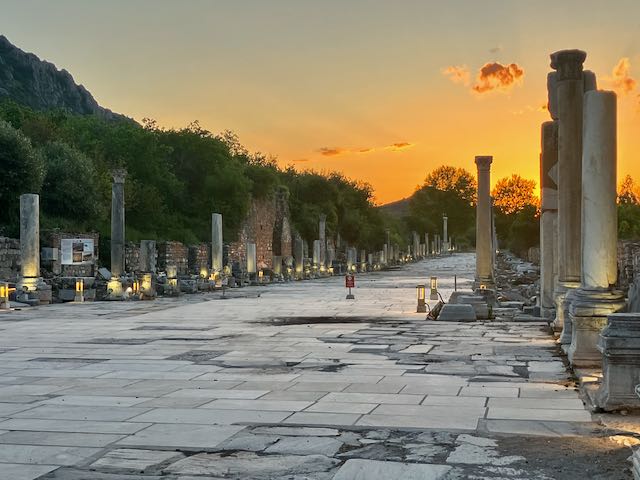
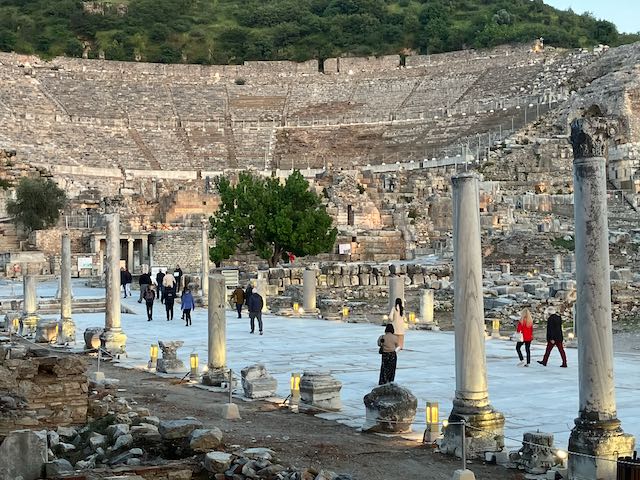
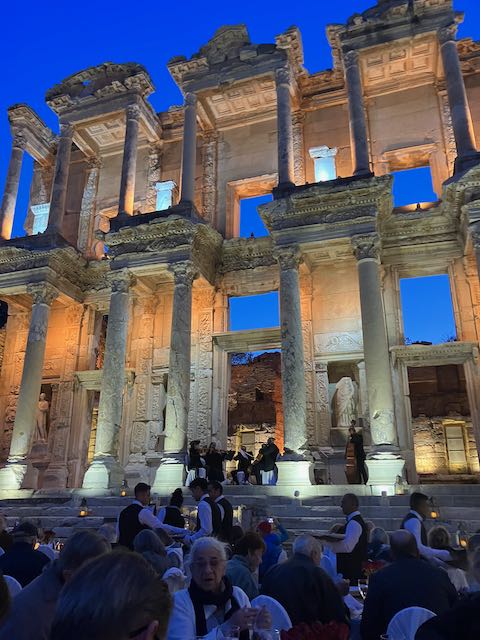
Quick Detour Back to Greece—Mykonos
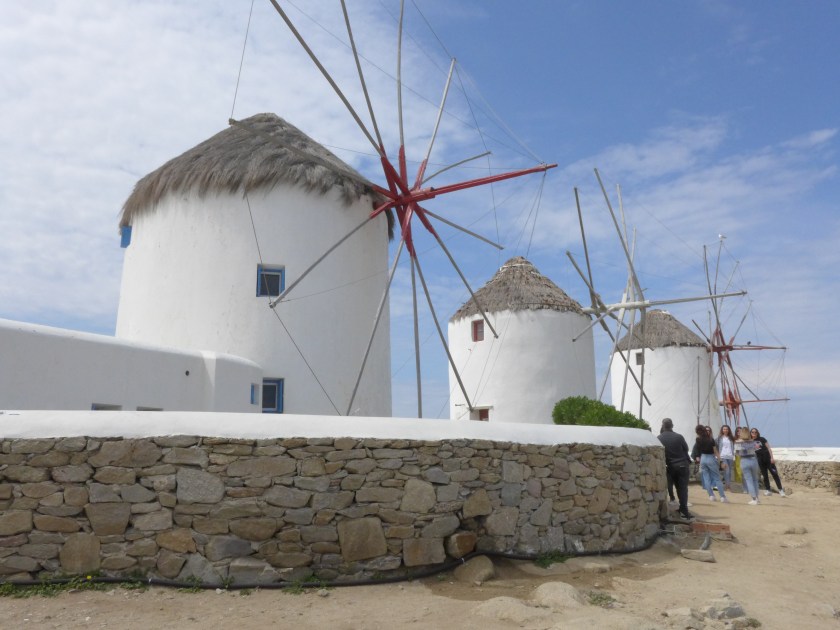
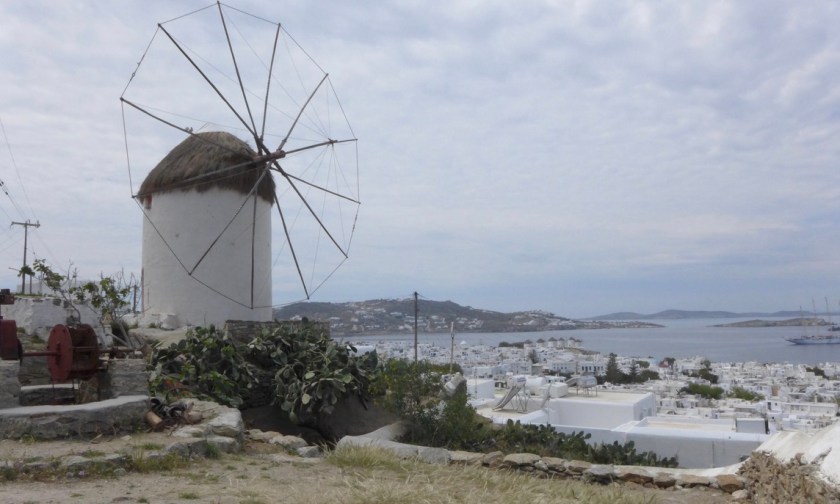
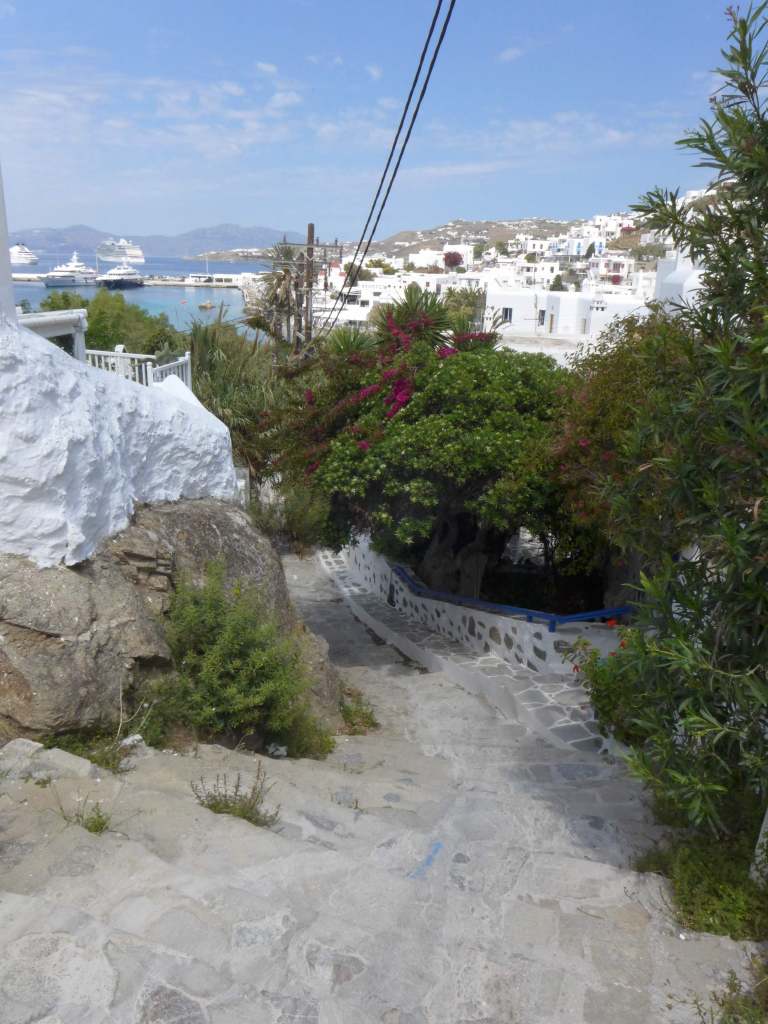
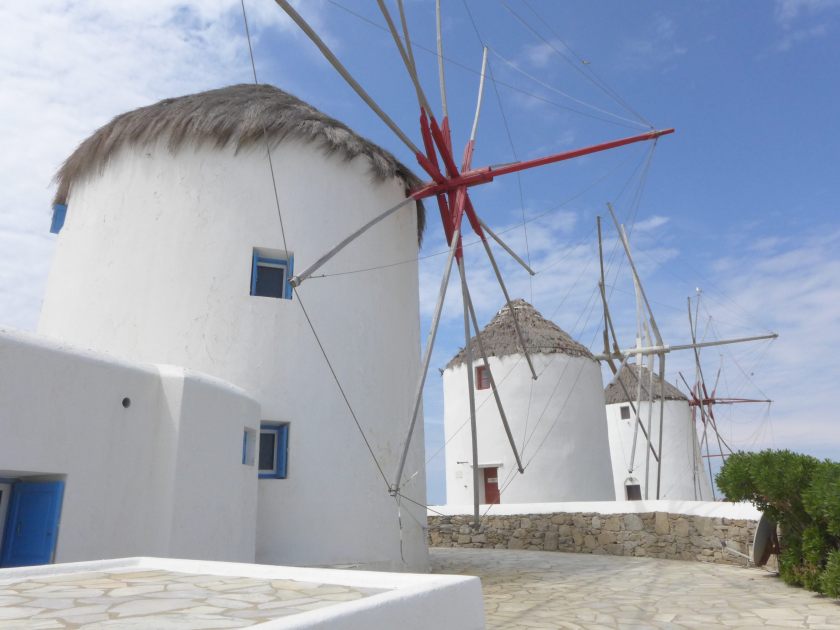
At first, it may seem odd to sail to southwestern Turkey from Santorini, then return to another Greek island before venturing onto western Turkey. But it worked out well. We stopped at Mykonos on the way from Kusadasi to the Bosporus. Mykonos, with its iconic six white-washed wind mills, the Katos Milli, is quintessential Cyclades.
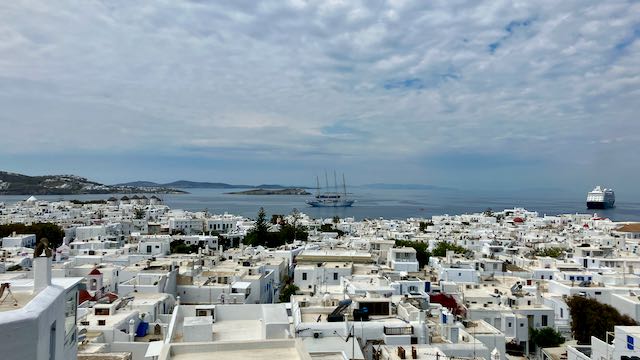
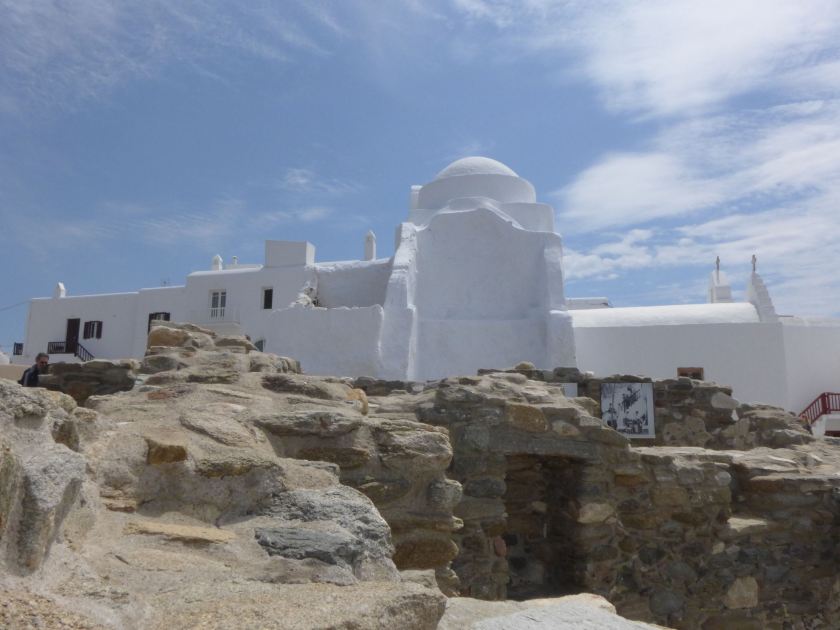
The Castle of Mykonos was built by the Venetians in the middle of the 12th century. It’s mission was to help protect the citizenry from pirates and other invaders. The area in and around it were the first part of the town to be inhabited. By the 17th Century, the town had begun sprawling around it as Mykonos entered its so-called golden age.
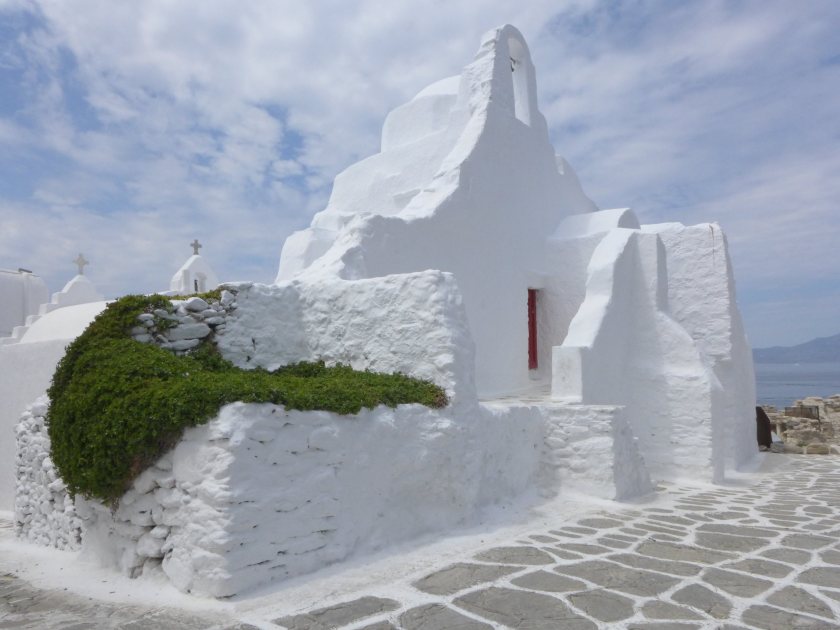
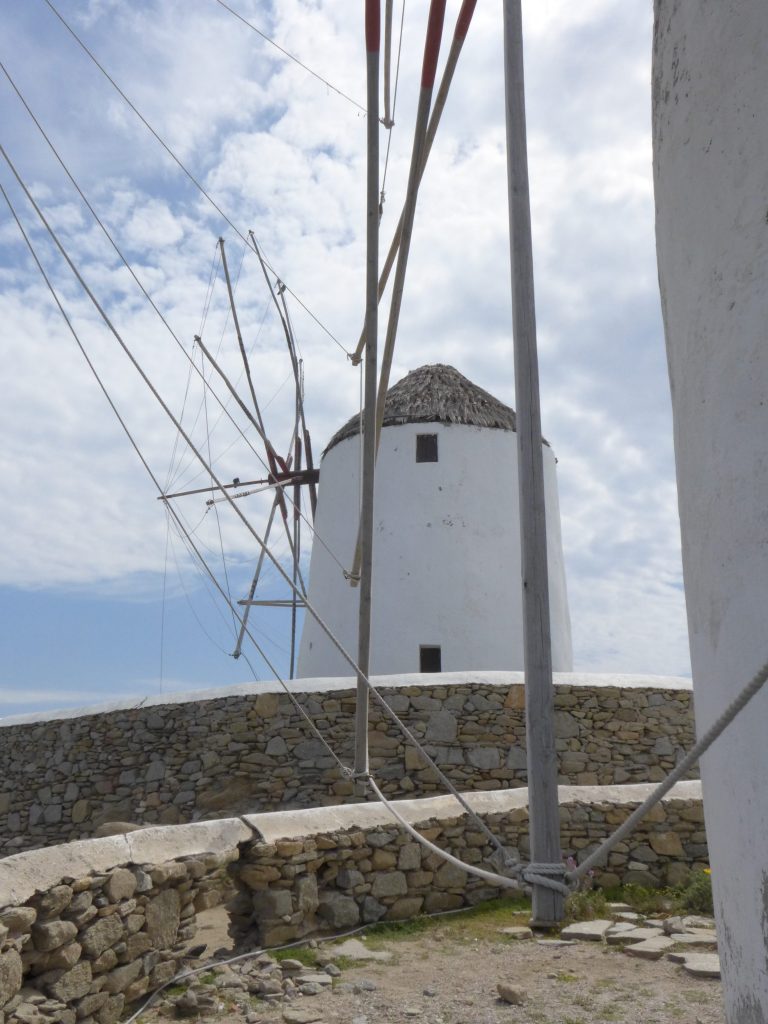
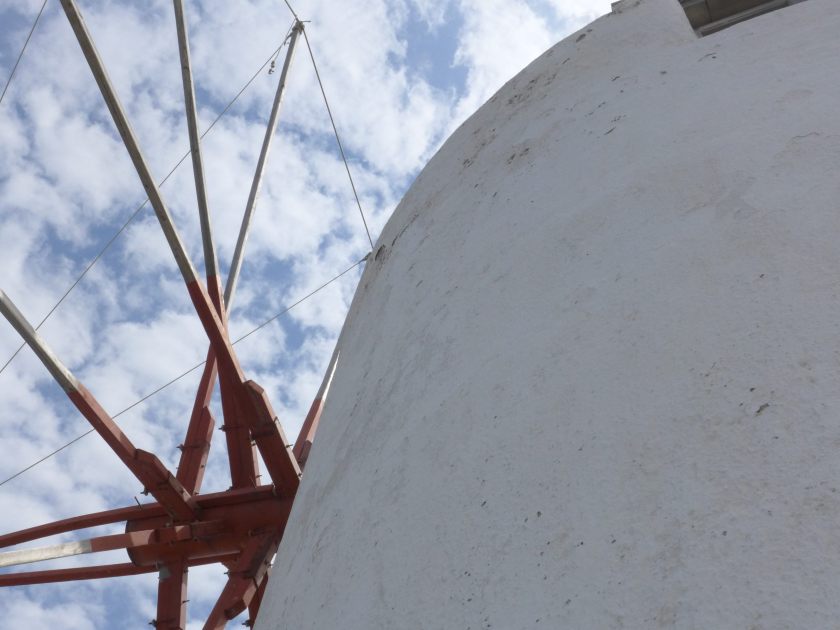
The open-air Agricultural Museum of Mykonos is located in Chora, or Mykonos old town. Much of its collection of pre-industrialization agricultural tools and equipment is housed in and around the Boni windmill. Dating back to the 16th century, it sits on a hill in the Ano Miloi or the “Upper Windmills” neighborhood.

Back to Turkey and onto the Bosporus
Our next port of call was Çanakkale at the entrance to the Dardanelles Strait. It is the southern entrance to the Sea of Marmara. The Gallipoli World War I battlefields are now a national memorial park situated on the north side of the strait.
My wife chose to tour the town. She photographed this rendition of the Trojan Horse built specially as a tourist attraction. The archaeological site of Troy is located in the hills southwest of Çanakkale.
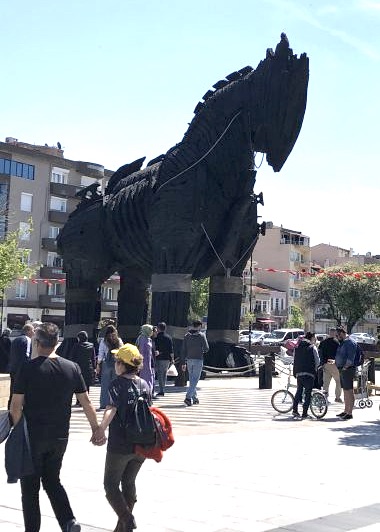
I joined a tour of the World War I battlefield memorial sites across the Strait. We started by crossing the strait on a car-carrying ferryboat.
Gallipoli, or Gelibolu, is a town on the Dardanelles Strait. It is a gateway to Gelibolu Peninsula National Park enshrining the battlefields of the World War I campaign fought by Allied forces of Europe against the Ottoman Empire. The battlefield memorials are a sobering reminder of human folly and the difficult histories of Europe and Asia. Today it is series of serene and beautiful seaside parks, memorials, and military cemeteries. In its day, it was the site of atrocious battles, bloodshed, death, fear and heroism.
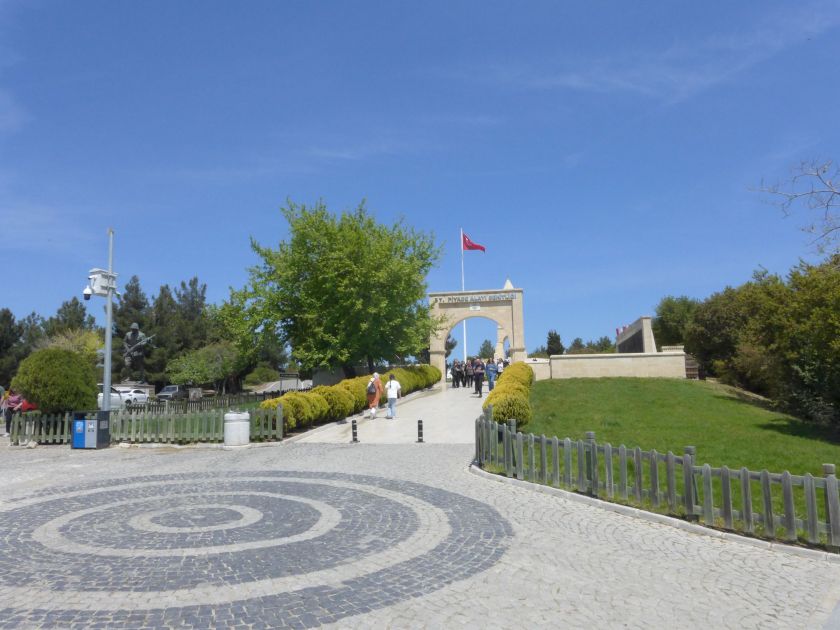
Up the Dardanelles Strait to Istanbul
From Canakkale, we sailed through the Dardanelles Strait to the Sea of Marmara. The port and cruiseship terminal at Galata, Istanbul marked the end of the cruise. But having arrived early in the morning, we were scheduled to join a walking tour of the city center.
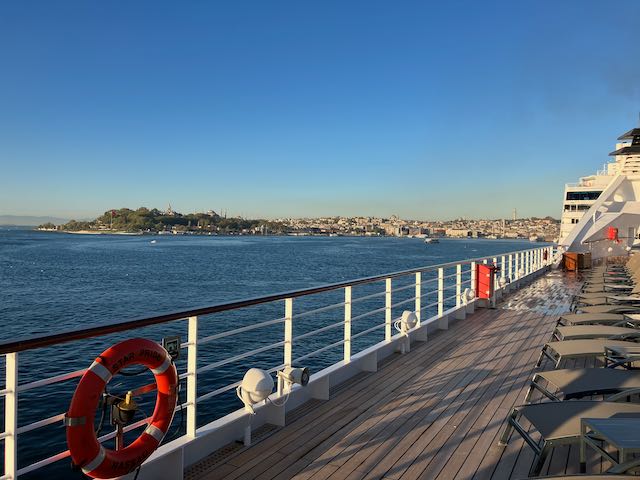
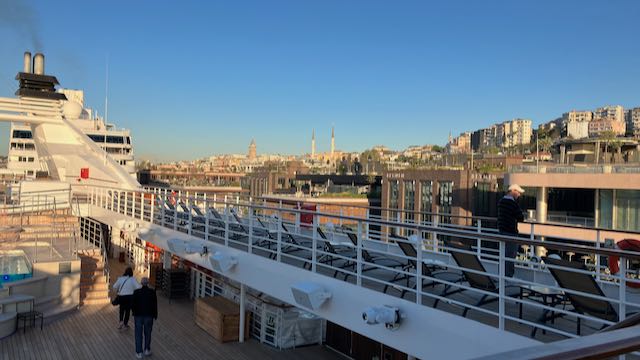
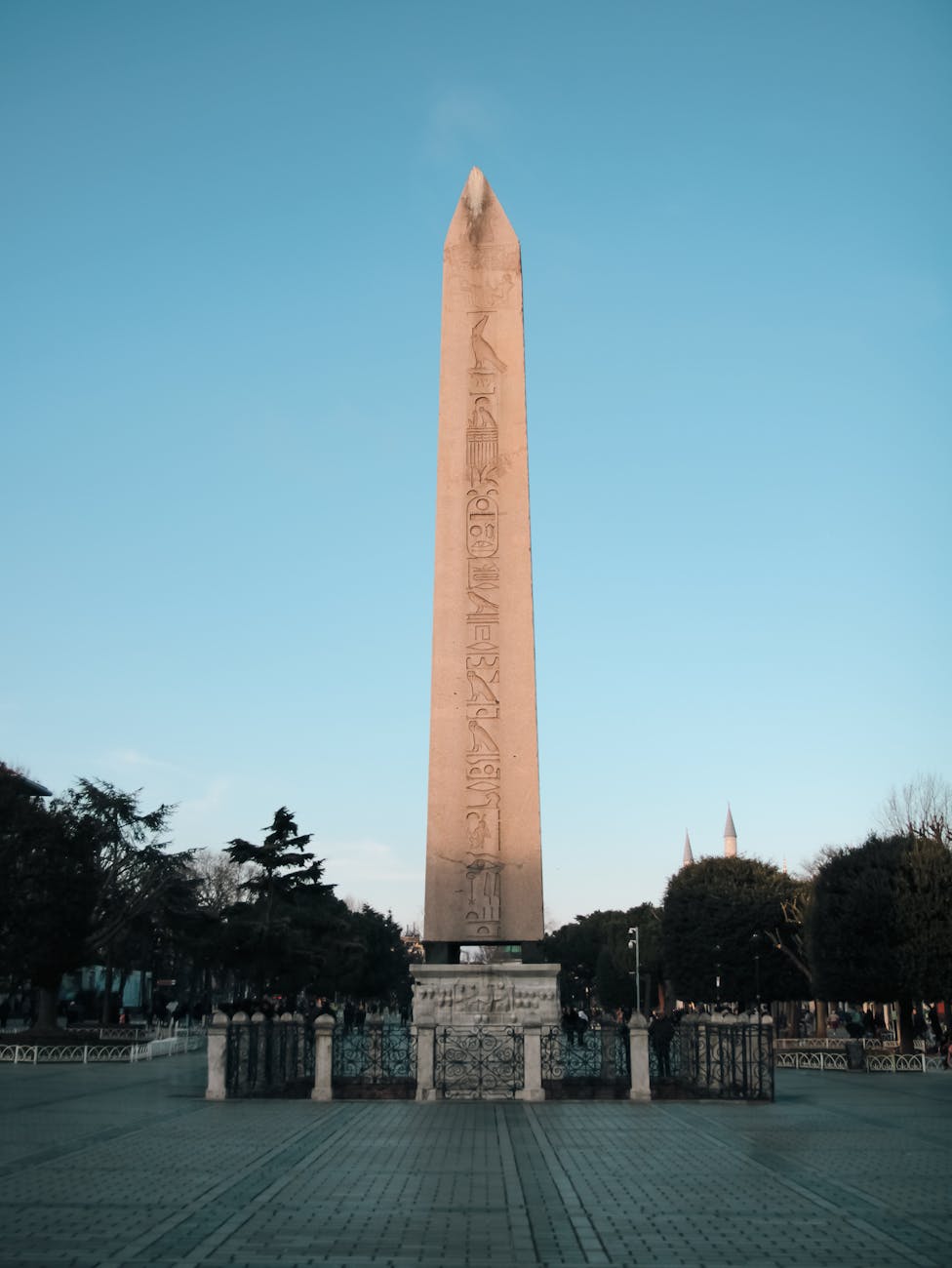
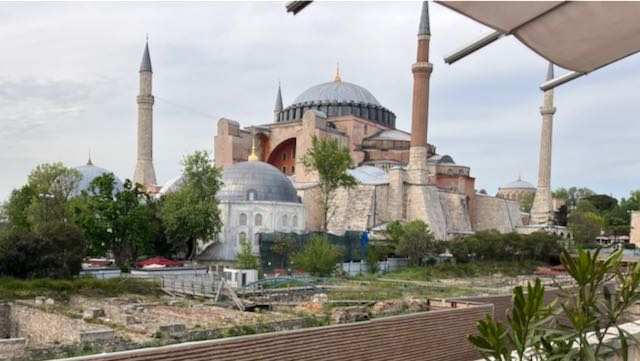
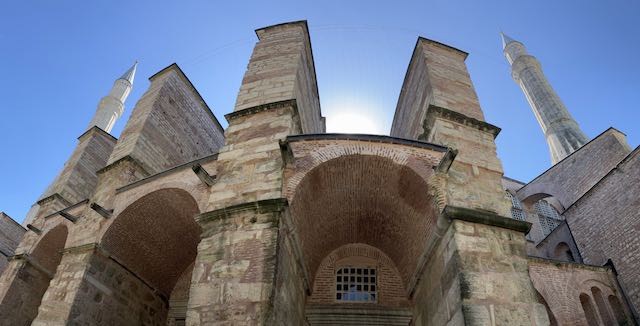
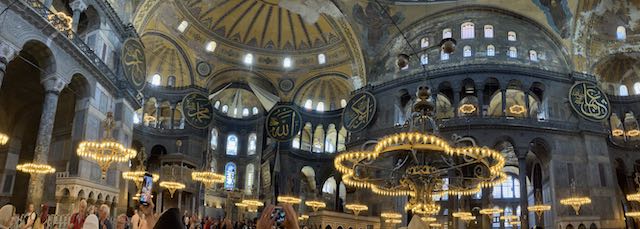
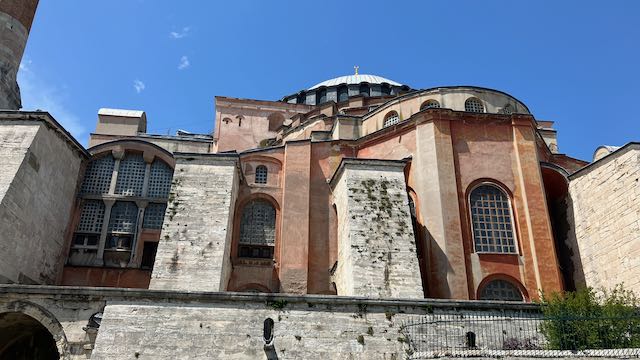
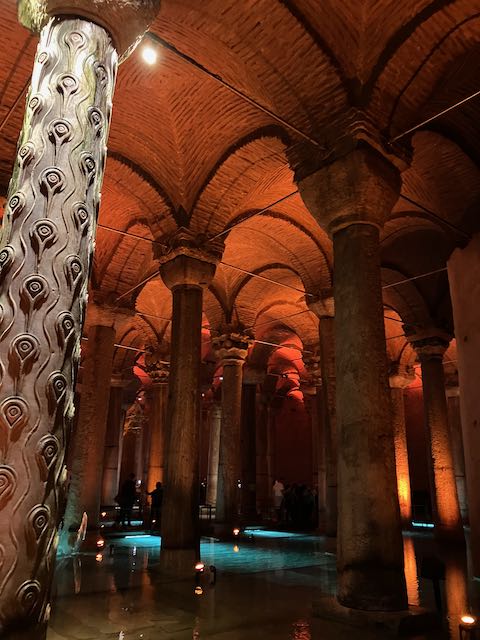
Finally, it was time to make our way to our hotel for the evening—the Pera Palace, an historic residence where the founder of the Republic of Turkey, Mustafa Kemal Atatürk (c. 1881-1938), once resided for a time.
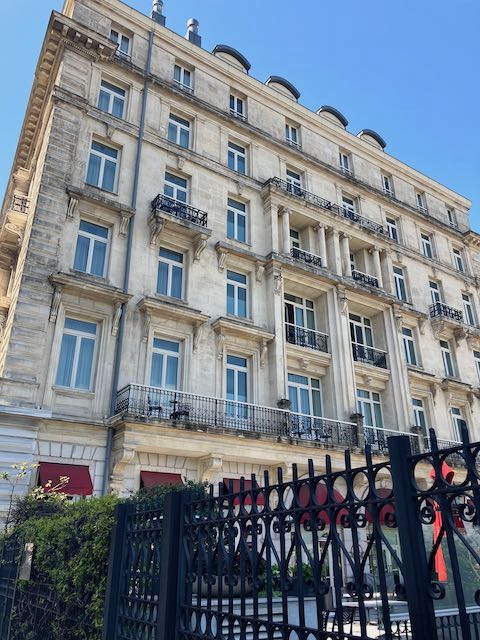
TO BE CONTINUED—Second day in Istanbul. Please check back. Thank you.

 A Finis Terrae