Arequipa, Peru
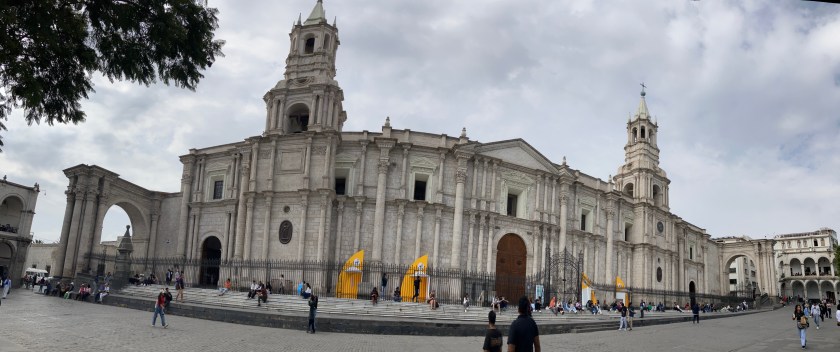
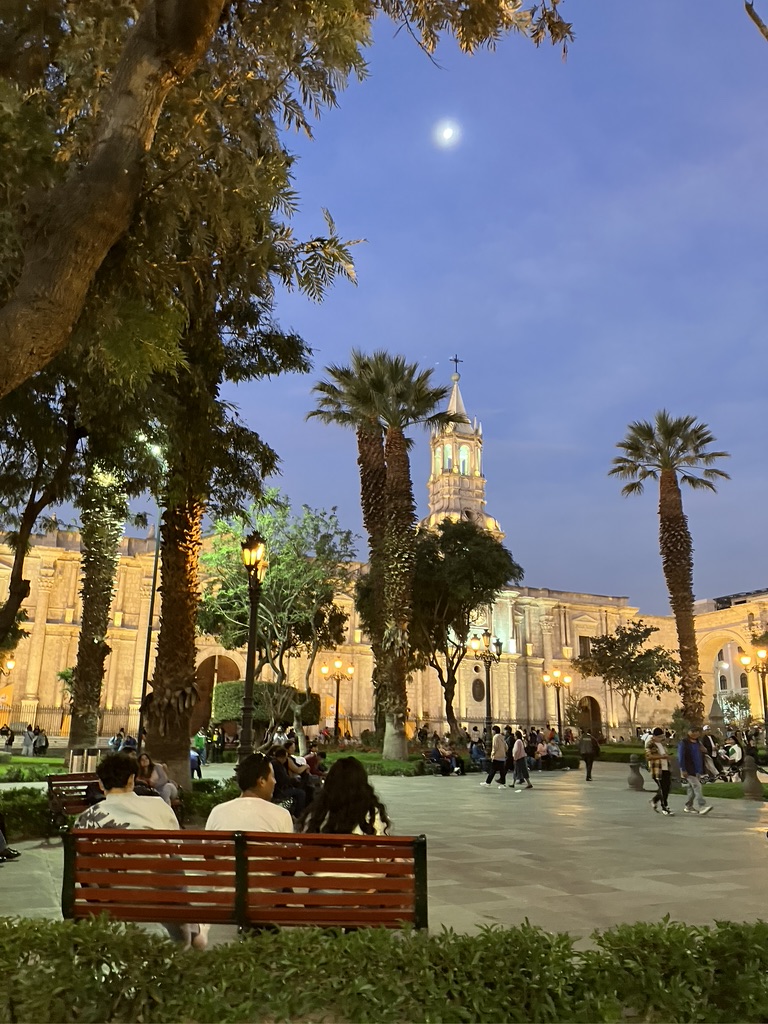
From Cusco, we flew to Peru’s second largest city, Arequipa— also known as La Ciudad Blanca, the “White City,” because of the many buildings made from the white volcanic stone sillar.
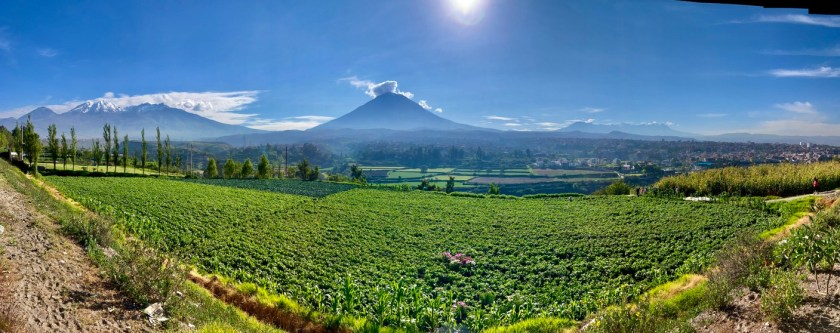
We arrived at our lodging near the Plaza de Armas, Hotel San Agustín Posada del Monasterio, across the street from our first stop planned for the following morning—Monasterio de Santa Catalina de Siena (Santa Catalina Monastery).
As we approached the hotel, located in the center of the city, the traffic grew slower and more congested until it ground to a halt. After some time, the driver and our guides decided it would be better to walk the last block to the hotel! I have to give great credit to the hotel’s one and only bellman on duty that evening—he went back and forth on the long block from the motorcoach to the hotel with a luggage cart piled high with bags several times befor he was done! He went well above and beyond the call of duty. We did tip him generously.
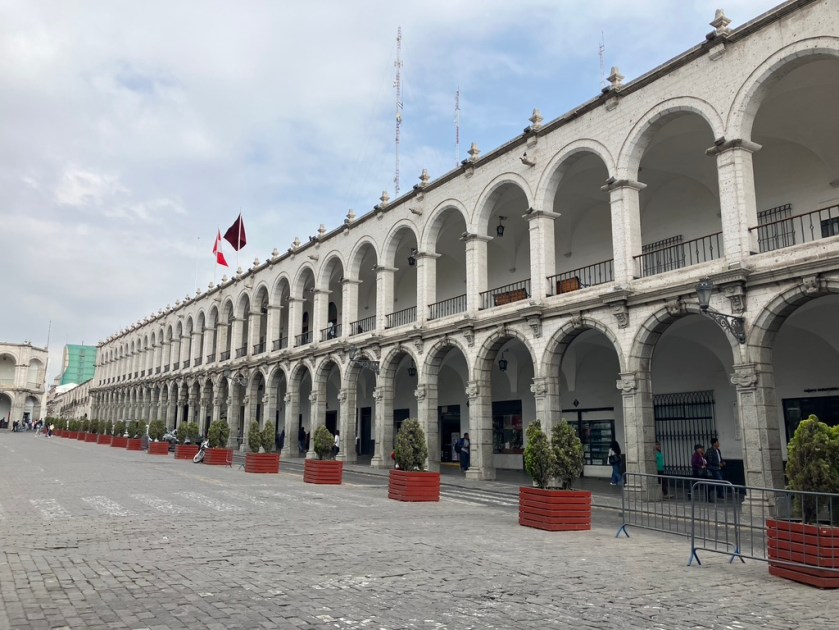
The next morning, after breakfast at the hotel’s nice Continental buffet, we crossed the street to the Monasterio de Santa Catalina de Siena and museum.
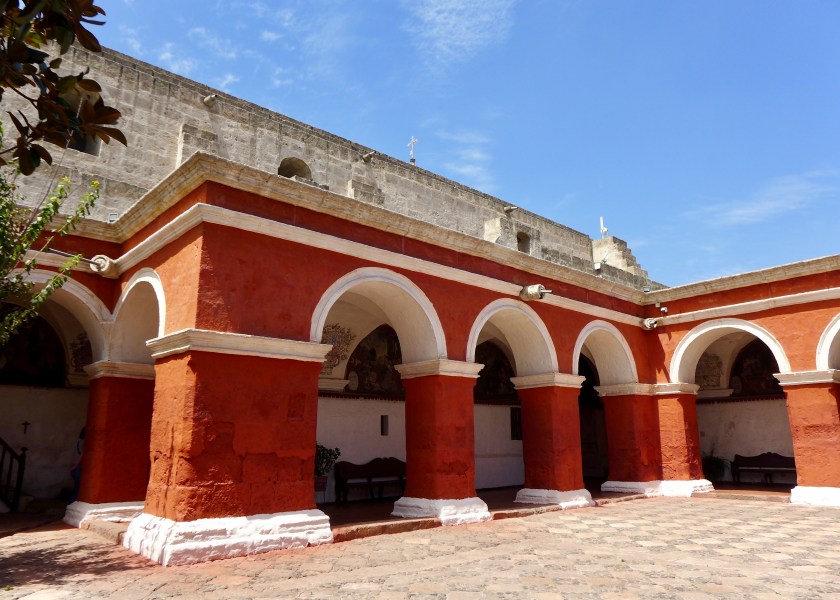
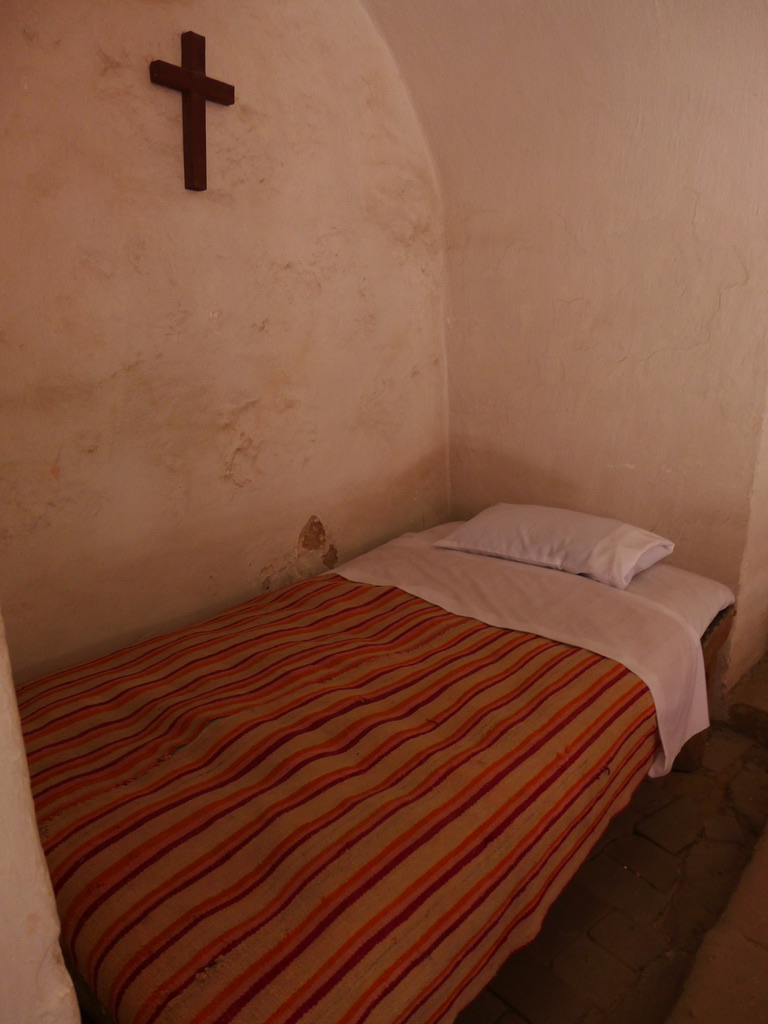
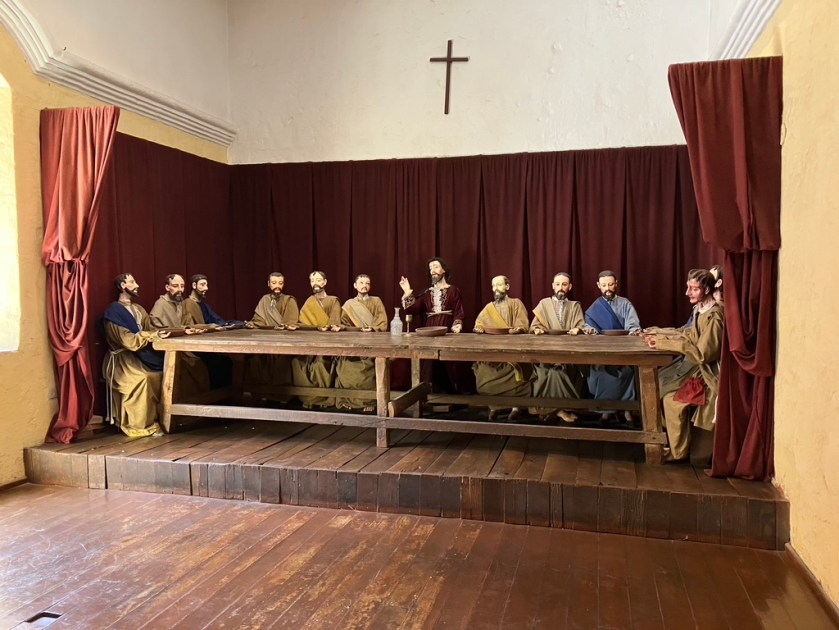
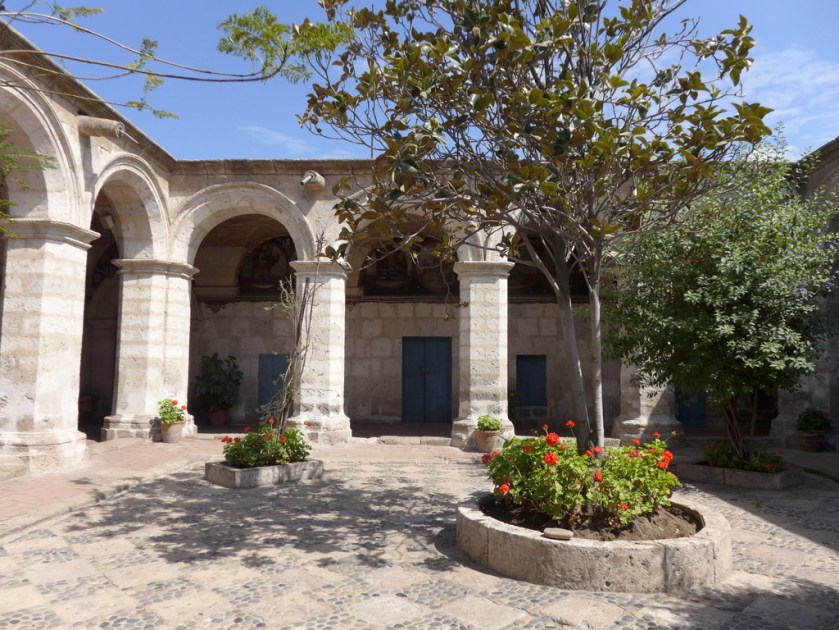
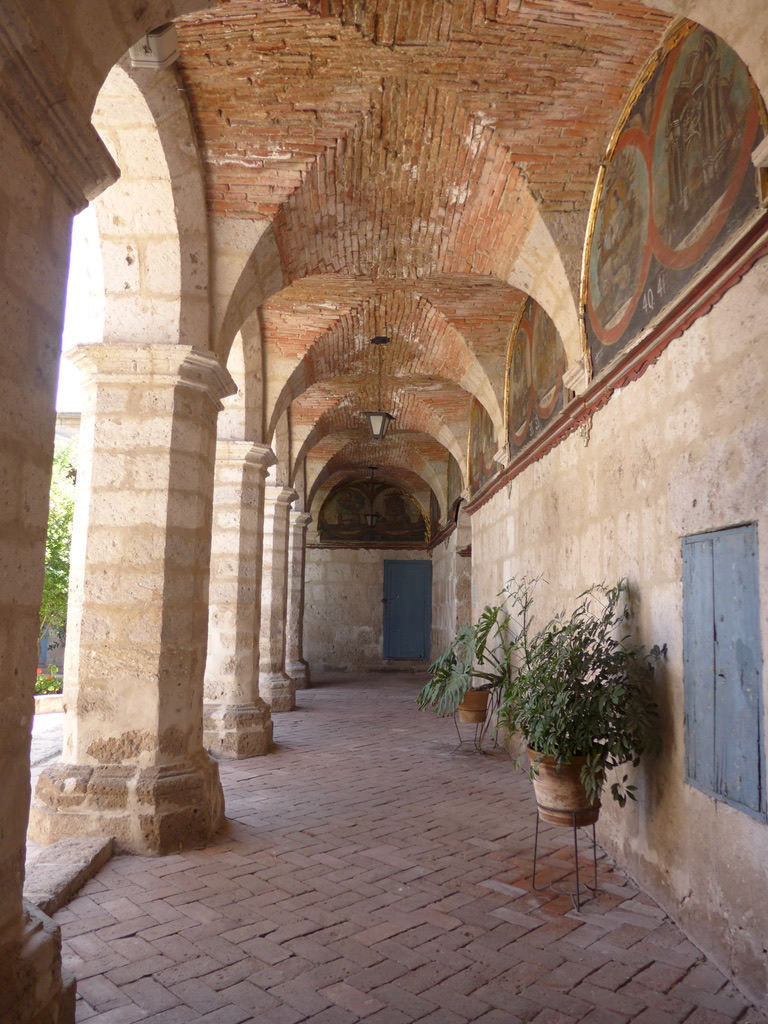
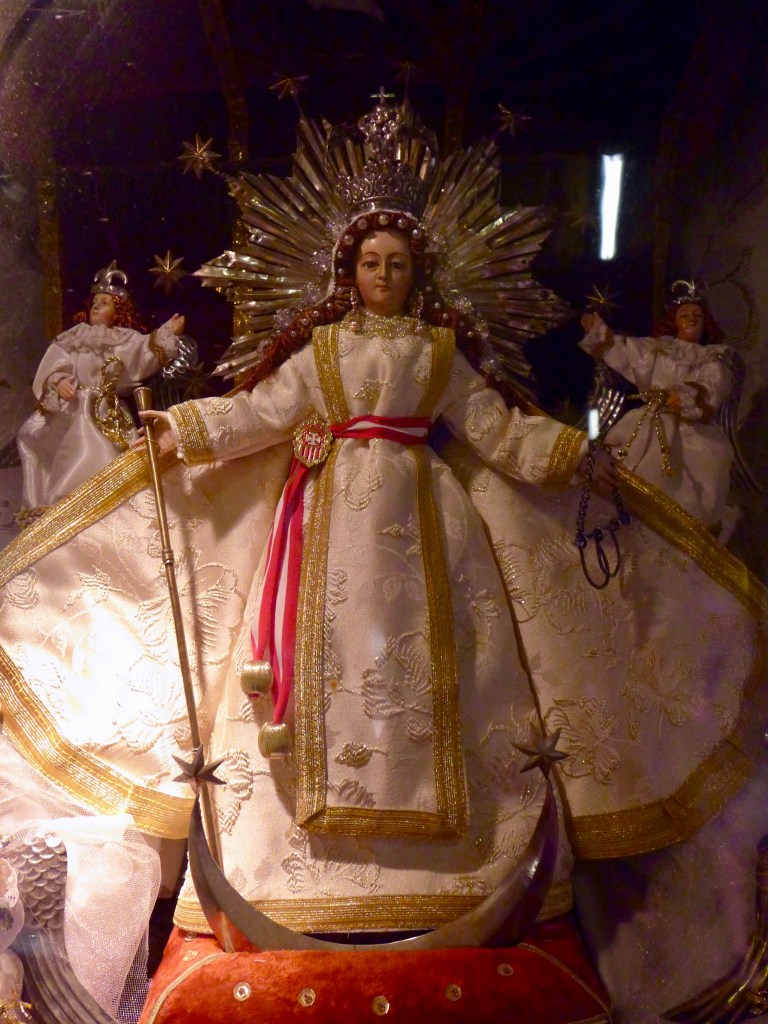
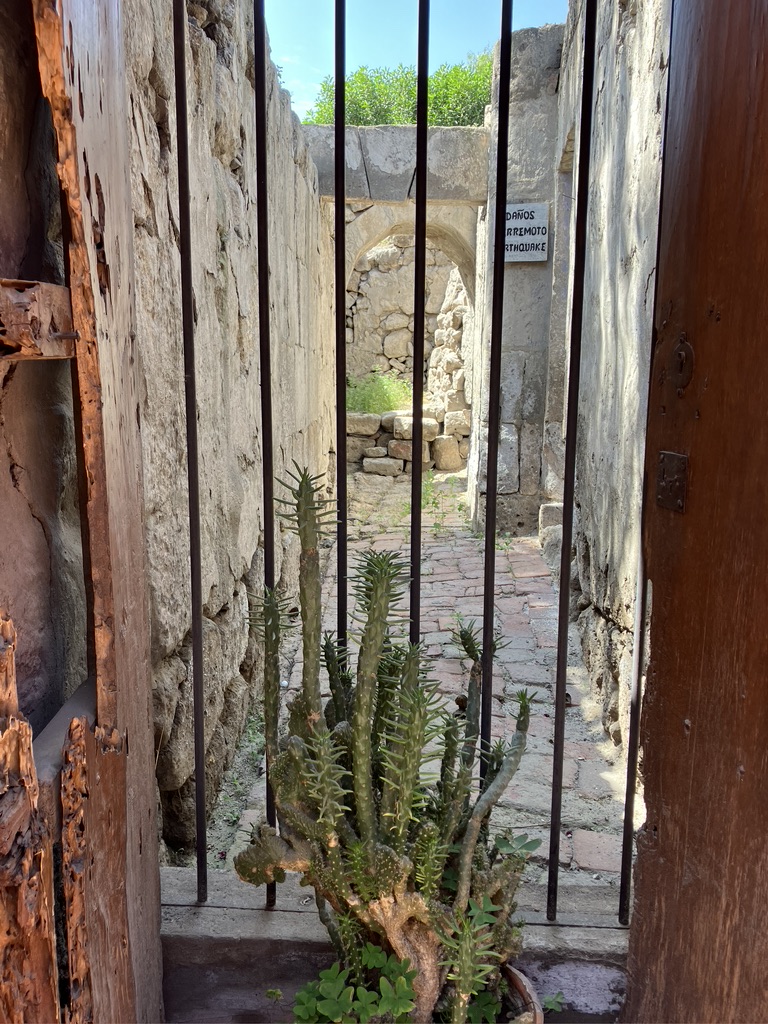
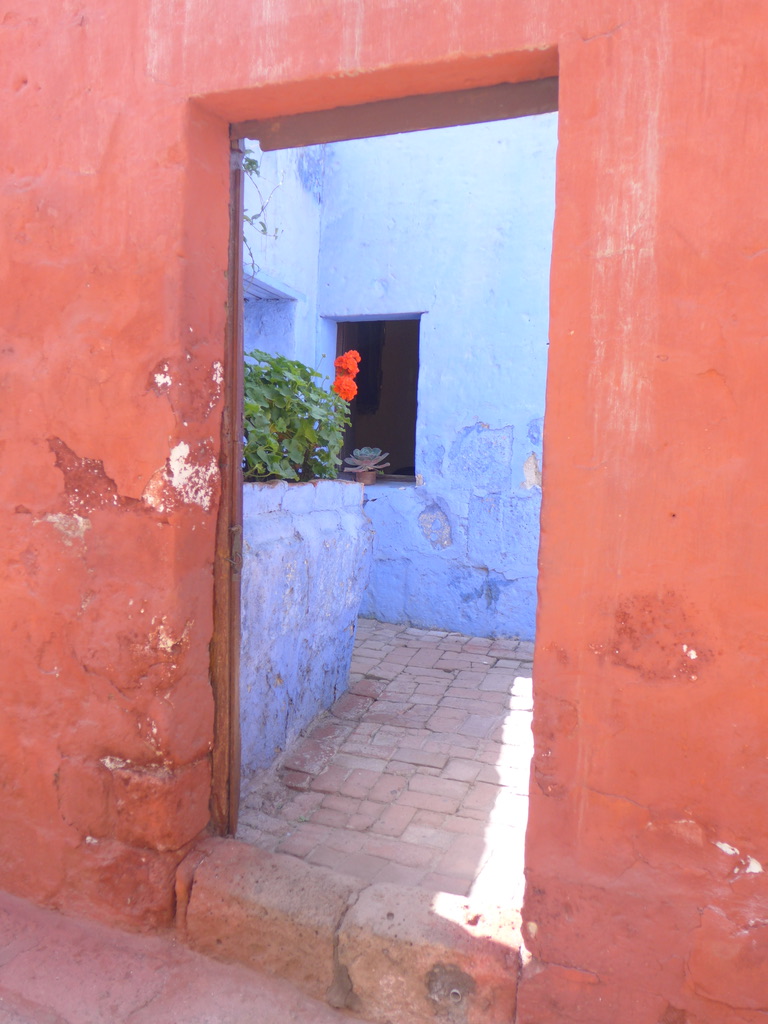
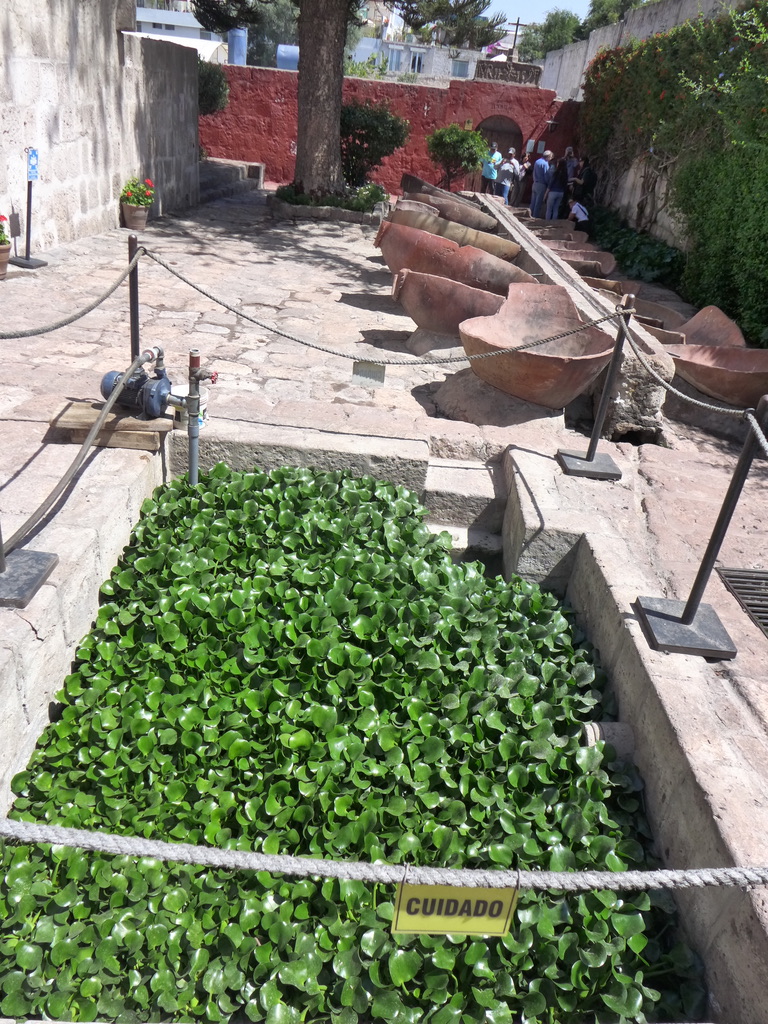
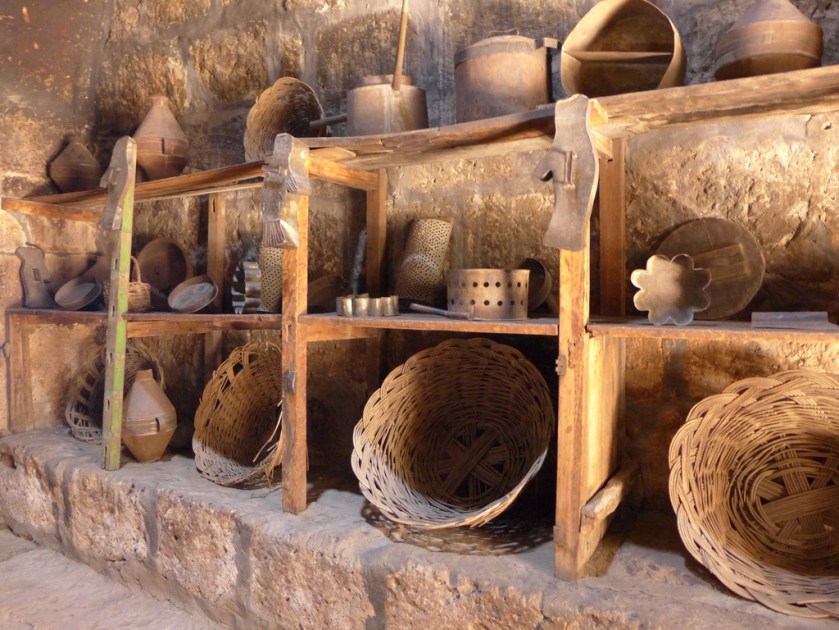
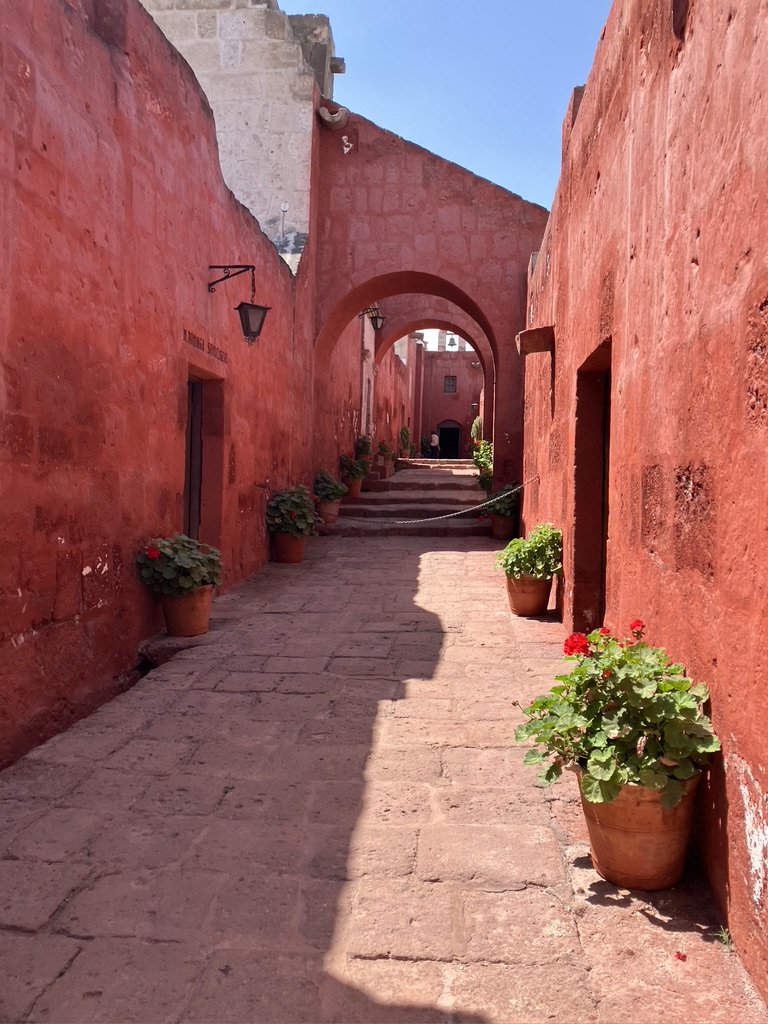
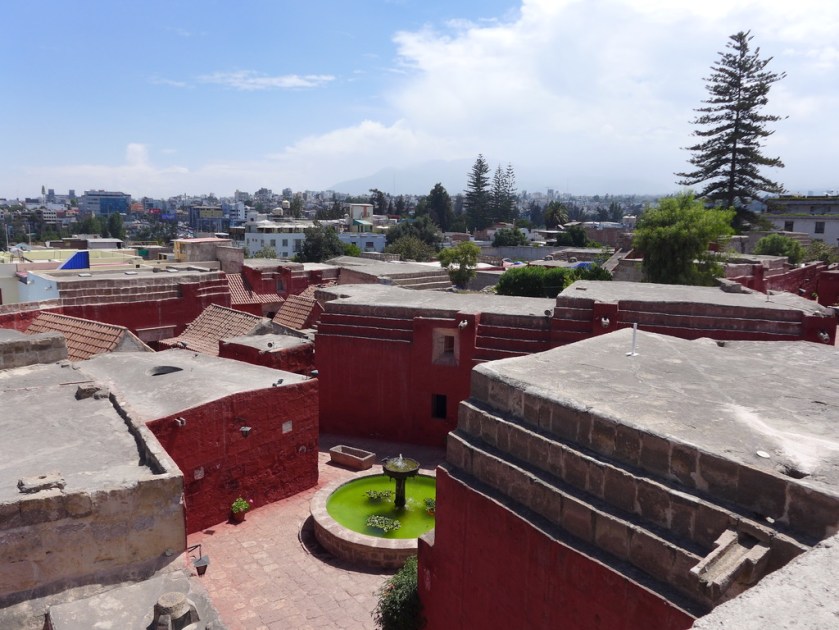
The monastery is actually a large complex of buildings spanning more than a large city block—chapels, courtyards, dormitories, apartments, offices, storage rooms, galleries, and gardens. It’s truly a maze. But, fortunately, the local guides lead groups of visitors on a logical path starting and ending at the main entrance on the corner of Calle Santa Catalina and Calle Ugarte.
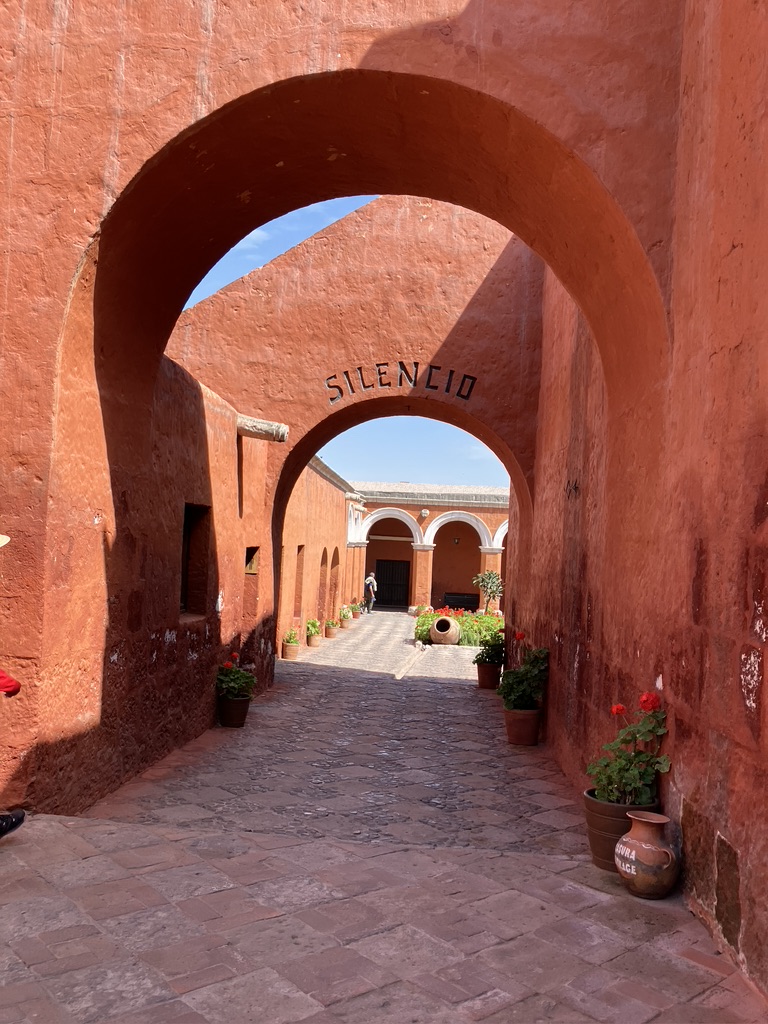
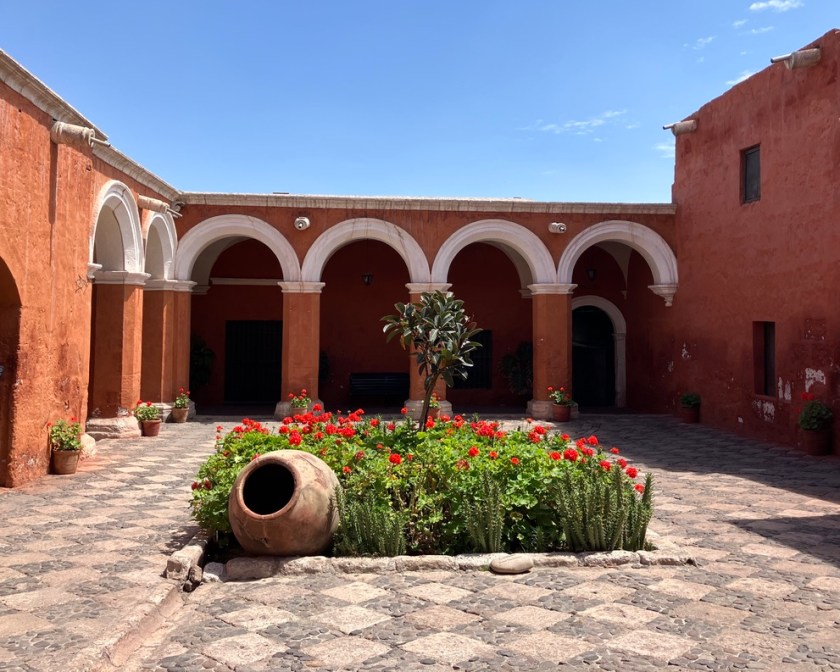
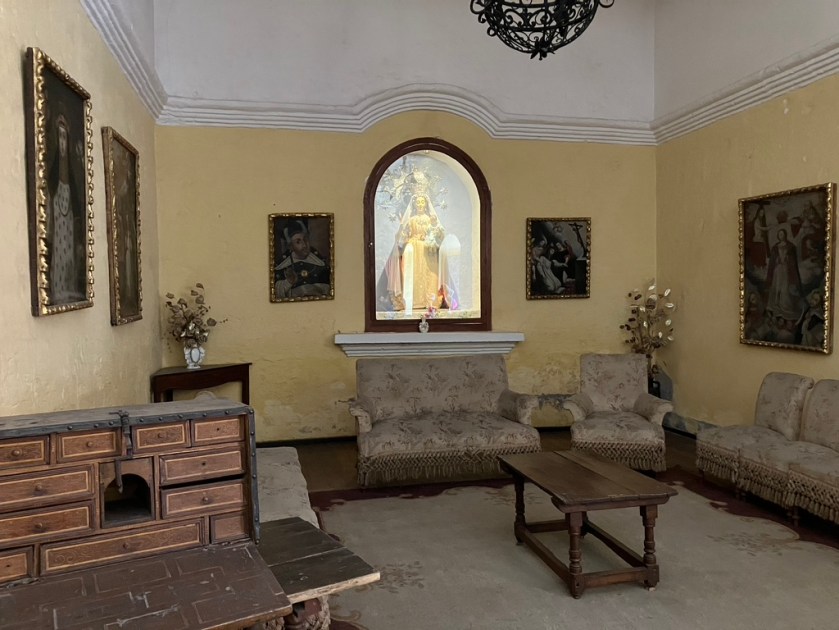
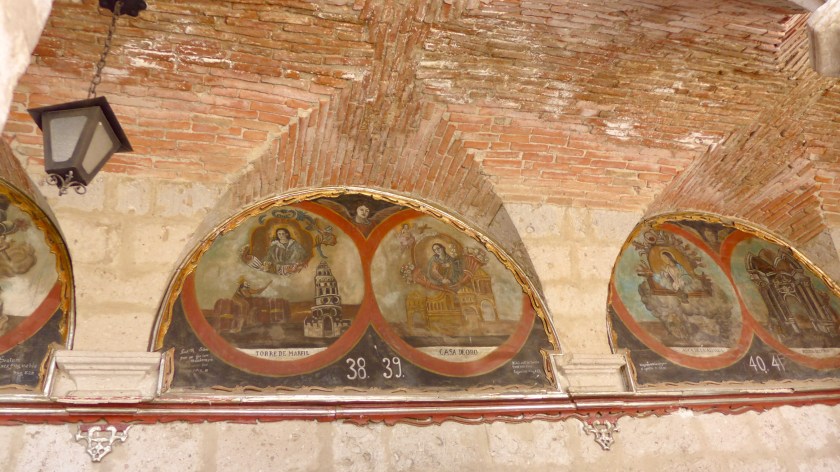
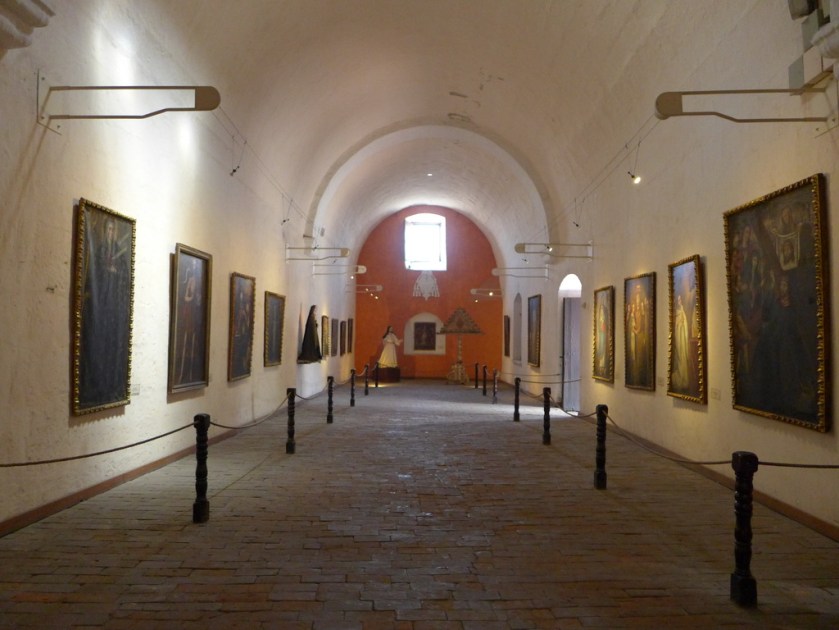
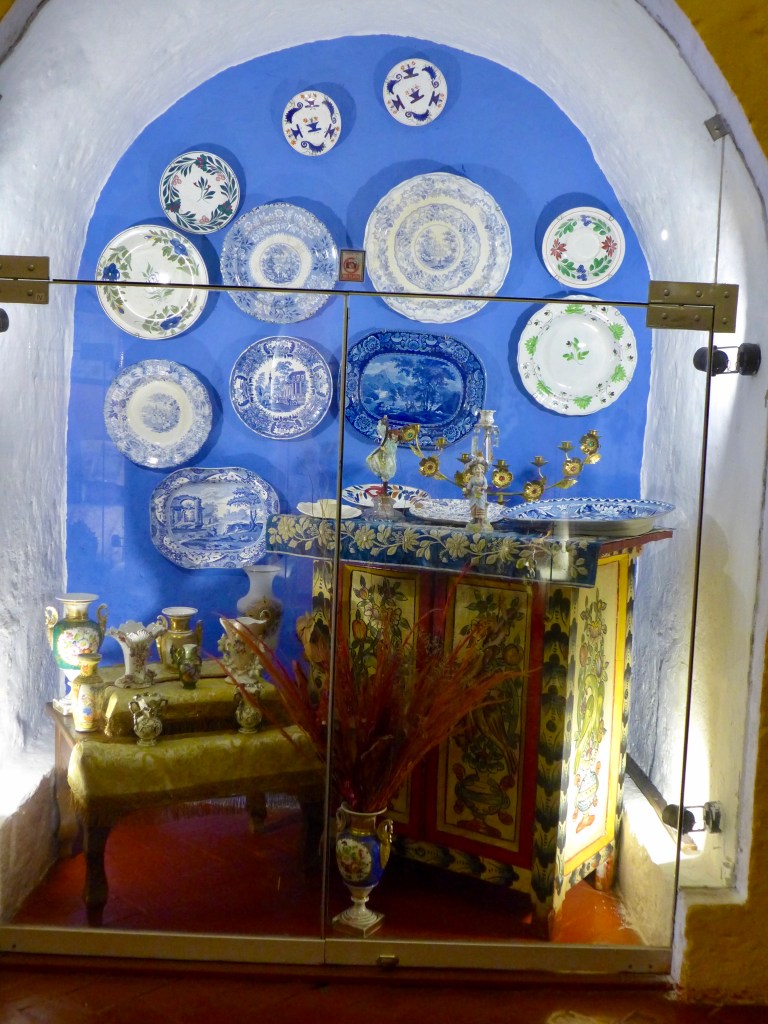
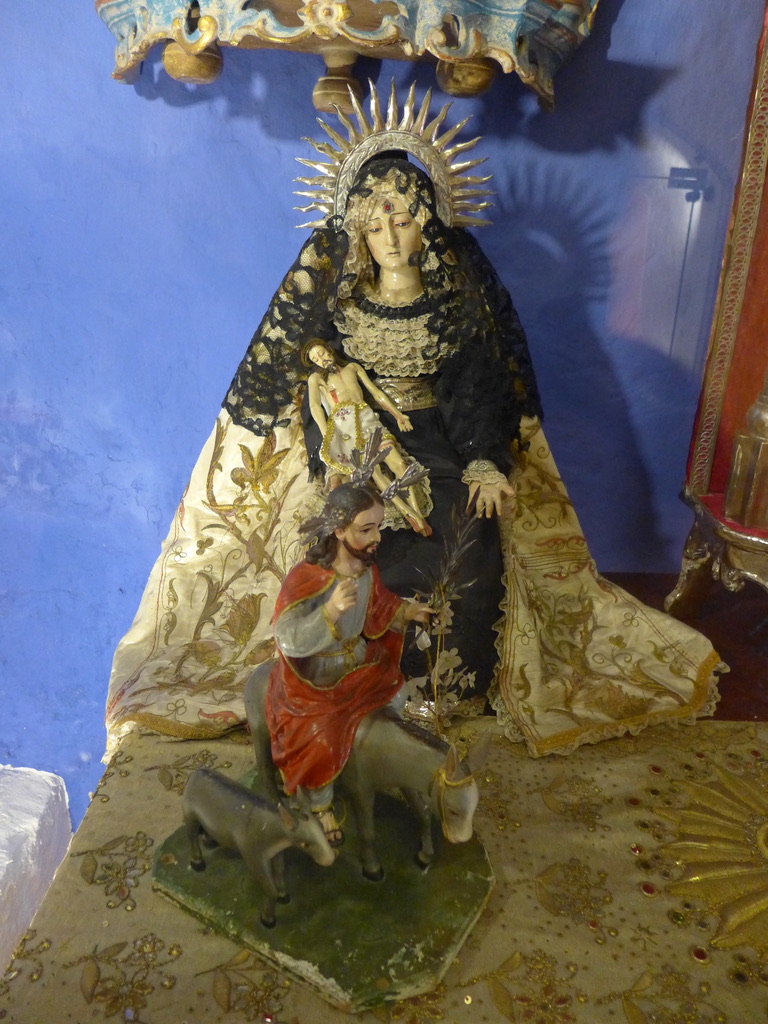
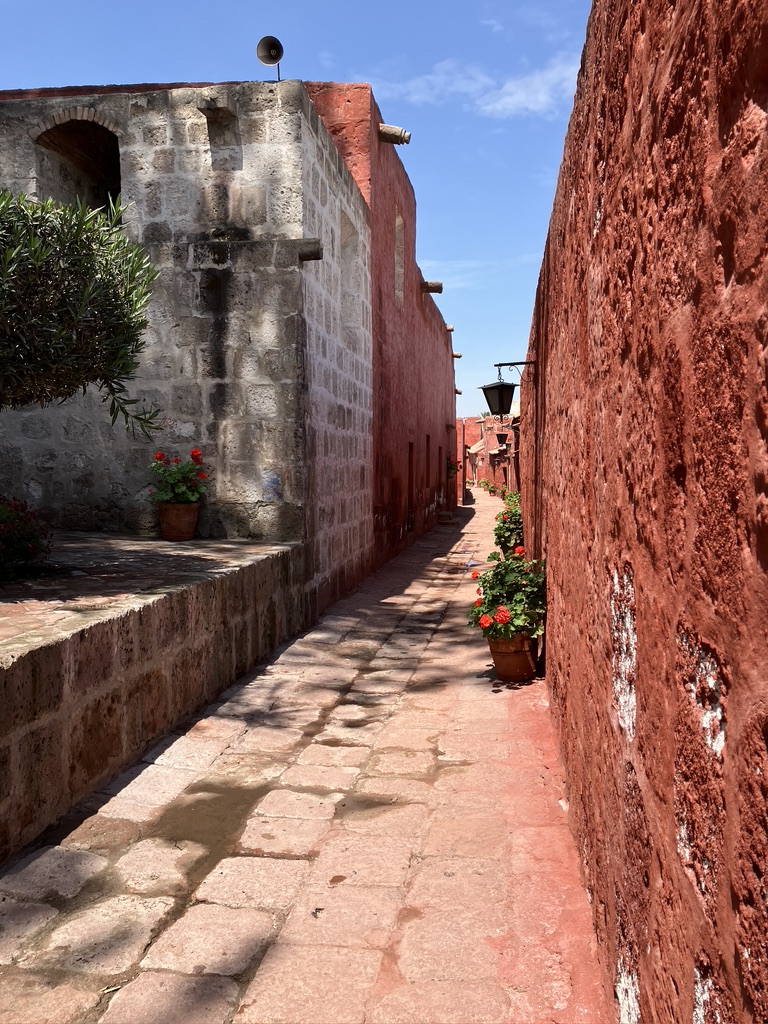
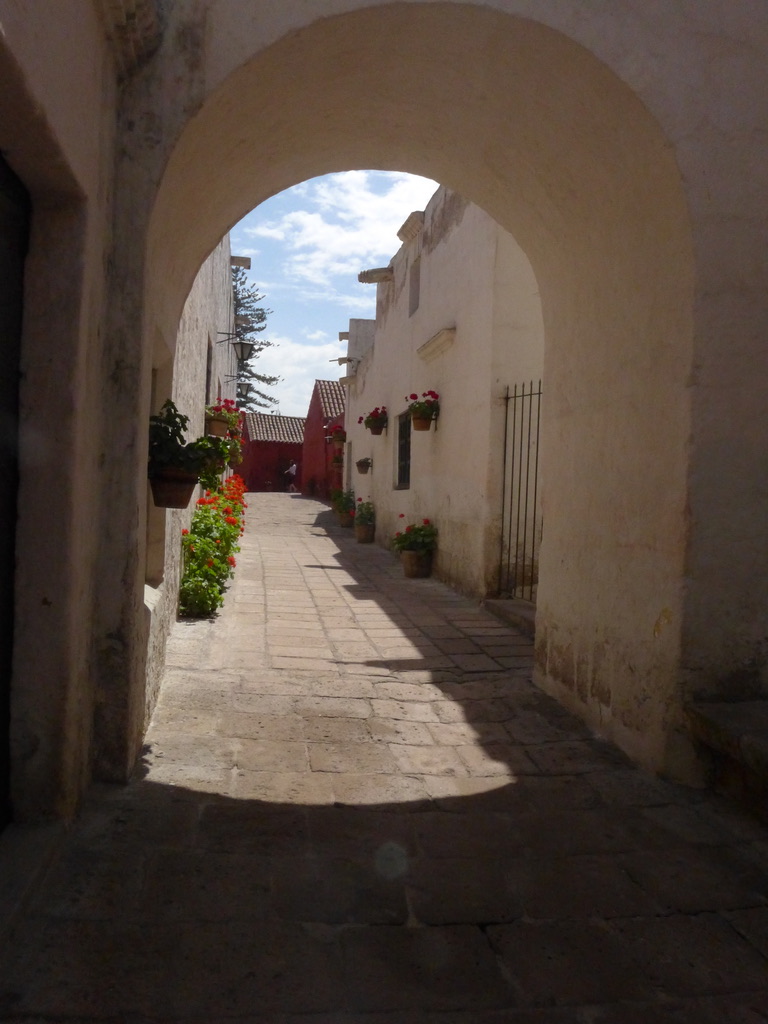
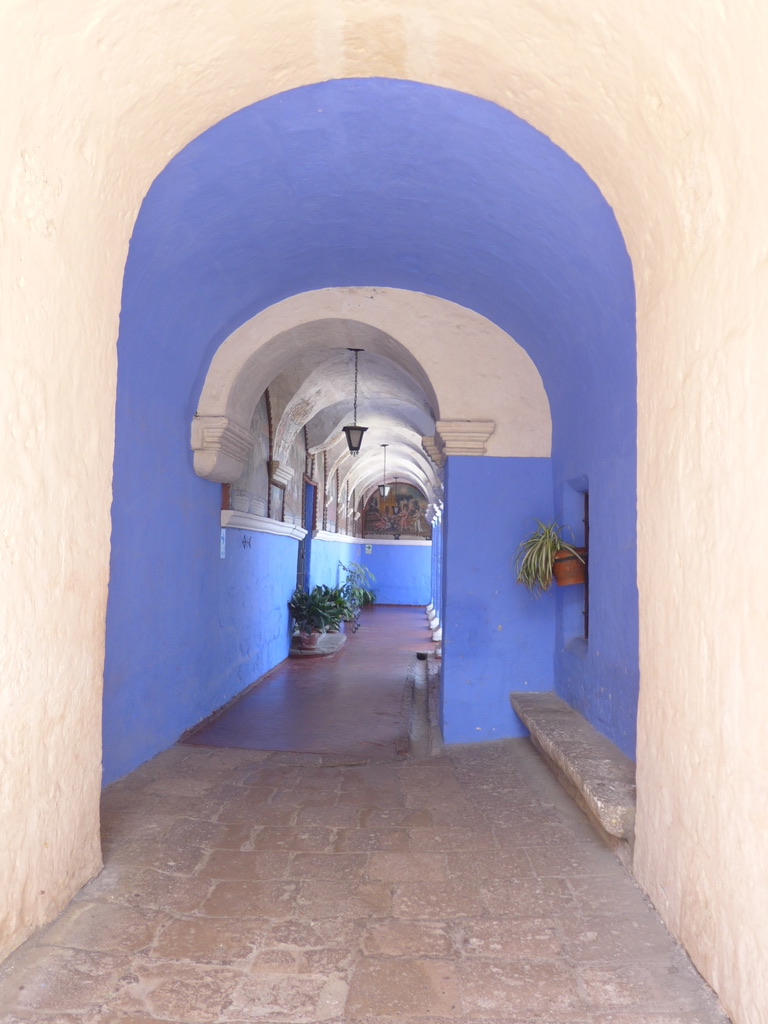
Passages
Our final stop in Arequipa was at the Museo Sanctuarios Andinos (Andean Sanctuaries Museum) at the Universidad Católica de Santa María, Casa de la Cultura (Culture House). We went on a guided tour of the exhibits related to the Dama del Ampato (the Lady of Ampato) or “Juanita” the Ice Maiden.
The exhibit is divided into five halls, the first of which starts with a short video presentation on how and where the sacrificial child, nicknamed Juanita, was discovered in 1995 on Nevado Ampato—from the Quechua or Aymara words for “frog.” It is a snowcapped dormant volcano, 20,630 ft. high, located about 75 kilometers northwest of Arequipa.
Juanita’s body had tumbled down from its original location some time after having been sacrificed in a ritual ceremony to the Inca gods, or Apus, known as a Capacocha. Her body had been tightly wrapped in fabric and had been thoroughly preserved in a frozen state for more than 500 years.
The second hall contains twenty artifacts found with Jaunita’s body. Subsequent halls contain some of the Inca priests’ tools and vessels along with artwork, jewelry, elaborate textiles and other items included among the offerings to the gods.
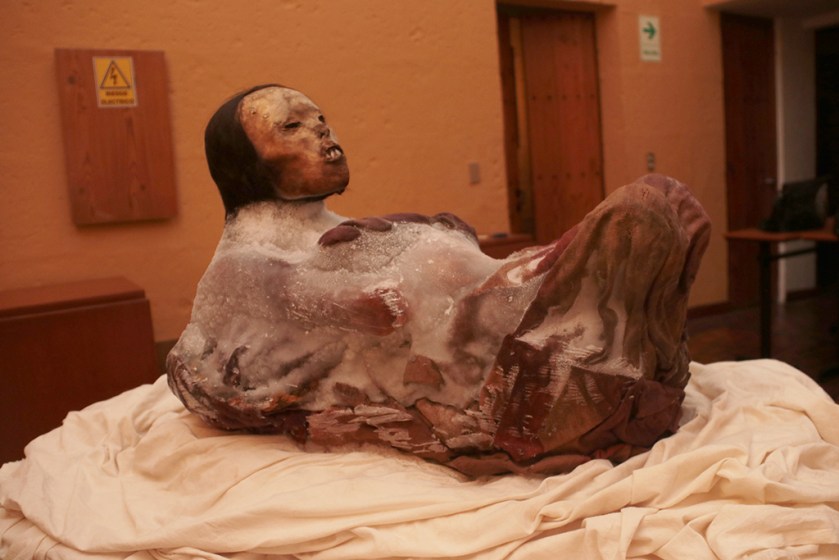
In the fifth and final hall the preserved body of Juanita, “La Dama del Ampato,” is displayed on certain occasions in a special glass chamber chilled to below freezing. When her actual body is not on display, as is the case most of the time, an accurate replica is placed in the chamber. Near the body of the twelve year old adolescent is a doll made of textiles which was found with her on the mountain side. It is considered to be part of the offerings to the gods.
As photography is not allowed in the museum, here is a picture of Juanita taken from the museum’s website. It may be a bit gruesome to behold so I have included only a small copy.
To learn more about Juanita and the Capacocha ceremony, please visit the museum’s website at: https://ucsm.edu.pe/museo-santuarios-andinos-de-la-ucsm-dedicado-la-dama-del-ampato-abrio-sus-puertas-poblacion-arequipena-y-los-turistas/
NEXT—Over the mountains to the Colca Canyon

